Banning foreign-owned companies isn’t unprecedented in the US, TikTok is just one of the latest

The whole TikTok-banning story has been interesting to me. I understand that there is little faith in dominant foreign-owned orgs that either sit on our networks or in our social circles.

For me, because it’s in my face often in my daily work, I am reminded of Merck. The US cleaved off the US branch of Merck during WWI, leaving us with 100 years of a US Merck and a German Merck.

More recently, the US government has placed restrictions on Huawei and Kaspersky.

How will this TikTok story progress?

Having lost its fight in Congress, TikTok faces a tough battle in US courts and with China’s own export controls. Source: TikTok has a tricky legal case to make against the ban law – The Verge

The sad thing is, at the heart of this is Trust. China’s behaviors, which I will point out are of a different sort than Russia or Korea, have generated a high level of distrust across the world.

Indeed, there are other countries with various bans on TikTok.

And it doesn’t help China itself bans a slew of foreign-owned internet services.

Banning TikTok, tho, will be interesting. This isn’t some hidden tech, but a leading social network platform in the hands of millions.

I am expecting the eventual outcome to be a banning on government devices, the formation of a US-owned subsidiary keeping US data in the US (à la Merck), and a string of retaliations by China.

What do you think?

[BTW, is DJI next in line?]

Is Autopilot as smart as a horse? (another BASAAP story)

There was an article in the Verge, discussing a recent study by the NHTSA finding Tesla’s poorly designed driver-assist features have been linked to hundreds of crashes and contributed to fatal accidents.

I’m not surprised. So much of Tesla is driven by the imagination of one man, and I keep seeing biases in their design choices that are more based on beliefs than evidence.

But one comment from that man caught my attention.

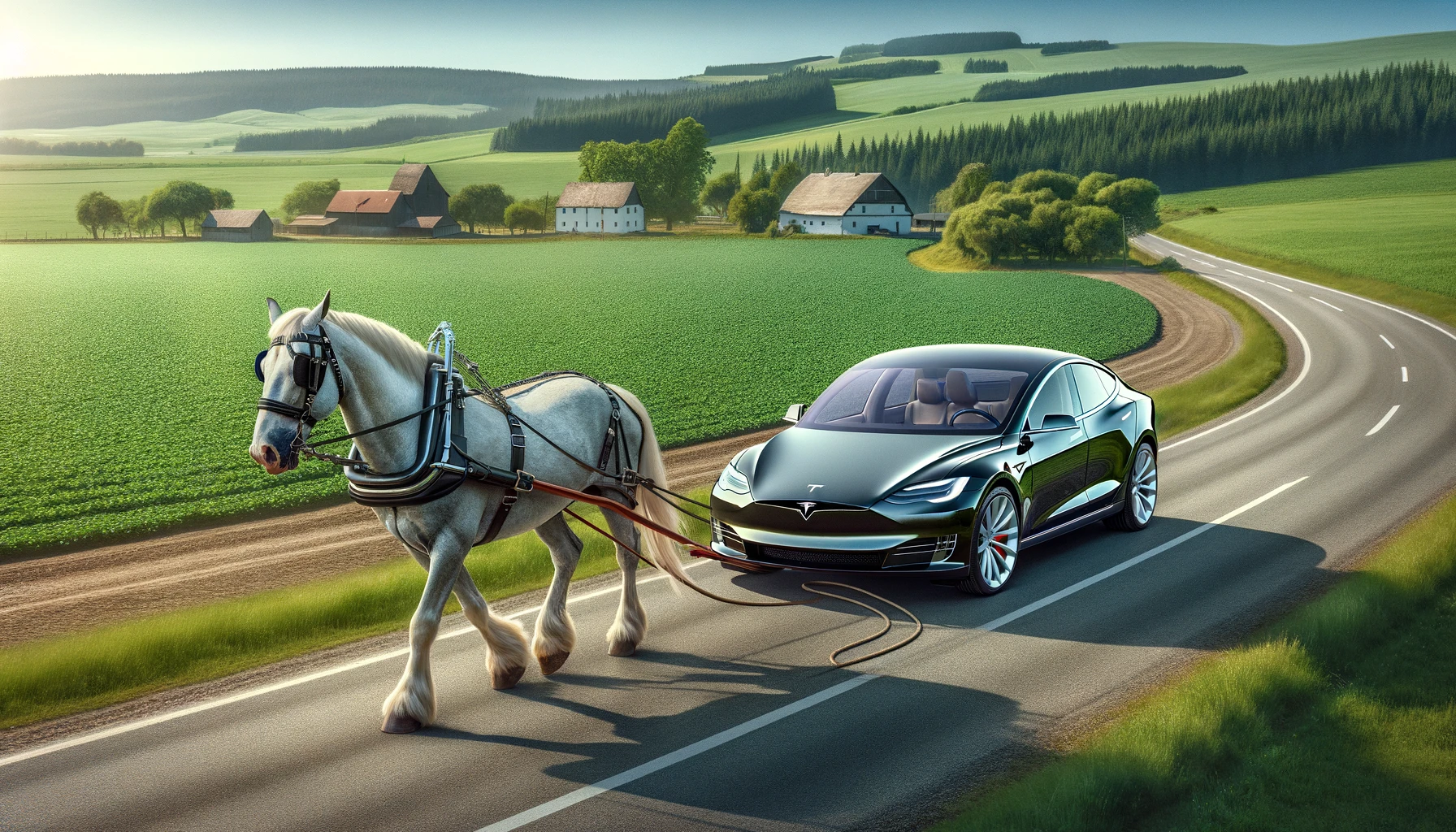
In an X (can’t call them tweets, right?), his response to a comment on autonomy is “Everything else is like variations on a horse carriage.”

via “Tesla’s in its flop era” – The Verge

I gotta say, if I had to choose between an autonomous car designed by Musk and a horse, designed by millions of years of evolution, I’d choose the horse.

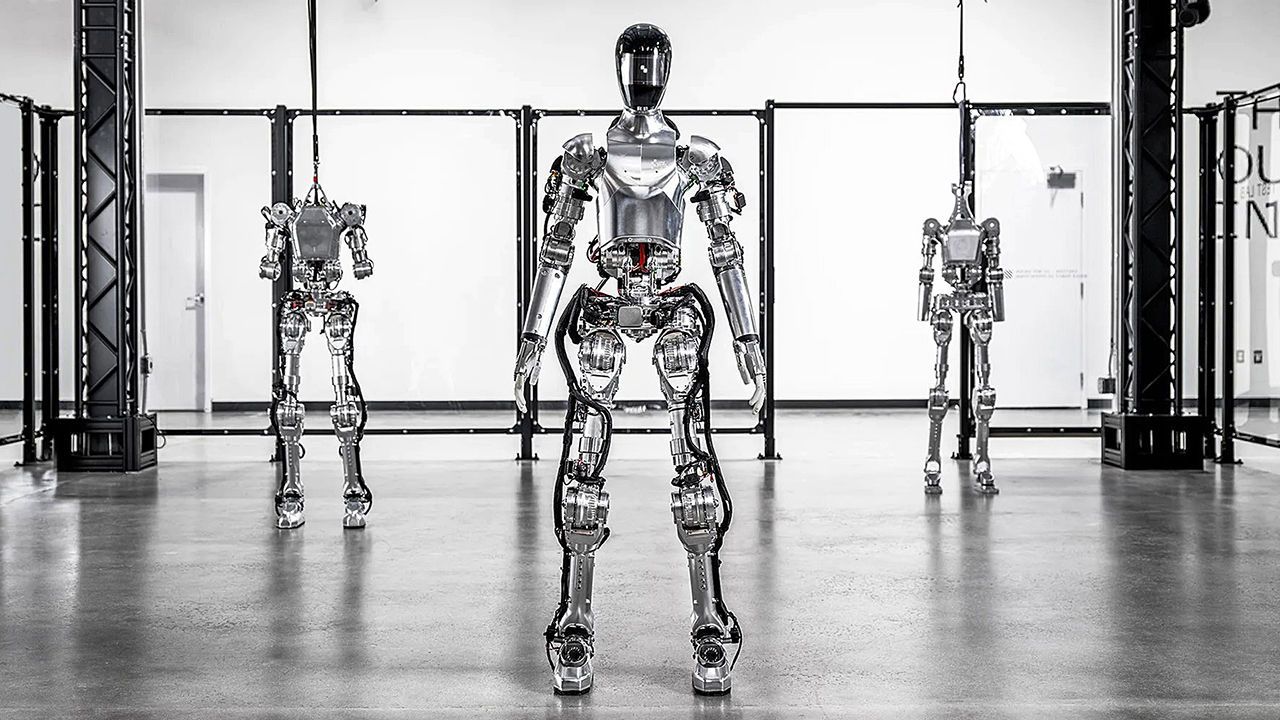
This isn’t about being as smart as a puppy, but being as smart as a horse (#BASAAH?).


Image from DALL-E. Worked really hard to get it right and finally just chose to go with this one.

Adidas Sambas are over 30 years of memories for me

I got my first Sambas (the traditional black ones, like in the photo) in college, influenced by some of my friends who were on the soccer team (bless ya, JP) .

OK, I wasn’t a footballer. But I grew up in the land of Samba and soccer, and had all sorts of Adidas stuff since a child. So there was a special connection there.

Rishi Sunak may have rendered them uncool this week, but the trainer has risen to ubiquity in the past few years. So what is it about this fairly simple design that is so widely loved? (From The highs and lows of an It-shoe: how Adidas Sambas took over the world | Fashion | The Guardian)

I wore many pairs of Sambas as my main sneaker for 30 years or so (sometimes putting in different laces)*, until the last one was worn to shreds.

Was hard to not renew my Sambas in the end. But I shifted almost 10 years ago to Vans. And now they are my main sneaker.

Interesting to see all the hullabaloo from Sunak’s reveal (and apology, it seems). Tho, I must say, the black ones I had are the only Sambas to me (which Sunak was _not_ wearing). The rest are just other Adidas sneakers, derivatives of the real deal. 😁

*Laces I remember using – hockey skate laces, purple laces, and checker laces. Style, baby, style.

Photo from Guardian article

Are all GenAI buttons magic fairy dust?

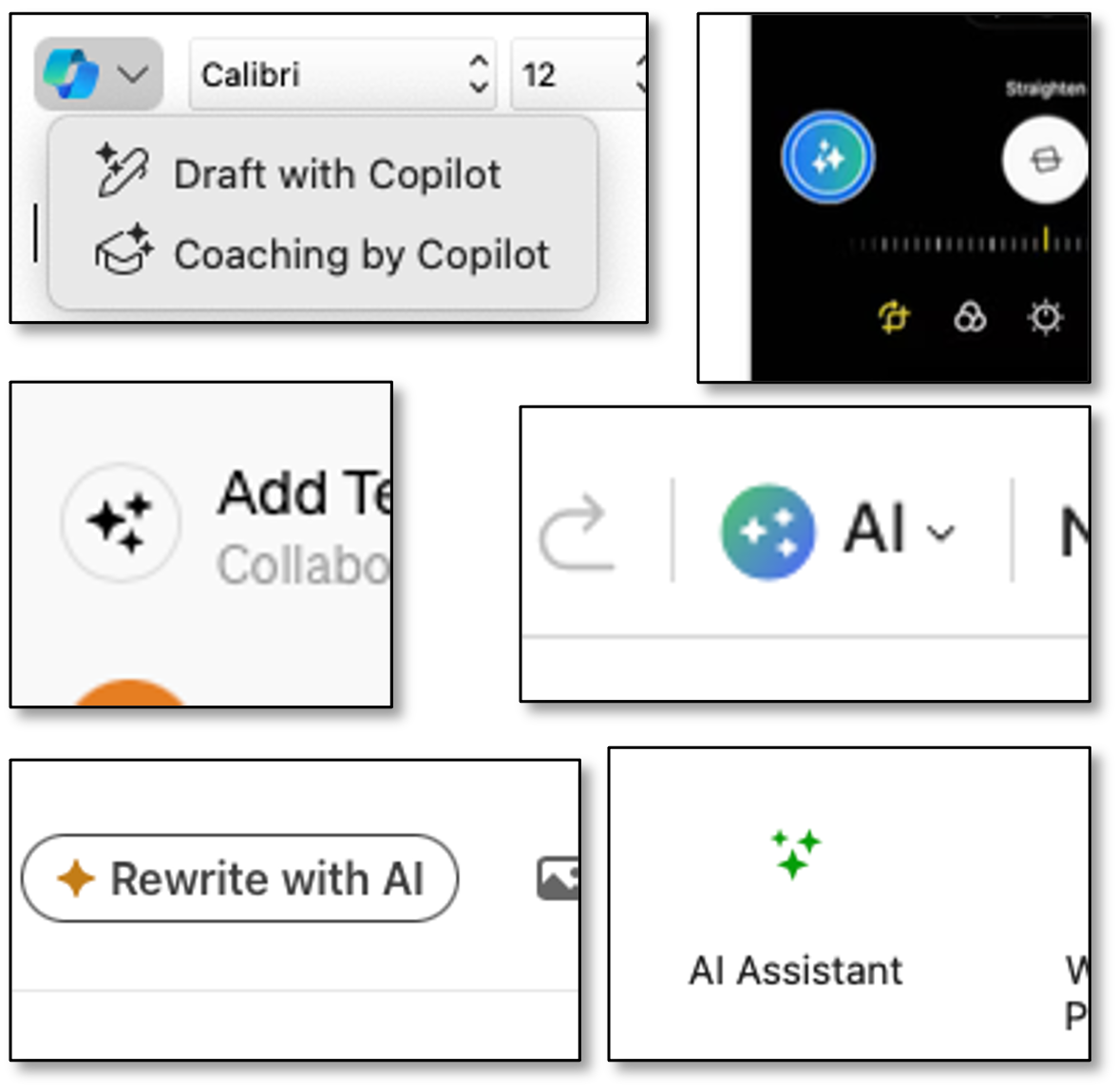
I now have apps everywhere asking me to click a button to use GenAI to do the things I can do myself. So I sorta ignore them.

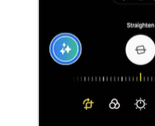
But last night I saw a Samsung ad on Prime* and the GenAI photo clean up button looked quite similar to the button Evernote keeps putting in front of me.

So I did a quick search to see where else I might have seen such similar buttons.

See the gallery below for a few I quickly found in less than a minute. Aside from Samsung, these are apps I use on a regular basis.

The dream of the future
What does it say about us that all these button designs converge on stars and magic fairy dust. Indeed, that they are all too alike makes me think I am late to the party and there were some shared winks or discussions that the GenAI icon would henceforth be fanciful stars, sorta like the similarities in other icons, like ‘save’ or ‘send’.

But _even_ if there was some agreement among designers, that we chose wishful dreamy stars to represent a GenAI action betrays our techno-optimistic view of what GenAI can do for us.

Clearly the design is meant to evoke magic, inviting folks to engage in a not-threatening way (‘It’s fairy dust!’). But will it be forever, like the disk icon has remained for ‘save’ even after the last of the floppy manufacturers fade away? [Imagining Colossus with a big fairy dust button🤔]

Help out here
What do you think? Also, let me know if you see other similar buttons or fairy-like depictions of GenAI.

Now I’m going to go sprinkle some pixie-dust on this blog post I’ve been working on. 😜


*regarding Prime ad – thankfully, only at the start, and not interruptively stupid – I’m looking at you YouTube, especially during TinyDesk Concerts


Images, in case you’re still wondering, from Microsoft Copilot in Outlook MacOS, WordPress, LinkedIn, ChatGPT, Samsung, and Evernote

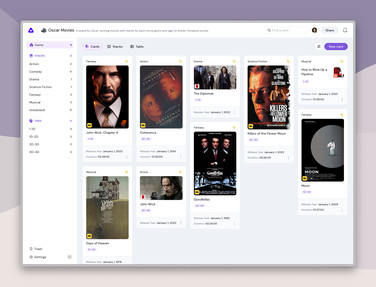
Is Aboard onto something, building with GenAI? (Bonus: BASAAP reference!)

I will admit (not that folks didn’t already know this) I am not really an original kind of guy.[1] Tho I do fool myself into thinking I am a decent remixer, pulling together multiple threads and jammin’ a new tune. Indeed, that’s sort of what I was trained to do at the outset as a scientist – read, learn, investigate various signals, blend the threads, build models, test those models, and deliver new knowledge and insights.

I sorta never have been able to stop doing that.

Just today I was wondering (in the preverbal shower, no less) whether ChatGPT could drive a robot (or car). And then I stumbled upon this article that helped bring together to some signals coalescing in my head.

Aboard is just one of a new class of AI companies, the ones that won’t try to build Yet Another Large Language Model but will instead try to build new things to do with those models and new ways to interact with them. from: Aboard’s AI-powered bookmarking and project app is a new spin on a chatbot – The Verge

Ghost in the Machine
I feel we enjoy saying ChatGPT is only an overengieneered autocomplete because we don’t want to believe there is any intelligence in something built in such a boring way (to me: brute force linking). But if you’ve spent any time with ChatGPT (I’m conversing with it almost daily as a sparring partner, pair coder, ideation tool, among other things) there is an uncanny feeling of some sort of smarts.

Is it the smarts of a savant? Is it the smarts of a puppy (BASAAP!)?[2] Do folks understand the concept of emergent properties?

Doesn’t matter. The interactivity and responses are frakkin’ in some uncanny zone, and only because we know how the sausage is made (sorta). And I think we’re missing the point making ChatGPT pass the Turing test. Why must we insist it be human, any more we insist a dog or a dolphin have human intelligence? We certainly suck at dog and dolphin intelligence, right?[3] ChatGPT only needs to be a smart ChatGPT, and nothing else.

But I digress. Who frakkin’ cares? It’s a formidable tool. And as a tool, what other tricks can it do?

Invisible hand
That leads me to ChatGPT as a puppet master of some sort. What kind of front ends can we build, be they a robot or a webpage (as in Aboard), that ChatGPT manipulates (no idea how) to construct a digital output or a physical action?

If you think of it, our brain is a hyperconnected society of agents working together thru a vessel that allows us to manipulate the environment. Why can’t we provide ChatGPT some input, say converting sensors into something ChatGPT can understand (‘object 3, 2, 1 ft away’), and give it a way to manipulate an output (‘turn wheel left 2 degrees’)?

I don’t know how Aboard does the to and fro with ChatGPT. But seeing already the formats of outputs and inputs ChatGPT is already comfortable with, seeing the add-ons folks have been building to provide ChatGPT with skills, I don’t see why we can’t build other types of glue to provide ChatGPT skills to affect a user interface.

Again, I mean outputs that are not the usual textual or image or what we currently have ChatGPT do. I mean interactive things, things manipulated by ChatGPT.

Between the ears
This is just me seeing different threads and rearranging them in my head, trying to make sense of it, trying to see what permutations click (kinda like PBChoc ideation).

Dunno if this ChatGPT as manipulator is a signal or just a offshoot into nothingness. But now that I’m alert to it, Geoffrey (what I call my ChatGPT) and I will have to go out there and learn more.


[1] I once had to take a psychological exam (given by a contractor called ‘Psycho’, no less), when I was being considered for my first job at Nokia. That exam is what made me realize I was great at jammin’, just not originality. And, as a scientist and scholar, I am cool with that. Haha. Oh, and I had to take another psych exam for Business Finland too. What is it with these exams, Finland?

[2] Been thinking of digital smarts for a long time – here’s a 2016 post of mine referring to chatbot smarts, and referring back to puppy smarts from a 2007 convo on systems being BASAAP – ‘Be as smart as a puppy’. I’ve been jammin’ for a long time.

[3] Frak, a lot of footnotes today. In any case, you gotta read this book, or at least the parts on ‘alien’ intelligence. Brilliant.


Image from the Verge article
The connection between the T-Mobile Sidekick and Nokia Cloud 

This article got me all nostalgic for the mid-2000s. Back then, I was at Nokia, deep into the Nokia smartphone world, fusing mobile and the internet. And by 2005, looking for a new gig. I was just off of Nokia Lifeblog, having spent a few years immersed in the emerging Web 2.0 and Social Media world (we we only starting to call them that).

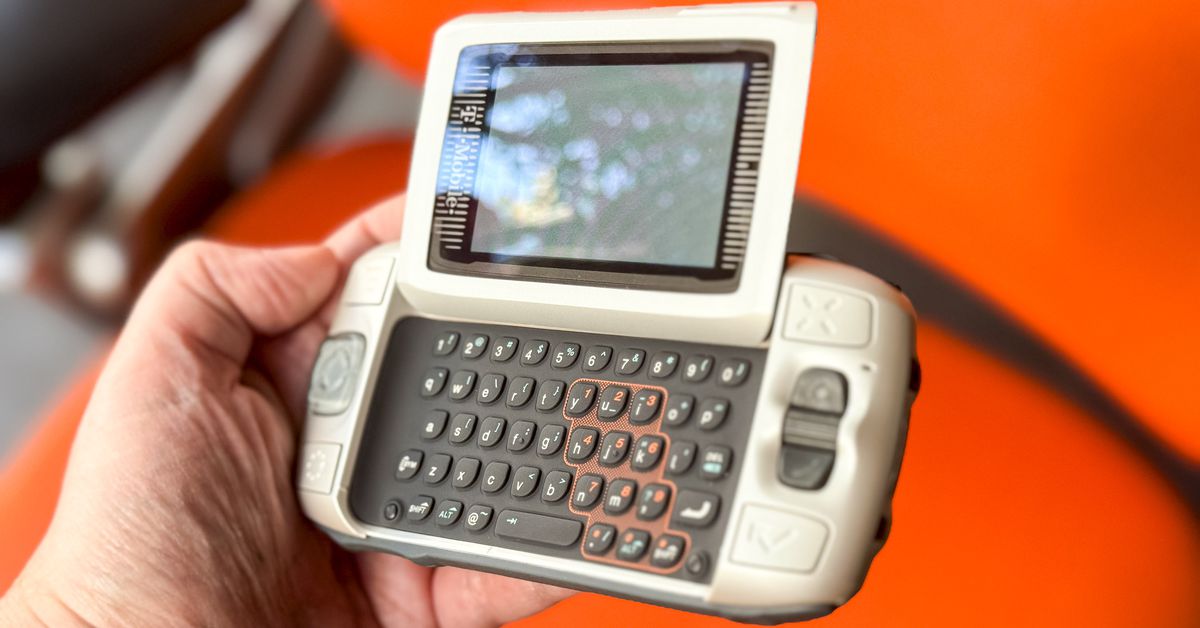
Before the iPhone, before Android, before webOS, a revolutionary soap bar of a phone made it incredibly easy to get shit done. The Danger Hiptop, better known as the T-Mobile Sidekick, made the internet portable and affordable like no phone before.
Source: The T-Mobile Sidekick’s Jump button made mobile multitasking easy – The Verge

Nokia Cloud v1.0
At the time, I was ruminating on an idea, partly inspired by the Danger, of not just the promise of the Web in your pocket, but the idea that the phone didn’t matter, of all your connections, streams, and stuff living in the cloud. The classic story was if your Danger fell into the drink, you’d get a new one and whoosh its previous soul would fill up the new phone – all your stuff was safe in the cloud. [Yeah, that was a big deal back then.]

I went around Nokia trying to pitch the idea of Nokia providing a place in the cloud for all your Nokia phone data and activity. We called the project Nokia Cloud, and, when launched, the service started as Ovi (‘door’ in Finnish, because I kept describing it as a door to your digital life).

I will admit I left the project just after launch, for various personal and professional reasons. While the project was an immensely intense learning experience for me, I was disappointed I wasn’t able to deliver a fuller vision.

Android
As is mentioned in the Sidekick article, many of the Danger folks went on to found Android. And my closest brush with Android was during a visit to Google a few months after Android were secretly acquired. Secretly, as Android didn’t exactly make clear what they were working on, nor did Google make a fanfare of the acquisition.

During my visit to Google, I met Andy Rubin, the top guy from Android. We had an interesting chat and then I said it was obvious they were working on a phone with Android. As far as I recall, nothing was really in the news what Android was (yes!) but I knew their pedigree and that always informed me how folks behaved.

The funny thing is that Andy got all defensive saying I was wrong. 🤷🏽 Could be he was thinking I was thinking a physical phone. Where perhaps he was thinking what I was also thinking was Danger 2.0, just the software. Keep in mind, I was also part of the launch and early days of Series 60, which was Nokia’s smartphone platform OS, sold to licensees, just like Android eventually was. So yeah, I wasn’t a phone-head but a software-head.

Alas
Android went on to own the smartphone world, only held off by Apple’s iOS. And Andy left Google with a platinum (way more than gold, y’see) parachute. Yet another one of my brushes with millionaires during that time. 🙄

And me? Well, no one is fondly remembering Ovi these days. Nokia Mobile Phones is no more. And I’m still writing this blog in anonymity. Haha.


Image from the Verge

What’s at the heart of the iRythm Zeo XT monitor?

I came into possession of a Zeo XT long-term heart monitor (see image right). The device was sent to someone I know who ended up not using it. So I took it and, being curious, decided to crack it open and see what I could see.

The whole device was fascinating to explore and, without the benefit of knowing the designers, contemplate the design decisions.

Cracking it open
The is the cover. Note the blue dot. That’s a button I’ll show later on. [FYI, images follow explanatory text]

The cover opened up easily enough. Later, I realized it could be when the device is sent back, the technicians need to easily open it to access a micro USB port I’ll show shortly.

The bottom that the board sits on shows where the contacts for the leads come in, and you can see that there are divots for where the contact clips connect. There are also contact clips for the batteries. Smol. Smol.

That rectangle is the recess to accommodate the memory chip.

PCB
Lots of test points. View of both sides of the board. Closeups of some areas follow.

iRhythm Tech N100A6001.

Little clippy things for leads (in right image) and for batteries (in left image). 

That big chip is the ISSI IS34ML04G08. NAND memory. 

Closeups
Right next to the clips for the leads (next to two large resistors) is a chip with TI 86 I333. This chips seems to be an INA to convert voltages into data. 

Next to the memory chip, this chip says 263 8453 JSH. I wonder if it’s a NXP MMA8543 accelerometer. Not sure why there’s an accelerometer on this. If that’s what that chip is. I was just Googling things, not chasing it too deep.

The MCU is a ATSAM3U4C

The architecture is designed to sustain high-speed data transfers. The multi-layer bus matrix, multiple SRAM banks, PDC, and DMA support parallel tasks and maximize data throughput.

Seems like data downloading is thru USB (which MCU supports). I think that’s why it’s so easy to disassemble. 

And that’s a big blue button. The cover, shown earlier, flexes to click the button. This is the logging button that the user presses (when they feel an event?). Makes sense that it’s big and sturdy.

And here is an opamp.

I think these are power regulators. And I think all this is to clean up power noise?

Also, you can see the clips nearby for the batteries at the top (negative) and bottom left (positive). Tiny tiny clips.

Layers, donkey
Lastly, I wonder how many layers the PCB is. It’s about 1.5mm thick. But that’s not a good measure for number layers I presume. 

Yeah, I like investigating things like this.

Project: Bruins 100-year anniversary sign

I had mentioned an earlier project where I hacked the parts of some solar deck lights, where the lights were cheaper than me buying all the parts myself.

So of course, when you have hammer, everything is a nail. So, of course, I have been thinking of other projects that can use the solar deck light parts.

One Hundred Years
The Boston Bruins are celebrating this year their 100th anniversary. Being a Bruins fan, I wanted to do something to celebrate, too.

So I figured I’d do a solar powered sign to put out front.

And, as I am a 3D printer kind of guy, I printed out the parts of the sign.

The build
I downloaded the current Bruins logo from WikiMedia and printed it out in three colors (see image above).

I then designed and built a frame to hold the logo and parts of the solar powered light, and to backlight the logo.

[Aside: because the print was so large, I did a lot of test prints of just certain parts, for example to ensure fit of battery and buttons and the like]

In use
I was happy with the build. Only thing, I set it up high up on the side of my house (there was a hanging hook already there), where the eaves leave a shadow, even in January here at latitude 42°. Therefore, I was taking it down to charge in the full sun. I was also trying to hang it from a wire so that it was lower and more in the sun. But I did not like that.

As things progressed thru March, I gave up and just left it on the hook. Tho it is still in the shadow from the eaves, even longer as we head into Spring.

Also, because I had it and didn’t expect to use it much, I was doing my test prints in blue filament. In the end, I liked the color and kept it for the blue glow it provides behind the spoked B.

One other catch: The solar lights have three settings. The one I usually use is the third, which turns on the lights with movement.

But I wanted this sign to be on all the time. So I have it set to the second setting, where it is mostly lit and gets brighter with motion.

Luckily, anyone or anything passing in front of my house (many 10s of feet away) is picked up by the sensor.

Tho, being on all the time also means that the lights are not on all night. But the sign in the end is on for many hours after sunset when it starts with a full charge. Good enough for me!

And of course, folks can see the sign, albeit, small, during the day as well.

Go, Bruins!

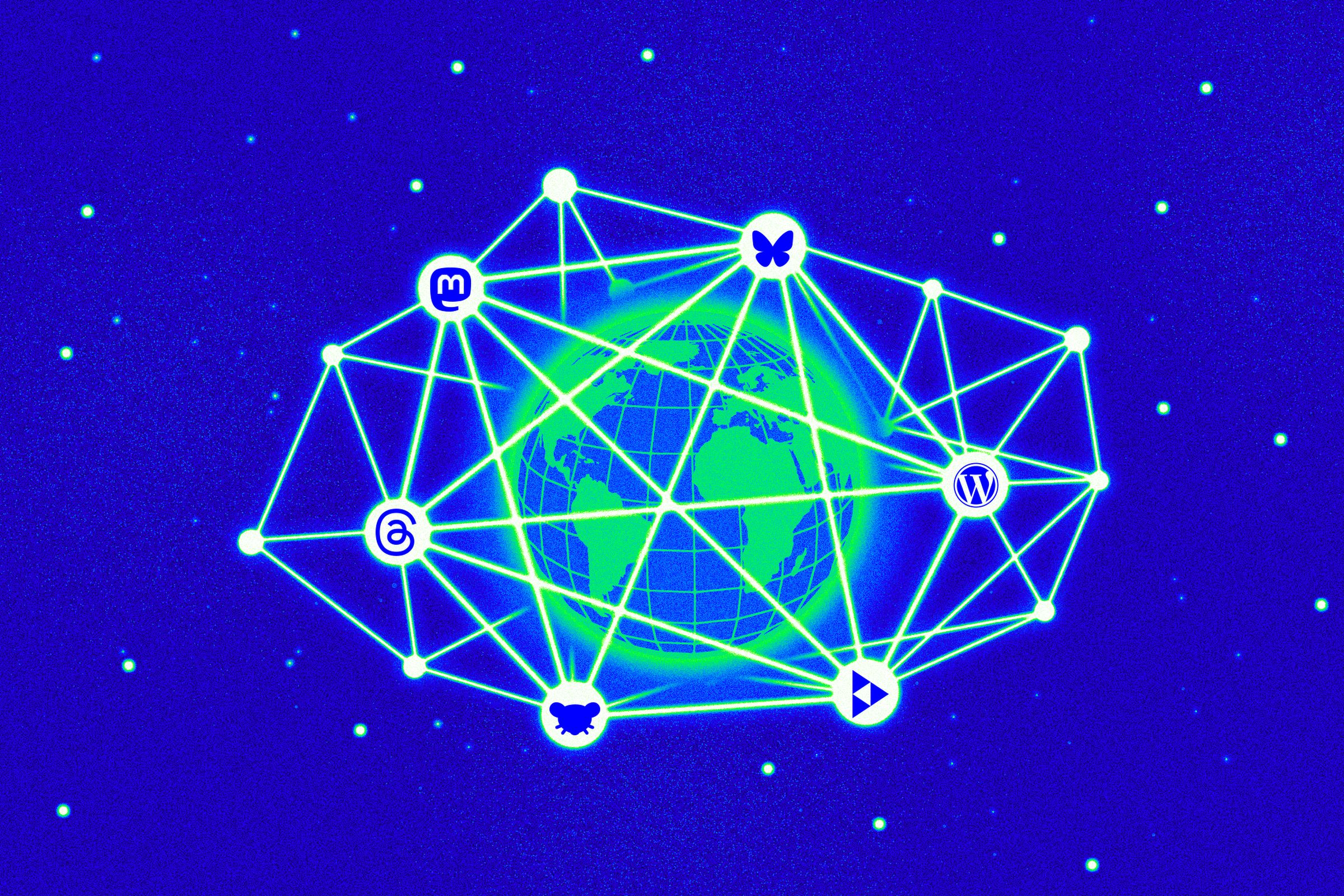
The Fediverse – and why I feel like Cassandra

Been meaning to make this whine-post for some time.

Yes, I was excited with all the discussion last year of the fediverse, the rise of Mastadon (even tho it’s been around for while), the general growing realization of the enshittification of social media.

A new kind of social internet is currently forming. Right now it might still look like ‘Twitter and Reddit, only different,’ but that’s only the very beginning of what’s to come. Hopefully.

Source: Here’s why the fediverse is the future of social networks, and the web – The Verge

But I’ve been banging this drum for a while:

If those dates seem bunched up, it’s because around that time I was actually trying to build something (roughly 2006-2007) along the lines of taking control of the data streams of your life and others [My greatest story, never much told: Nokia Cloud]

And I’m not the only one who was thinking of these things. There were folks who contributed to the early days of the social, feedable, permalinkable, likable, tunable web back then who also were trying to federate things – knowing full well what would happen if big companies controlled things in silos.

Guess who won out?

Now all of us from back then feel like Cassandras, warning of a future no one believed but gladly accepted like so many frogs in warm water.

Sigh.


Image courtesy of DALL-E, who described the image as: “The image created captures the transition from a centralized and controlled social media landscape to a diverse and decentralized fediverse, reflecting the themes of angst and hope discussed in the article.”

Another time shift game – and my own take on it (story time!)

This article (quoted below) reminded me of another similar iPhone game back in the day. I think it was some sort of space game. But same concept, each time you die, you come back and your previous lives repeat what you did. The idea is to use the repeats to do a task in concert.

Cool concept. And now there is another one, reviewed by the Verge.

You’re given an arena filled with enemies that you must defeat within a certain amount of time and a certain amount of chances. Once that time is up, you are teleported back to the beginning of the fight and forced to do it over again, this time with your “remnant” assisting you, killing the same enemies you killed in the previous loop.

Source: Fight monsters with the help of your past lives in Lysfanga: The Time Shift Warrior – The Verge

This recent article reminded me also how that other game had inspired me to write a short story within my NaNoWriMo novel back in 2012.

Check out the story here: Time and again

Enjoy.