One night – a global story of one night in the mobile life

NightOutThere is but one Night, a Night that lives in Earth’s shadow, a Night that covers half the Globe, sliding gradually West in a never-ending run from the Day. Though we are said to be day creatures, descending at dawn from the safety of our trees to hunt and gather, our time, the time when we hunt and gather in a different way, when we no longer hunt and gather for food, shelter, protection, when we hunt for friends, companions, when we gather together for play, song, love, our time when the day creature is put away in a little box and out comes the social creature we really are, our time is the Night.

Our Night has evolved as our life has, becoming richer as more effective ways to mix and match and connect and enjoy have been invented. Granted, every generation thinks they live in the Golden Age, the height of their civilization. And, granted, later generations dwarf previous Enlightenments. Yet, the Dark Ages these are not, the inevitable trumping of our Age by some future Age in no way diminishes the Wonderment of our Hyperconnective Age.

And Life wants to be connected, it wants to build layers upon layers upon layers of connectivity, and the last century has heaped more layers of hyperconnectivity via transport and communication. The narrative we seek here tonight is that narrative of hyperconnectedness, of personal mobile communications, of mind-to-mind connections, of one-handed, background, interruptive, back-pocket, individual, essential, ubiquitous, untethered freedom.

The facts in this narrative are not as important as the participants, the ones who have integrated into the Mobile Lifestyle, the ones who know no other way to communicate, the ones from every walk of life who are united by a piece of metal and plastic.

All of them are here tonight, all 2-plus billion of them, all being watched by the next billion, who live mostly in emerging countries aspiring to enter the real net of humanity, the real net of connectivity, the net that keeps growing and will soon encompass everyone able to think, to feel, to share.

Night arbitrarily starts in the Pacific, not far from Auckland, where we pick a thread of this mobile narrative on a mid-winter Friday, early evening, where a young man pauses before heading out the door, empty-handed, with only keys and wallet. In a momentary panic, he turns to look for the object to fill that emptiness, the object that is present even when missing, the object he would more readily report missing than a lost wallet or lost keys.

Night moves on and covers a group of Tokyo teenagers, dressed up in their favorite get-up, a get-up borrowed from movies, manga, magic, a get-up that both removes and enhances their identity through a common language easily read, as easily read from their overloaded keitai straps, the ringtones, the sub-culture in sub-cultures of their text message codes.

Prognosticators watch these teenagers, guestimating the future of the Mobile Life- style effortlessly exemplified by the Tokyo Lifestyle these teenagers don’t consider special, but integral to whom they are. Are their phones their wallets and keys, too, as waving becomes a way to exchange info, connect, pay for stuff, open doors? Will the world be tagged with invisible radio and cryptic 2D tags as a physical to virtual connection, as a way to access more info than could be pasted on a wall, as a way to bring static objects to life, as a way to hide a whole new world under the noses of the adults?

A night in Tokyo will teach you much about the far future, the future made real by only a few million, compared to the almost 2 billion who don’t have or can’t afford the gadgetry to live the Tokyo Lifestyle, who need to be or are content with a gadget that fits their budget, their lifestyle, their culture, their language. The real thriller in Manila is the combined millions of pairs of thumbs that text message in huge numbers, using their thumbs to communicate, using their thumbs for social activism, using their thumbs to organize for democracy, for communism, for Islam, for rebellion, for freedom of expression. One hundred and sixty characters unleashed in a way as in no other country. One hundred and sixty accidental characters, built with a clear goal that no one ended up accepting. One hundred and sixty characters that The People hacked, that The People took as their own, that The People used to show that “we are not passive consumers, we are active participants in our lives”.

No matter what you foist on your “consumers”, you cannot control what they do, so wake up and smell the text message and be open to the creativity and inventiveness of those you provide service to, provide the loam and let them do the gardening, not because you are dumb, but you would never have made millions of Filipinos pound happily and obsessively on their phones, and pay you for it, if you had tried to plan it.

Impressed as we are with billions of text messages a day, we still have no idea as to the scale of things. Take the most populous country, with Mumbai as one of the largest metro areas in the world, and text message is just play as Mumbai youngsters actively chat via their phone browser, winksters all, discovering the power of the Web for the first time via their mobile. With most of the next billion phone users coming from emerging markets, with most of the next billion never having a PC or access to the Web, what will we unleash as they join the throngs of texters, of winksters, of people empowered by the simple joy of text, the joy of voice, the joy of a personal communication companion?

Just look at Hong Kong, where the Night is always hot in midsummer, hot with flashy cars, flashy jewelry, flashy neon signs, flashy high-end phones with all the latest software, all the latest features, all the latest accoutrements that drive high-end use. Whip out the phone at a bar for karaoke, or just look up lyrics on the Web, or sniff for other Bluetooth devices to meet friends, to get laid, to pull a prank, or snap-upload-share in that vicious cycle aided and abetted by a camera phone with flash and finesse.

A far cry from Accra, old city in a young country with even younger people, some of whom can only dream of owning their own wireless tie to the rest of modern humanity, who don’t know if they are ashamed or empowered when approaching these two men in wheelchairs, two men who have spent so much time trying to make a living only to strike pay-dirt by becoming telephone dudes who rent out seconds or minutes or messages of connectivity for those in the eternal waiting line for their own phone. Make your call with ease, let them remember the number for you, even if you are not illiterate, these men are the new phone booth, the new entrepreneurs, the new phone company, the new future of communication. If they are lucky, they might land a micro-loan, a phone, and an antenna, and set up their own provider for a village, for a region, for a people to leap forth into the modern world without the baggage of the 20th century.

Yet, this is not a worry for the birds who flew for a fling in the Canarias, from Finland, where all old enough to write their own number, not the social security number from the government, but the social secureness number that comes with a SIM card, a subsidized 3G handset, a megapixel camera, a Nordic lifestyle, and those little umbrellas in their drinks. Ever free but never far, these Finns enjoy a midsummer of a different sort, on a faraway island, but connected to home islands and lakes via midnight photo messages of bonfires and celebrations back home.

In contrast to Lutheran restraint loosened by midsummer cheer, the hot and sweaty mid-winter of Rio de Janeiro only further enhances the exhibitionism and innocent egotism of snap-happy mobilistas who party early into the morning, their photo trail uploaded on the go for all to see and endlessly comment on through social networking sites. Contradicting reasonable assumptions, the Cariocas snap and share as if there were no tomorrow, no shame, no repercussions, no end to the joys of sharing by voice, by photo, by Web, by mobile.

Flipping assumptions of a poor country of exhibitionists to a rich country exhibiting restraint in mobile phone use, we see Night becoming mobile as rich and educated Boston evolves from voice-only to discovering the power of the silence of text, the power of an empty message saying volumes, the power of a semi-colon, dash, and closing parenthesis to make someone feel warm, the power of a “yes” in making a young man’s knees shake, the power of a few text messages to coordinate a group faster than a chain of calls, the power that the mobile-savvy have always known, the power that is inherent in all phones, the power that is as basic to modern mobility as is voice.

Yes, the Boston night has become quieter since phones became extensions of thumbs, since voices no longer need to be heard over the sound of the band, since an inoffensive beep or buzz is enough to say, “Uh, excuse me, you have a message, please pull me out of your pocket when you can, it’s just for a moment, then you can just slip me back into your pocket until the next time I chirrup and politely call for your attention”.

But not all want a modest phone, as in Los Angeles, hot and bothered by the mid-summer heat, glitterati parade for their adulators, consort in one hand, mobile phone of the millisecond in the other, thin or flip or color, with no requirement of functionality, usability, longevity. For the jet-set, it’s not about what it does, but how it looks, how it matches the other accessories, because, really, who makes their own calls?

As the afterglow of the sparkle and tinsel fade from our sight, we espy at last the dark underbelly of the mobile world, dark enough to upturn the Mobile Lifestyle, to keep it from growing, to make the bleeding edge coagulate to a stand still, and, for no particular reason except that our Night is ending, we find evidence for this in Honolulu, near the end-point of our Night. There, our night revelers reach for inexpensive landlines to coordinate a gathering, or upload their digital camera photos from their all-you-consume, super-sized broadband PC in the wee hours before dawn, before going to sleep, before the evening joys are forgotten.

Nor do the revelers give out their mobile phone numbers because they need to pay for incoming calls and messages, or open up their browsers to check anything, not because it’s expensive, but because they can’t figure out what plan they’re on, how many minutes they have, how much 1 kilobit is and how much it costs, when the free minutes end or start, why it costs me to get my photos off my phone, why do you charge and disable, why is the real cost of using all those fancy services you are touting never revealed, why is cost the dark underbelly of mobile services?

Oh, it is now Saturday evening in Auckland, a full turn taken, as has been taken for billions of years, different turns for different folks in our narrative, different ways mobiles have impacted their lives, different ways mobiles have progressed and integrated into our existing networks, our existence, our culture, our habits. And it’s only been a decade or two since the mobile phone boom began. How will we continue shepherding all these different threads of the narrative, nurturing each individual evolution, letting a thousand flowers bloom? That’s our narrative for another night.

No longer feeling abandoned, anxious, or lonely, but reassured, loved, and now secure, our young man has remembered his phone this time, placed it in his hand, rolling it slowly in an unconscious gesture mobile phone owners have, fingering it, caressing it, twirling it, checking it, touching it, treasuring it, fondling it in a self-pleasurable sort of way only something that is part of our body deserves.

Indeed, the mobile phone has become more personal than any other tool we have ever created, every Night revealing its true position in our lives, its true impact on our behaviors, its true importance in how we as a collection of cultures, we as a global society, we as a species, have just evolved to a new layer of connection.


Background
This was written, by invitation, for Vodafone’s receiver magazine in August 2006. I noticed today the original article had finally disappeared from the web (like other great mobile sites, such as The Feature), but I had a copy and decided to post it once more.

I was excited to be invited to publish in receiver. Lots of cool mobile folks from that era were invited to write for receiver. If I recall correctly, @moleitau also wrote for this issue, though he was @blackbeltjones still at the time, I believe.

The issue was #16 “Connecting to the Future”. The publishers even had someone narrate my story. It was cool to hear a BBC-ish British man read my writing. Thanks to the Wayback Machine, I was able to find a snapshot (go click on the animation a few times) with the recording (I was briefly saddened that I could not find a copy of my own).

Of course, this story was interesting to re-read today. It was written before the iPhone indisputably altered the fate of all mobilistas; though Nokia’s Cloud project (aka Ovi) was already forming in my head. And, at the time, I was mulling a longer book on the mobile lifestyle, of which this is a hyper-concentrated version of what I intended (and, finally getting it all out in this format, sucked out all the desire to finally write that book)

And why the narrative format? When the publisher contacted me, it was for a basic scholarly article type of thing on the topic of ‘night out’. But then she had mentioned she had read and liked “chillin’“, so I offered to actually write the article in that style. I was pleased she like the idea and, lo, the story above was born.

Wow. A trip down memory lane.

Here was the intro receiver wrote for the story:
Charlie Schick currently provides internet strategy consulting to various projects within Nokia. His checkered past includes numerous articles and stories for online and print publications, deep scientific research, a book (co-authored), mobile multimedia products, and some unpublished fiction hidden in his closet. He has recently fooled himself into writing another book, due to be unpublished sometime in the far future. In his contribution to receiver, Schick weaves a global story of one night in the mobile life.

http://cognections.typepad.com/lifeblog/ Charlie Schick’s blog
 

Smartwatches: data freshness, interactive surfaces, and how the old became new again.

suunto-t6If you are an older runner, like me, there’s a high chance that smartwatches are nothing new to you.

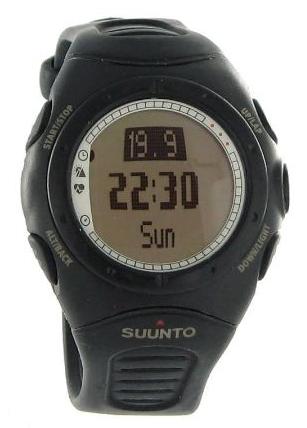
In 2005, when I was at Nokia Ventures Organization, there was a team looking into mobile connected devices in sports.[1] At one point they even hired the ex-CEO of Suunto (great guy, great stories[2]). For those who don’t know, Suunto is a manufacturer of “wrist-top computers”. Yes, these are now known as smartwatches (that’s a Suunto T6 in the image to the right).[3]

Back then was an interesting time for mobile sports tech: accelerometers were getting cheaper (Nokia was considering buying a company in that space), ANT was being promised as the ideal wireless networking for personal area networks and various sports watch manufacturers were adopting it, and GPS was becoming more widespread. Also, Nokia had a really cool app called SportsTracker that could use GPS to track your sports activities.[4]

Using a smartwatch in 2005
I bought a Suunto T6 (which comes with a heart-rate monitor strap and a barometer inside) and an accelerometer for €500 (the GPS pod wasn’t available yet). The HR monitor and accelerometer communicated with the watch via ANT wireless. Comparing it to the experience I had with SportsTracker (with GPS pod if phone didn’t have it), I got a great feel for what works and doesn’t in smartwatches and accessories (logging it all in some form in LifeBlog, of course).

What did I learn?

  • The watch is a surface. Small and, by convention, glance-able, the watch has its limitation dictated by its form factor. No big surprise there. For example, having a small screen as a readout for my current HR, speed, and time is crucial for my run. I really never expect to do any deep interaction with the watch, either when in motion or when not, except what could be done with the buttons and small interface the watch has (start, stop, splits, perhaps even review log).
  • Data has a freshness. Every data has its timeframe of usefulness and value. For example, once again, viewing the current HR, speed, and time helps me manage the run as it happens. But then, once downloaded to a computer[5], the HR and speed were relevant as a trend, not necessarily as an instant reading.
  • Data has its time scale. For example, weather changes over hours, not minutes; a run is measured over tens of minutes and hours; HR and speed are averaged over seconds for current reading, but over the course of the run for overall activity performance. When and how data is useful and how you interact with it changes, it’s not a fixed thing.
  • Data integration adds value. Having various sensors (speed, time, altitude, HR, GPS), plus adding other measured data such as temperature, weather, maps, allows calculations of other interesting things at the intersection of all this data. Though it’s not always true that more sensors and measurements are better.
  • The connection to other “surfaces” is critical. Being able to easily view the data on another larger surface, say a PC or, these days, a smartphone, allows greater exploration of the data after the event. The watch is one surface in our overall pervasive computing environment. Use it as such, and take advantage of the form factors of other surfaces.

Where folks will trip up
I think each of these areas listed above will be spots where the “new” smartwatch manufacturers will trip up.

For example, my biggest concern is that smartwatch makers will forget that the watch is a surface on the wrist, thus best suited for certain interaction modes. When I hear things like making calls and texting, I think the manufacturers are missing a trick.

At Nokia, we used to talk about the “usability knee,” that quick fall-off of usability as a mobile device is pushed to do things it really isn’t made to do, due to form factor, interface design, and the like.[6] Really, these smartwatches can’t be more interactive than an iPod Nano. If you think you are going to shove a smartphone into a writwatch, then join the crowd of “cool but failed” tech.

And already I see connected device makers tripping up on the data integration and exploration side, providing interfaces too complex to easily interpret the data that comes off the device (I am looking at you FitBit).

Simple, mobile lifestyle
Simplicity will be key. Understand how the watch is a surface; that the data has a complexity in its value (in time and scale); and how best to interact with that data on various surfaces, from the watch to other larger screens, which also have different usability and interactivity environments.

Back in 2005, when talking about fusion of PC and mobile, I used to talk about the Mobile Lifestyle, that the mobile is not a PC, that it requires a different way of thinking that is consistent with the way folks expect to use a mobile device.[7] PCs are lean forward, flat surface, two eyes, two hands, large screen, keyboard. Mobiles are in-pocket, lean back, interruptive, snippets of time, one-handed, two thumbs, on the move. Does that make the watch, interrruptive, instant, glanceable, one-touch, one-finger, [calm? pervasive? suggest more?]?

Back then, I knew that trying to replicate the computer experience on mobile devices was wrong. Same goes for now: trying to replicate the smartphone experience on watches is also wrong.

Let’s see how these manufacturers do.

What do you think?


OMG, footnotes?
[1] Alas, after all the thinking and skills that they had, the best they came up with was a fancy pedometer.

[2] Being a measurement geek and an athlete, he told me a story of when he was wearing multiple watches, HR monitors, and other pods on a run. He was worried he was going to be stuck by lightning, he had so many electronics on him. And you thought QS was new.

[3] Garmin, Timex, Suunto, Polar – all well known wrist-top computer manufacturers. Products range from dive computers (where Suunto got its start) to running and swimming and climbing wrist computers. And all started many years before folks got excited over the Pebble, or even the FitBit.

[4] Before the phones had GPS (remember the N95?) I used fobs like these. And yes, I was using apps on a smartphone long before the iPhone and the App Store came out. Another example how the old became new again.

[5] The Suunto T6 connects to the PC with a USB cable that clipps to contacts on the watch. In 2005, the PC software was atrocious (I eventually stopped using it for many years). These days Suunto has a website where all the data goes (via the PC, though) and only in the last two years or so has it become usable.

[6] A term I picked up from my old Nokia Ventures Organization boss, Christian Lindholm, long before we started working together.

[7] A great example of folks not getting the way these interactive surfaces need to fit their “lifestyle” is in iPads. No, you do not put a keypad on the iPad. That defeats the purpose of the tablet. If you want a small surface with a keyboard, buy a Mac Air. Pet peeve of mine.


Combination therapy vs single-target therapy

mosquitoI feel that single-target drugs are getting harder to make.

I remember years back, when there were three AIDS drugs going through clinical trials. We were all shocked when all of them failed. But some smart soul realized that when combined, the three were a miracle cocktail. Indeed, fast forward to the present and this cocktail has basically turned AIDS from a death-sentence to a background disease (of course, I simplify – the point is the success of the cocktail, combination therapy).

Combination therapy in this sense, should not be confused with drugs that are not complementary. For example, MMR and DPT vaccines are mixes of individual independent vaccines.

I claim that we need to explore how combinations of drugs, say antibiotics or antivirals, can work better than the constituent drugs alone.

Alas, as far as I can tell, this will complicate clinical trials, trying to deconvolute the contribution of each individual component. But I am hopeful that tools that can munge and analyze large data sets might able to do this deconvolution.

What do you think?

Link 1: PLOS ONE: A Longitudinal Trial Comparing Chloroquine as Monotherapy or in Combination with Artesunate, Azithromycin or Atovaquone-Proguanil to Treat Malaria.

Link 2: Access : New TB drug cocktail : Nature Reviews Microbiology

The development of novel combination therapies is one of several strategies that are currently being pursued to combat tuberculosis TB. Recently, researchers at the XIX International AIDS Conference presented the results of a groundbreaking clinical trial which showed that a combination of three drugs can kill more than 99% of Mycobacterium tuberculosis in infected patients.

Image from Wm Jas

Are EMR systems in the 10s like AOL in the 90s?

aol_cd_too_difficult_computer_helpI’ve been getting a feeling that EMR systems, while here, are a decade late.

While I am totally in favor of digitizing the patient, what EMR vendors set out to do – capture patient encounter information in a structured way – is no longer appropriate or scalable, at least in the way they chose that predates the internet boom of the 2000s.

The tools, such as the social web, mobile, and unstructured text mining (all developed to a high extent in the last 10 years), mean that we no longer have to create long forms and forced workflows to capture rich information on patients.

In fact, I feel that we are collecting less and irritating the care giver and patient in the process.

Where does the connection come in with AOL? In the 90s, AOL led the way in creating a interactive online experience of content, exploration, and apps. Except, when the open internet came around with a better, more dynamic, faster, and more scalable experience of content, exploration, and apps, AOL ended up, by comparison, looking formulaic, overly structured, and confining.

Kinda like what I hear about EMRs these days.

Link The EHR debate: fighting the last war?
Yes we’re having the wrong fight by focusing on old problems. The EMRs that are producing the studies we’re fighting about are the current equivalent of 1990s EPR implementations. In general they’re hard to use and require lots of money and training to produce halfway decent results.

What do you think? What is the alternative?

Image via TooDifficult.com

“Welcome to the Post-Pasteurian Age” (my HealthFOO Ignite talk that never happened)

I was blessed with an invitation to HealthFOO this year, here in nearby Cambridge. Alas, the event was cancelled due to the intense events after the Boston Marathon.

But not only was I bummed out that I wasn’t going to spend a fun weekend with follow health enthusiasts, but I also had to cancel my Ignite talk.

Microbes!
Of course, I was going to talk about the practical use of microbes. Below, I’ve written what I was going to talk about, with the sides I was going to use. (No, this is not my verbatim script, so it’ll not be exact to the timing usual of an Ingite talk)

Enjoy.

Slide1

Hello, my name is Charlie Schick. By day, I work for IBM as a sales consultant in healthcare and life sciences. By night, I am a fermentos, a practitioner and promoter of the practical use of microbes.

Tonight I want to welcome you to the Post-Pasteruian Age. But, for some historical perspective, a Post-Pasteruian Age suggests two preceding ages. Let me tell you about them.

Slide2

When we think of the Pre-Pasteurian age, we think of  a scary time of plagues, food poisoning, death by simple infections, and poor public health systems (can you say miasma?).

Slide3


But it wasn’t all the bad.

Folks were using bugs practically, for food safety, mostly. Most cultures were fermenting foods – milk, vegetables, grains – to preserve them and improve nutritional value.

Slide4

Indeed, microbes can be credited for the start of civilization. The magic that converted a warm mash of grains into a well-preserved intoxicating food drove humans to settle down to ensure a steady supply of grain to ensure a steady supply of intoxicant.

Slide5

Then Pasteur and gang came along.

Hello, Pasteurian Age.

John Snow (upper right) figured out crucial pieces of germ theory. And leading scientists gave us anti-microbial terms like Pasteruization (Pasteur, upper left) and Listerine (Lister, bottom right).

Science!

Slide6

The progress of science also led to Fleming’s accidental discovery that microbes (fungi) themselves were good at killing bacteria, setting us on a long path of conquering microbes through antibiotics.

Slide7

And we can’t deny that we’ve we’ve become healthier overall. Vaccines, antibiotics, public health, food safety have all been components of our improving health, increased longevity, and reduction in microbial deaths from childhood to old age.

Slide8

But what have we wrought?

Enter the Pasteurian Age! An age of disinfectants at every turn, on every surface, in every process.

Slide9

But this age is now an age of sterile, processed food. This isn’t the real cheese.

And this age has led to a reduction of biodiversity in our environment, foods, and, most importantly, our bodies.

Slide10

And the only things that can survive this harsh aseptic environment are the super bugs – bugs that have learned to resist every tool we can throw at them to eradicate them.

MRSA, XDR-TB, C diff – you know it’s bad when non-scientists know what these bugs are and what havoc they can wreak (sometimes first-hand).

Slide11

And our ability to keep our environment so clean is thought to be leaving our immune system with nothing to fight. The thought is that our immune system has turned against us in boredom and is causing a rise in allergies.

Slide12

But it’s not all bad.

We are now entering a Post-Pasteurian age where there’s a resurgence in the practical use of microbes based on biology and technology and science.

*by the way, I got the term Post-Pasteurian from MIT anthropologist Heather Paxson, in a paper on the US politics of raw-milk cheese.

Slide13

I would be remiss if I didn’t mention Sandor Ellix Katz’s amazing paean to fermentation:  “The Art of Fermentation”. It’s a celebration of experimentation, chock full of stories and recipes beyond the usual yogurt, beer, cheese, and sauerkraut.

And fermentos (a term I picked up from the book) talk about the bacterial terroir, the mix of native bacteria that is used to naturally ferment foods, as contributing to the final product. Much like the vinyard’s terroir contributes to the flavor of the wine.

Slide14

And you know there’s a resurgence of microbes in daily living when you see probiotics getting to be vogue. The idea behind probiotics is that competition of good bugs can put the bad bugs in check.

Ok, so some of these claims might now hold up in a clinical trial. But look at the creativity of these vendors. For example, if there are now vagina salves, how soon until we have armpit or acne salves?

Slide15

Indeed, I’ve played with some of these probiotic supplements that are purported to have therapeutic effect. I didn’t make vagina beer (beer with the right yeast to control vaginal infecions), but I did make a tummy beer (using Florastor on left) and tummy yogurt (using VSL#3 on right).

If you need to know, the tummy beer was yummy. The tummy yogurt wasn’t so tasty, possibly due to the not having a full complement of a yogurt culture.

Slide16

I also see an increased interest in extracting value from biowaste. For example, dairy farmers are turning into electricity suppliers, learning the art of anaerobic digestion. And municipalities are realizing the value of compost (and the reduction in landfill needs) for recycling all the biowaste we thoughtlessly throw away.

Slide17

And there have been huge changes in microbiology. It feels to me a total rediscovery of the wonders of microbiology. Technological changes in gene sequencing and analytic algorithms have led to a growth in microbial ecology studies – in the environment and, most importantly, on our body. For example, we are trying to see patterns  in what microbes individual carry while healthy or sick.

Slide18

And this understanding can lead to bacterial cures, cures where bacteria are applied to restore microbial function in the patient.

For example, in whole bowel transplant for bowel inflammatory diseases. It was found that leaving the donor’s microbes intact rather than flushing them out led to better outcomes.

Another popular example, Clostridium difficile is a nasty infection, usually acquired in a hospital after a patient has had a course of antibiotics. Current standard antibiotics are not too good at eradicating this infection, leading to a high rate of relapse.

Slide19

Understanding the ecology of the bacteria in the gut and C diff’s role in this ecology has led to an interesting solution – transfaunation. Or, transferring poop from a healthy individual to someone with C diff.

Initial tests have been promising. And scientists are now trying to better characterize the sets of bacteria that help C diff patients recover.

Slide20

Welcome to the Post-Pasteurian Age.

It’s an exciting time for the resurgence of the practical use of microbes in food, products, and health.

But don’t be passive in this age. Go out and ferment something!

Loving the Moves App

photoFor the last few months, I have a wee app on my phone that works in the background to track my activity. Called “Moves,” it presents a pretty and easy to use interface to annotate (somewhat) and review what I’ve done and where.

The simplicity is wonderful, so it’s been hard for me to work up the courage to suggest any changes. Any changes could potentially turn this simple app into a patchwork of different feature requests that kill the simplicity and calm of the app.

That said, I have been trying to wonder how to layer in deeper and deeper engagement with the app. I’d like to see users able to uncover a bit more, do a bit more as they become heavier and more frequent users of the app.

Browser interface to data?
For example, there’s no browser component to review the data on a larger screen. Currently, the only interface is on the phone. Getting the data off the phone opens things up for other uses of the data.

Business-wise, I can understand why the Moves folks don’t want anything beyond the app, as then there would be a whole web service they would have to create. But at the same time, this could open up the opportunity for an API so that hackers can take the tracked data and do new things with it.

Heck, why doesn’t Moves just make an API and let someone else deal with the browser interface?

Indeed, seems like they are considering releasing an API. Though not sure if it’s just on the phone or from their servers.

Life streaming?
Also, there is other data on the phone that could be folded in to Moves, such as images or text messages. Yes, I am harking back to my Lifeblog days. Moves already gives me a ribbon of activity. What if I could explore the images or text messages collected along the way?

And could this be layered for more active users? This ties back to my comment above that the interface reveal more of itself as I become a more proficient or more frequent user.

Just some thoughts. Have you had any thoughts on how to tweak Moves*?

*Please, no rants on battery drain. 🙂

Why can’t health be a sufficient incentive?

There have been a slew of consumer healthcare devices that have come to market ranging from fancy pedometers and activity meters to apps that track your every move to a toothbrush. Yes, an intelligent, app-connected, electronic toothbrush.

I am all for tracking behaviors. Quantifying behaviors can be used to detect depression or Alzheimer’s  or even manage migraines. Of course, tracking activity can also be used to lose weight or train for a race.

Gamification?
One challenge with all of these monitoring devices is keeping people engaged for longer than the excitement of a new whiz-bang electronic device can last. Also, the challenge is that these devices become less useful as the behavior they seek to modify takes hold. To keep relevant and engaging, device makers have created fancy data interfaces, social connections, and, even gamification.

Gamification is the idea that adding game elements, such as badges, achievement awards, cheering, or leaderboards, makes an activity more engaging. And there might be cases where gamification might make something more engaging, though I can’t see how managing migraines can be turned into a game.

Back to our toothbrush.

Justifying ends and means
The toothbrush system awards folks on how much and how long they brush their teeth.

This brings me to my first concern: be careful what you measure. Is there a correlation between good oral health and frequency and length of brushing? Sure, there is some correlation, but when do diminishing returns kick in? Sure, brushing after meals is good. But if you reward someone for frequency and duration of brushing, how long until someone is brushing all the time just to get achievement awards? Yes, kids can be obsessive like that. [And that music the kid listens to for as long as they brush? Watch them try to play the same tune for a very long time, constantly brushing without stop.]

This brings me to my second concern: why can’t good health be the reward? I understand that we want to reward good behavior, but how can we do that without gimmiky gaming badges and awards, especially when it has something to do with our health? To me, any health program that tries to modify behavior should do it through promoting good behavior rather than conditioning the behavior through non-related rewards. This goes for a diet (learning how to eat right, not just lose weight) or a toothbrush (learning proper oral hygiene, not gaming a system).

This brings me to my third concern: coupons. Really? What I didn’t say is that the toothbrush users will also be rewarded with coupons. And coupons just rub me the wrong way. For one, the connection between coupons and tooth brushing doesn’t seem clear to me. Also, and back to the previous two concerns, are we trying to devise a nifty coupon-generating device or are we trying to instill good brushing habit and proper oral hygiene?

How devices help
I totally think the use of an electronic toothbrush can be quite beneficial to promoting proper oral health. As part of a system of periodic check-ups, proper eating, and flossing, brushing is important. And tracking brushing might be good for educating children, tracking and correlating usage patterns with dental or oral outcomes, or even for seniors to keep track of the last time they brushed.

To be fair, the toothbrush makers do a good job of pointing all this out. But none of these really should require coupons or achievement badges to get folks to do it. Heck, so many of us already brush our teeth daily without coupons or awards. Simply wanting to avoid bad dentist visits and halitosis are good motivators, too. So, perhaps a bit of measurement can help folks who are a bit on the slack side. But in the end, it’s good health we want, not a clockwork orange coupon-clipper with shiny teeth.

What do you think? Am I being a frump?

[Thank you @changeist for unknowingly providing the spark to write this.]

Think mobile when designing a mobile app

radiobdcheadernew__1346861492_1782One of my favorite radio stations in the Boston area, Phoenix WFNX 101.7, died an inglorious death last year. But, like the phoenix, it rose from its ashes as a live streaming radio station, supported by Boston.com (my home page for 10+ years). Now called RBdC (Radio Boston.com) it has multiple ways to access the radio stream. One of them is, of course, a mobile app.

While the idea of a digital-only local radio station is fantastic, I was a bit disappointed that the mobile app missed a few tricks. It failed to take advantage of the mobile modality (what I sometimes call the “mobile lifestyle”), and seems to act like some PC app.

Let me show you.

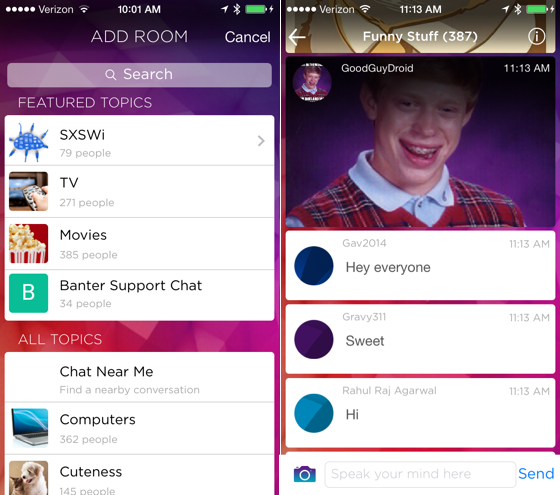
imageMain screen – what’s missing?
The one major major omission that stands out like a big thumbs-up is a “Like” button. One of the benefits of a streaming station is the ability to collect data on the listeners – when, where, how long, who. But something that is even better, is that a music player is a feedback conduit. Sure, they could track how many tracks are purchased or shared, but I think they would get a ton of valuable data with a “Like” button. That would give feedback to the DJs on what is resonating with listeners  – and of course, that data would be sliced and diced based on who is listening, when, where, and how long.

RBdC, use this app as a data collection tool to not only improve your station, but provide valuable data to your advertisers. And, no, you don’t really need to get creepy about it. There’s a ton of usage data (plus the “Like”) that you can collect that isn’t a violation of privacy.

Now imagine if all ads (and interstitials) also had their graphic and folks could “Like” them? Take that back to your advertisers.

[Gah, listening right now and so want to fave a tune. Great radio station as always, and I want to tell you so!]

The only other comment I have on the main screen is that ton of white space. Why haven’t they used that whole space for the song graphic? What is that upper open space going to be used for?

This ain’t your grandfathers radio
image(1)image(2)I think it’s great that I can see what songs have played before. But why can’t I jump backwards and start the stream earlier? And where’s the pause button? As this is a stream, let me interact non-real-time, non-linearly with the station. Give me the ability to jump back or pause the stream. I know that this might be an issue with ads (ok, so don’t give me a FF button). But at least let me enter the stream at different points. One use would simply be that I see a song I love in the back stream or I want to replay it. Please?

And this is an app on a phone, so there will be many interruptions. I’d be pissed if I was into a tune and then got a call and missed most of the tune. 🙂

Also, as this is on a phone, why are the only options to share email or Facebook? What about text message (or Twitter for that matter)? I could text (tweet) a link to the song to a friend and the link opens up their RBdC app on their phone (and it starts at the beginning of the song) so they can hear the song as well and share the experience with me (if they didn’t have the app, it opens up the store to download it – spread that usage!).

Do my ears deceive me?
One last thing: I’ve used other streaming music apps, such as iHeartRadio and Pandora. The quality of the music on those apps is really rich and good on my phone. I feel that the audio quality RBdC app is just OK. I don’t think it’s using the full bandwidth it could use to stream music. Indeed, the science of streaming audio is ancient and I expect the quality of the audio to be the max the pipe can provide. Considering that my kids and I never use the radio in the car, blasting streaming tunes driving 80 65mph down the highway with full, rich audio, over 3G, I think RBdC could do the same.

Think mobile
I’m not writing this to poop on RBdC. They deserve a special place in the Boston music scene pantheon, both pre-break up and now as carrying the torch of alternative music in an age of pop-ification and homogenization of radio and TV music.

This exercise was simply to point simple ways a mobile app can take advantage of mobile and not just be a port of a desktop experience into a small screen. It frustrates me to no end when folks think a phone is a small computer. No, you need to understand the mobile lifestyle.

This isn’t 2005. It’s a very different world from what I wrote about at the start of this blog. The users, networks, and phones are way more sophisticated. So, I expect way more.

For those who know me, I haven’t spoken about mobile in a while (the therapist asked me to avoid it). But lately at work (around healthcare and life sciences) mobile has been smacking me in the face, so that part of my brain woke up and I’m back to mobile (to quote a famous mobile genius “Because I can’t shut-up”.). Expect more rantings in future.

[Argh! RadioBdC, another string of f-ing awesome tunes you’re playing in my head and I can’t tell you. You guys are great and I want you to know!]

Do you have an app that misses a few key mobile-savvy features?

Pause for station identification

IMG_1581Oh, seems like another good time for a pause for station identification. I do these periodically to let folks know what this (as of late, slow) blog is all about.

Me
Hello, folks. My name is Charlie Schick. I am a Director on the Big Data sales team at IBM. I am a sales consultant with industry expertise in Healthcare and Life Sciences (I have a PhD, by the way). I thoroughly enjoy this job, as it allows me to talk science and healthcare and cavort with care providers and research scientists, all while working for an amazing tech leader.

Prior to that I was at Children’s Hospital Boston (as fundraiser and as scientist and faculty – though roles separated by a decade) and Nokia (in marketing and product management). If you’re interested in knowing more of my tenure at those two places, feel free to invite me to lunch or beer.

Practical microbiology (and then some)
Throughout my life, I have dabbled in many things – building things from bio-molecules to web publications to communities. I am always happy to get deep into the tech (bio or otherwise) and get my hands dirty and tinker. In the past few years, I’ve returned to my first love – biology – and have been studying the practical uses of microbiology, such as probiotics, functional foods, physiology, and the like (just see the things I’ve been posting and commenting on here on this site and on Twitter).

Thinking rather than doing
Alas, I have a wide range of interests (see my About page) and I have a very active family, so I’m more of a thinker than a doer. I suppose one day I’ll pair with the right doer for my thinking and we’ll have a blast. Until then, I’ll keep writing and fermenting foods.

As I said before, if you want to learn more, I’m in the Boston area and always welcome a free beer.

And of course, my standard disclaimer (riffing off of Cringley)
Everything I write here on this site is an expression of my own opinions, NOT of my employer, IBM. If these were the opinions of IBM, the site would be called ‘IBM something’ and, for sure, the writing and design would be much more professional. Likewise, I am an intensely trained professional writer :-P, so don’t expect to find any confidential secret corporate mumbo-jumbo being revealed here. Everything I write here is public info or readily found via any decent search engine or easily deduced by someone who has an understanding of the industry.

On the flip side, this is my personal site. Please don’t flood me with ideas that you think IBM might be interested in. There are other channels for such biz dev, and this site is not part of them.

Looking back on 2012: I am a “fermentos”

At the start of each year, I write down a few things I’d like to accomplish or focus on for the year. Usually, it’s a behavior I’d like to see improve or do more of. Often, I find that when I write something down, it seems to happen somehow. And the expectation is also that the behavior will continue in subsequent years.

In 2012, I decided that I wanted to ferment more – brew more beer, try fermenting new things, make more yogurt. And I did.

Looking back, I am pleased with the fermentation that I did do.

Beer
True, I made a few batches of beer, mostly from malt extract with some grain. I would like to make the jump to all-grain, but am content with the kits I buy.

Yet, one wee adventure in beer-making was to take Florastor, a probiotic supplement based on a yeast, S boulardii, isolated in Vietnam by a Frenchman in the 20s. I read that the yeast made a fruity beer, much like a wheat beer, so made a batch of wheat beer pitched with Florstor. I called it “Tummy Beer”. It was delicious and is now all gone.

Yogurt
I made more yogurt in 2012 than ever before. That’s not much. But, much like the Florastor, I took a commercial lactic acid bacteria product and tried to make yogurt out of it. VSL #3 is considered the premier probiotic supplement, containing 8 different strains of lactic acid bacteria. I did make some yogurt from VSL #3, but it wasn’t too tasty. For sure it needed other bugs as part of the consortia.

What I was exploring with Florastor and VSL #3 is other ways of providing clinically-tested probiotics in foods we already readily consume. What clinically-tested bugs could we deliver in malt- or milk-derived matrices we are so comfortable with? Perhaps gut repopulation to stop C diff or IBD or Chron’s? I do not think these concoctions are far off.

[Added 27jan: I just remembered that I also made a few batches of yogurt with goat milk. Came out runnier than with cow milk, but was quite tasty.]

Sauerkraut
Being of German decent, I grew up eating white and red kraut. I stumbled upon Sandor Katz’ website, Wild Fermentation while looking for a recipe for sauerkraut (more on Sandor below).

With his amazingly simple suggestions I made two batches of sauerkraut. And, while the idea is that you are to eat the sauerkraut straight, to take advantage of the fermented bacteria, I cooked it up. I was accustomed to eating kraut cooked with meat – and the smells of the first time I did this transported me back to my childhood.

What was interesting was that my mom, who knows how fermentation-happy I was, only then mentioned that my grandfather would make his own kraut. Ah, I wish I were able to learn how he did it. My mom did learn how to cook kraut from my grandfather (her father-in-law) and gave me tips on flavourings. Perhaps she’ll remember how he made the kraut and provide that link back to my heritage.

Pickles
I also love pickles and picked up a suggested recipe from Sandor, again. As part of my CSA (Community Supported Agriculture) this past summer, I got a batch of pickling cukes. It was only natural to pickle them. Meh. They were tasty and tangy, but came out too watery – I need to compress them better next time.

Kefir
I always read what bugs are in fermented foods. I am a firm believer that there are some digestive and even health benefits to these bacteria and fungi. For example, I’m partial to Stony Field Yogurt over others because it has six bug versus the usual five found in yogurt.

But I was curious about kefir, which has up to 10 microorganisms, including yeast and some bacteria that are known to be residing in our guts (unlike the lactic acid bacteria in yogurt).

I started buying different brands and trying them, loving them all. The catch, though, is that you can’t just take store-bought kefir and use it as a starter to make more, like you can with yogurt. Kefir has these strange “grains” that are clumps of the bugs needed to make kefir. Also, kefir is made daily, not amenable to once a week batches like yogurt.

While I didn’t make kefir in 2012, I found grains on Amazon and ordered some a few weeks back and made a few batches. My impetus to make kefir is related to all the fermenting I did in 2012. So, more notes on kefir-making coming at a later date!

More on Sandor Katz
And what’s more, in 2013, I know that I’ll take fermenting to new heights for me. When I tweeted that I was making kefir, foodie friend Chris Heathcote (@antimega) suggested I read “The Art of Fermentation”, written by, no less than, Sandor Katz. I bought it immediately and am now thoroughly enjoying it.

I can’t really express how amazing Sandor’s book is for the fermentos in me (“fermentos” being the term I learned from the book – people who ferment). But even though he’s been doing this for 20+ years, it’s still an exploration for him. And rather than proscribing recipes, he provides suggestions on how to do things, encouraging exploration and wonder from his readers. He’s not a fermentation purist, but almost a ludic fermentos or hedonistic fermentos – it’s really about fun, flavor, connecting to nature, and connecting to culture (of many sorts).

I don’t know what I’ll ferment based on his book; perhaps meat or cheese or manioc. Yes, manioc: being also part Brazilian, I regularly eat foods based on manioc flour, which I didn’t know was fermented. Isn’t that weird?

Yes, by setting myself to ferment more in 2012 has put me on an even more enlightened fermenting path in 2013. And [thank you, Chris] I think Sandor’s book will have me fermenting even more, and perhaps dong some crazy experimenting, too. I know I’ll want to connect more with the fermented foods in my Brazilian-German heritage, too.

Let’s see.

I’ve also been less bashful about professing my mania for fermenting. And I am glad I have: my two closest colleagues at work have spouses that ferment regularly, from yogurt to kefir to sauerkraut. And they do it for cultural and for health reasons. And a sales rep I work closely with is part of a craft brewing company with a really interesting business model. That blew my mind: to have fellow fermentos so immediately close to the people I work closest with.

How have you fermented lately? Do you know folks who ferment? Am I crazy to get so excited about meeting fellow fermentos? 🙂