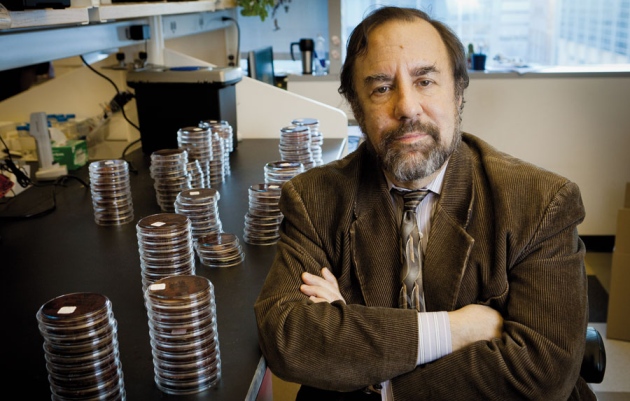
This paper is trying to measure and model the effectiveness of multi-drug antimicrobial chemotherapy.
Antibiotics are notorious for losing effectiveness as the target microbe gains resistance to that single antibiotic. Being able to treat microorganism with multiple drugs is sometimes the only way to manage the disease – as in HIV or TB.
But to be able to create better multi-drug cocktails, we’ll need to better model the contributions of each component.
This paper seeks to show how to measure and prove the effectiveness of the component sin a two-drug system. But I am wondering how we’ll do the same for more than two drugs (HIV anti-viral therapy has at least three components).
“Patterns of homologous gene flow among genomes of 12 strains from a single hot spring in Kamchatka, Russia, demonstrate higher levels of gene flow within than between two persistent, coexisting groups, demonstrating that these microorganisms fit the biological species concept. Furthermore, rates of gene flow between two species are decreasing over time in a manner consistent with incipient speciation.”
This is a really cool paper analyzing speciation in action. It shows how microbes slowly become less likely to swap genetic information as they differentiate. A key concept, too, is that each species has its own genetic island.
“This study demonstrates that the milk-feeding type and the HLA-DQ genotype differently influence the bacterial colonization pattern of the newborn intestine during the first 4 months of life and, therefore, could also influence the risk of developing CD in later life. Breast-feeding reduced the genotype-related differences in microbiota composition, which could partly explain the protective role attributed to breast milk in this disorder.”
Interesting study doing two things: 1) showing an effect of genotype on bacterial populations in the gut – and that they are different for those at risk for celiac disease; and, 2) showing a difference between the bacterial populations of breast-fed and formula-fed children, and a possible microbial reason why breast-feeding protects against celiac disease.
Very cool. And scary how it makes such good sense.
“The first challenge that OSDD’s cyber-community assigned itself was to glean more information from the M. tuberculosis genome. It was sequenced in 1998, but researchers had clues to the functions of only a quarter of its 4000 genes. In December 2009, OSDD set out to reannotate all possible genes. Some 500 volunteers got the job done in a mere 4 months. Now OSDD is trying to exploit these data. “The more people you put to work on the problem, the more chances you will have to identify the set of compounds that will likely make it through compound optimization, animal models, preclinical, and, eventually, clinical trials. If you increase your success chances, then your overall costs decrease,” says Marc Marti-Renom of the National Center for Genomic Analysis in Barcelona, Spain.”
FoldIt, GalaxyZoo, now this. Is the next phase of computing networked human computing?
“We report on the remarkable degree of biodiversity in the wine yeast populations naturally present in a small area of Sicily where traditional (non-industrial) winery practices are still in place. Out of more than 900 yeast isolates recovered from late spontaneous fermentations, we detected at least 209 strains. Given that the characteristics of the wines produced were found to be industrially appealing, the study demonstrated the economic potential of preserving the patrimony of Sicilian yeast biodiversity and highlighted the importance of maintaining traditional wine making practices.”
This is a great paper – studying the biodiversity of yeast obtained from traditional wineries; analyzing their genetic and metabolic qualities; and even using a few to make wines.
UPDATE 15mar12: Science wrote a nice review on this article. Ironic though that a publication with closed access articles is writing about an open access article.
“With new sequencing centers in Europe and the United States, BGI hopes its growing clout will help deliver the benefits promised by genomics—and revenue to pay off a mounting debt.”
As a card carrying practical microbiologist, I like making yogurt – cheap and easy to make and very good for your tummy (see here for more on yogurt and a recipe you can use). But I admit I’m not too adventurous: the most I do is try different cultures, flavors, or milks (latest was goat milk).
Furthermore, having spent a lot of time in the lab, I am just not ready to ingest bugs that have been modified through molecular biology, no matter how harmless the transformation – it’s just deeply ingrained in me from years in the lab.
That doesn’t hold back these adventurers. A while back, Meredith Patterson was working on making a yogurt bug that would detect malamine in the milk. Melamine was that nasty chemical Chinese milk producers were using to up their protein readings.
More recently, Cathal Garvey and Tuur Van Balen, two fellas who are not shy about being adventurous, revisit the topic. Of course, hacking yogurt bugs to produce helpful chemicals (Tuur suggests Prozac) would turn yogurt into an even better functional food.
From Cathal Garvey:
“There is a common conceit among we DIYbio enthusiasts, namely to suggest that one could opt to create “glow-in-the-dark yoghurt” using DIYbio-oriented techniques as a nigh trivial matter. Indeed, this conceit led to my recently being queried by twitter and email about the possibility; where are the guides and how-tos, if it is so trivial? While a conceit it may be to suggest that glow-in-the-dark yoghurt would be trivial, that’s not to say it’s at all out of reach to the dedicated biohacker. Here, I will lay out a suggested course of action based on the available literature.”
Tuur on the other hand, went so far as to actually going to the parts registry, synthesizing some DNA, and transforming L delbruekii (link via Cathal, of course).
Check out the video for Tuur’s demo:
What kinds of things would you want in your yogurt? Would you eat GM bugs? What do you think of all this?
“The Earth Microbiome Project (EMP) is the most ambitious attempt to provide a systematic characterization of the microbial world that dominates this planet. The ecosystem services provided by microbes in every environment (including the human body) are fundamental to the survival of life on this planet and the continued economic and physical health of the human race. The pilot study of the EMP started in March 2011 and is now reaching its zenith.”
This session has four interesting talks on handling the data deluge, a field guide, why we should care, and mathematical modeling. Cool. Can’t wait for the speaker notes and the like.