Teach me: Does Hadoop signal the end of the database?

I am still a novice when it comes to the technical underpinnings of databases and Hadoop. So, I thought it might be useful if I just asked if my thought on the future of databases is correct.

Basically, “Does Hadoop signal the end of the database as we know it?’

Here’s where this question comes from:
I work for Netezza, who make blazingly fast data warehouse appliances. At the heart of the appliance is a Postgres database. But due to the appliance architecture (and I think the fast speed) you don’t have to do the usual things you have to do to make databases work, such as tuning, indexing, and so forth (indeed, we have a long list of “no”s that set database folks crazy, as in “How can you not do that?”).

That got me thinking. Our appliance has changed the need for coddling databases. Indeed, weren’t databases created to make it easier for (what back then were) slow computers to handle large amounts of data, and all the coddling is to compensate for weak hardware? Would we need databases if it didn’t matter how the data was structured, as long as we had a fast search and processing of the data?

Segue to Hadoop
Lately, at work we’ve been taking about Hadoop, hearing folks actually NOT wanting to have a structured database. And, we see folks with large amounts of data with Hadoop, just throwing more processing power at the data when needed.

Following that thread, I started wondering if the evolution of tools like Hadoop might make structure databases obsolete*, that it really doesn’t matter how the data is structured, just so long as we can find it. And the processing issues are obviated by just throwing more processing nodes at it.**

So, teach me:
Where am I wrong in this thought thread? Will data always need to be structured somehow for computing purposes? How much of the structured data world can Hadoop gobble up (though the unstructured data world must be larger than the structured data world, right?)?

What do you think?


*Of course, just like folks are still using VAX, databases will really never disappear. When a technology is displaced, it usually doesn’t disappear, just gets relegated to a different niche.

**Do you still keep things in folders? I only do when I don’t have a good search tool. On my Mac, I use Spotlight to find and open anything, rather than searching through folders. Indeed, everything usually goes into one folder. Unless I need to separate something for follow up on the desktop (so, OK, folder doe not go away altogether). Nonetheless, search has replaced most of what I would use folders for.


Vampire-like Predatory Bacteria Could Become A Living Antibiotic : Discover Magazine

“What’s the news: If bacteria had blood, the predatory microbe Micavibrio aeruginosavorus would essentially be a vampire: it subsists by hunting down other bugs, attaching to them, and sucking their life out. For the first time, researchers have sequenced the genome of this strange microorganism, which was first identified decades ago in sewage water. The sequence will help better understand the unique bacterium, which has potential to be used as a “living antibiotic” due to its ability to attack drug-resistant biofilms and its apparent fondness for dining on pathogens.”

Absolutely awesome. And if there’s one bug that does this, there must be many many more.

Read this article…

PLoS Genetics: Identification of Widespread Ultra-Edited Human RNAs

“The traditional view of mRNA as a pure intermediate between DNA and protein has changed in the last decades since the discovery of numerous RNA processing pathways. A frequent RNA modification is A-to-I editing, or the conversion of adenosine (A) to inosine (I).”

Hah. One more inflection point in the complexity of molecular biology. I think the reality is that life doesn’t give a hoot about the individual organism, but is one gigantic randomization engine (or should I say, purposeful variation), sampling adjacent possibles, giving rise to genomic variants of all sorts, with some variants tending towards even greater complexity and randomization techniques. [Hm, that’s a brain wave developing there…]

Read this article…

Philips – Design Probes – Microbial Home

“The Microbial Home Probe consists of a domestic ecosystem that challenges conventional design solutions to energy, cleaning, food preservation, lighting, human waste and healthy lifestyle.”

Very cool. And mentions of a Post Electronic Age, too.

Read this article…

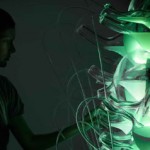
Images from Philips – more at Microbial Home


Philips unveils an elegant ‘Microbial Home’ concept | SmartPlanet

“Although these appliances won’t be manufactured any time soon, lifelike models of the concepts are currently on view at the Piet Hein Eek gallery during Dutch Design Week (which opened on October 22 and runs through October 30) in Eindhoven, the Netherlands. While the thought of cooking dinner with gas harvested from bathroom waste might not seem appetizing, the elegant concepts of Philips’ Microbial Home appliance system may seduce some skeptics via the power of their eye-catching design.”

[via @erigentry]

Read this article…

The Guts of Dietary Habits

“There is a multimillion-dollar industry based on the concept that introducing beneficial bacteria into the human intestines will improve our health. The trillions of symbionts in the large intestine profoundly affect our metabolism and immunity. Accordingly, abnormal bacterial communities have been identified in several human diseases such as inflammatory bowel diseases (1–3), colon cancer (4, 5), irritable bowel syndrome (6), and nonalcoholic fatty liver disease (7). The composition of microbial communities is generally stable within each individual. Past studies of the gut microbiota emphasized the huge impact of nutrition (8), which is likely to outweigh that of the host genotype (9).”

Nice review, with some references too. But it really rounds up and summarizes the latest. Also points to an article in the same issue that reports on some really interesting findings. Alas, not Open Access.

Read this article…

Host response: Probiotic ingestion alters mood : Nature Reviews Microbiology

“There is growing evidence that the intestinal microbiota interacts with the host central nervous system (CNS) to modify stress responses and anxiety behaviour; this is the so-called gut–brain axis. Bravo et al.Lactobacillus rhamnosus JB-1 can alter the transcript level for receptors of the neurotransmitter GABA (γ-aminobutyric acid) in the CNS in a region-dependent manner.”

Yet one more data point on the bugs-gut story.

[This is not an open access article. Boo. Hiss.]

Read this article…

PLoS ONE: Barcoded Pyrosequencing Reveals That Consumption of Galactooligosaccharides Results in a Highly Specific Bifidogenic Response in Humans

“Prebiotics are selectively fermented ingredients that allow specific changes in the gastrointestinal microbiota that confer health benefits to the host. However, the effects of prebiotics on the human gut microbiota are incomplete as most studies have relied on methods that fail to cover the breadth of the bacterial community. The goal of this research was to use high throughput multiplex community sequencing of 16S rDNA tags to gain a community wide perspective of the impact of prebiotic galactooligosaccharide (GOS) on the fecal microbiota of healthy human subjects.”

I’ve seen a ton of papers on “probiotics”, but I think this is the first I’ve heard of “prebiotics”. There is mounting data about the effect of gut bugs on our own systems, and there is a growing set of data on how our diet affects our gut bugs. A wee Google search shows that there’s been a lot of papers data on specific foods that selectively promote the growth of specific gut bugs.

Hm, this is really interesting. It all seems to be coming together. My suggestion: if you’re a grad student or a post-doc in biology, human gut microbiology and ecology is gonna be a big topic in the near future. It’s gonna change the face of medicine.

Read this article…

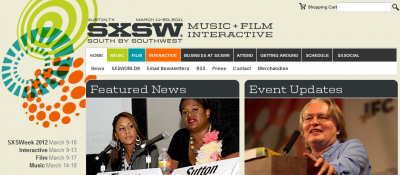
A “shucks” followed by a “yay” and the some: SXSW 2012 panels announced

No, my panel on DIYbio was not chosen.

That’s the “shucks”.

The great news is that Christina Agapakis’ panel “Designing Living Things” did get selected! She’s got a great crowd on her panel: Patrick Boyle, Daisy Ginsberg, Jason Kelly, and Sri Kosuri. A veritable who’s-who in synthetic bio and synthetic aesthetics. It’s a great follow-on to Venter’s talk in 2011. It’s going to be a very interesting panel indeed, and I won’t miss it for anything. And neither should you.

Indeed, Design was one of the ideas I thought would have legs, but I just didn’t have the chops, cred, or connections to have pulled it off, so I am glad that Christina took the leap of faith and set off to organize this panel.

That’s the “yay”.

As for some other interesting science panels:
– Ariel Waldman is running a panel “Get Excited and Make Things with Science” about Science Hack Day. I think this is a better segue from traditional SXSW fodder to science hacking (DIYbio might still be a large leap?).
– Christopher Mims and Michael Coren are running a duo-talk about “OpenScience: Hacking the Scientific Method

Check out the other sessions in this post on SXSW.com.


An eye for success: Jobs tribute from thankful scientists

“The use of computers in science now may bring images of data-crunching parallel processing and Unix-inspired open-source collaborations, but there was a time when the cutting edge — at least for molecular scientists — was being able to draw a benzene ring digitally on screen. Jobs and Apple gave scientists the power to do that, and more besides. Scientists responded with decades of loyalty and, on news of Jobs’s death, with tributes of their own.”

In some fields, such as design and publishing, Macs reign supreme. Science, especially biology, is another area where Macs have been prevalent.

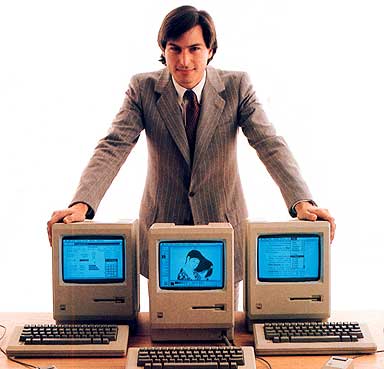
I used my first Mac in college in 1984. It was the original, quickly replaced with a Fat Mac soon after (Boston College was a key Apple school). Soon after graduating, I bought my first Mac, a Mac II. I would use that Mac for almost 10 years to write my PhD thesis, organize my wedding, create some animations (2D and 3D), and write a book and countless short stories.

In the lab
In grad school (’89-’94), we had a zippy Mac SE and another small 9″ Mac (I don’t recall which) in our lab. My boss wrote software to render and animate DNA, for non-linear regression, and run the instruments in the lab (HPLC, pumps, and specs). We also used the computers to design and plan experiments, draw molecules, and keep our lab reagents catalogs (on HyperCard, of course).

In my post-doc lab (’94-99), we had fast, colour machines for writing papers, making slides, keep our reagents catalogs, email (big thing then), surf the new and burgeoning Web (on Mosaic and Netscape 1) for genomic info, ordering, DNA alignments, running instruments, and non-linear regression. The interesting thing is by my post-doc, there were software packages that could do all the things my grad-school advisor has programmed. Quite a change for someone like me who doesn’t program.

No more lab
I left the lab and eventually found my way to a PC-centric corporation – Nokia. I had a few Macs at home, but craved to use it once more at work. After about 5 years, I did get one, and, of course, it transformed how I worked. [Indeed, I used to point out that Nokia kept getting blind-sided by Apple because Nokia’s PCs acted as blinders as to what personal electronics could be like.]

When I left Nokia, I entered a media producer role with two zippy cutting-edge, totally loaded Macs with great software and screen real-estate.

But now, in my current job, I am back to PC-ville, though not so hobbled as in the old days – Windows 7 isn’t so bad (though nothing really works as polished as it does on a Mac – loads of examples), and I still use Firefox and Seesmic as I did on the Mac.

Of course, we still have a few Macs at home and I hope to return to using a Mac for business in the near future.

Lab Macs rule
In any case, I’ve used Macs in all sorts of settings and have suffered the PC world. And Mr Jobs has indeed transformed my life, as he did the lives of all the scientists I worked with. This retrospective of mine was triggered by the article quoted above (link below). It’s a nice commentary of how, even though Apple was trying to be the business computer of choice, it ended up being a strong force in science.

What do you think? How Mac-centric is your lab? Could you imagine doing science without Macs?

Read this article…


Image from MacRumors