New watch, new discoveries

I went on a journey to get an analog field watch. I did get one I am happy with. But I learned a few interesting things along the way.

Fine things are not for me?
I inherited a lovely automatic Tissot Seastar 7 with Visodate from my parents. My mother had bought it for my father in the 70s. About 20 years ago or so, they gave it to me.

The watch is lovely – slim, simple, clean. I was told not to expect it to be waterproof, so was careful that way. And it had a leather strap, anyways, so not fit for swimming or showering.

I wore it all the time. And that was the problem.

Insight: I shouldn’t have nice things.

The first big damage was the crown got ripped off somehow. I was likely handling something bulky that pushed up against the watch. After that I let it sit for a long time as I knew the price of repair was high. So I sadly went without it for a long time.

When I finally got the courage to get the almost $1k repair done, I was happy. And started wearing it again.

But then I broke it again. Seems the rotor has been knocked loose.

Again, I shouldn’t have nice things.

I realized that maybe I should get a watch that is more robust and geared for my daily use.

Bang-around watch
I am by no means a watch fanatic, but I do like reading up on watches, seeing different types. And one type that caught my eye was the A-11 field watch.

The A-11 field watches were made in the thousands during WWII for the Army Air Force. They were simple, had hacking second hand (pauses so that everyone can synchronize to the second), had glow in the dark indicators, were waterproof, and were hand-wound or automatic. Yes, I love automatic watches.

There were a few A-11 recreation models I had my eye on, but turns out most of them over $500, which is beyond what I wanted to pay for a bang-around watch.

Looking on eBay for used ones from WWII, they also were a tad expensive, but ALL of them were severely beat up.

That was when I had my next insight: These were mass produced watches, made in a time when watches were worn ‘until they died or the owner did.’ They were not considered heirlooms or collectables.* They were just daily modest watches that were worn without ceremony and would get beat up, no big deal. Only in the past decades did their value and nostalgia go up.

Roll my own?
For some time I’ve also been considering just getting a watchmaking kit and going thru the assembly process. With a kit, you get case, hands, face, movement, strap and then slowly assemble it over the course of a few hours. I even started reading up on movements, parts, tools and then pricing things in case I wanted to assemble a kit myself.

Nonetheless, this still cost a few hundred dollars for an automatic movement with a set of parts to assemble. And hard to find the small size that A-11 were (watches were smaller back then).

Insight: This whole area of roll-your-own is interesting and there are a lot of videos to learn from, and sites and parts to choose from. Maybe for now I won’t do this, but it’ll always be in the back of my mind. 🙂 And I encourage anyone interested in watches (and with the money) to consider rolling their own.

Hm, quartz
As I was not finding something automatic I started looking for hand-wound watches. But that’s not a thing one can search for easily, so no luck there.

So I figured, I had to go with quartz battery-powered movements. And that’s when I had my last big insight in this quest.

I guess I was a snob, wanting automatic, and non-Chinese. Mostly, that’s what I had, and all nice watches were automatic. And, of course, the WWII A-11 watches were automatic or hand-winding (no battery powered back then, I think).

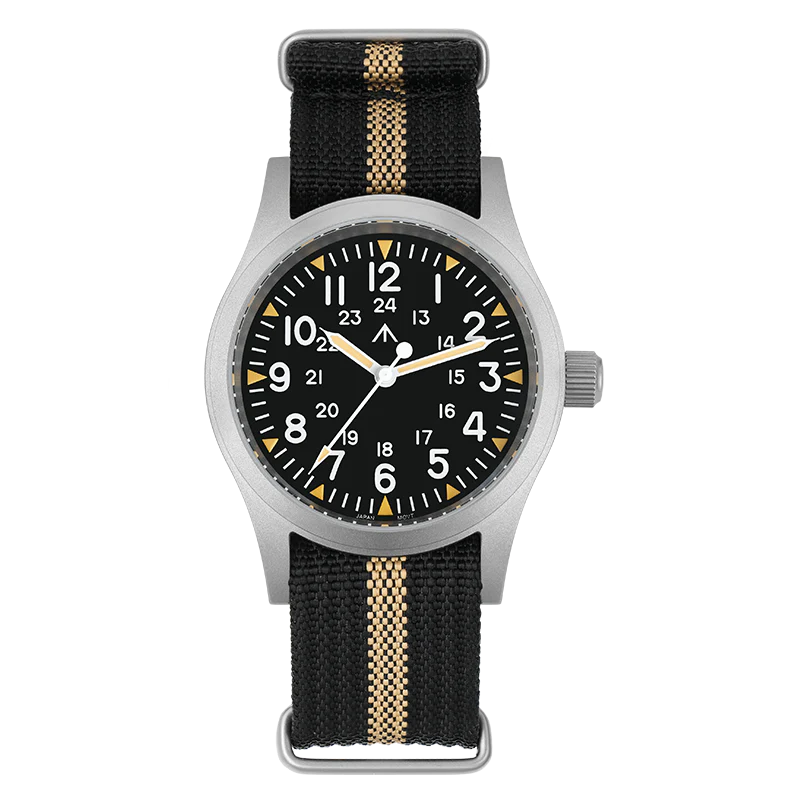
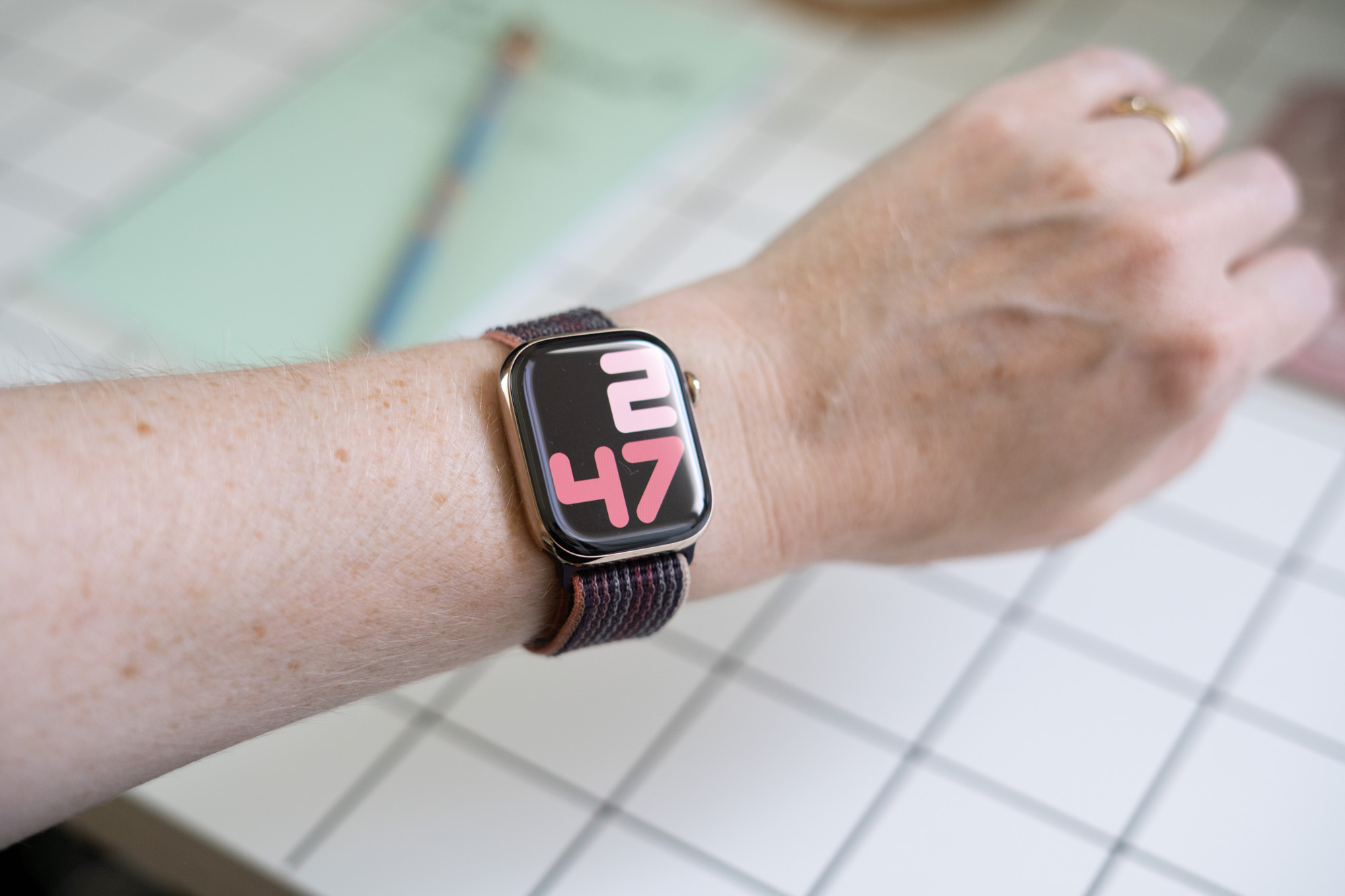
I did some digging and comparison of quartz movement field watches (many!) and came upon one from Militado. The watch was the right price point, right size, right look, right features. Except it was quartz and Chinese.

Yet, the Militado came recommended by a bunch of reviewers. The manufacturer seemed really into military watches. And the movement was actually Japanese (ok, so I’m still a snob). And, even tho I am usually a no-brand kinda guy, I liked their wee logo and placement and chose a version that actually had their logo.

They what, now?
I mentioned a final insight I had. The funny thing it came AFTER the decision to get the watch.

Insight: Field watches in the 70s-80s all went quartz. What’s more, the favorite Navy Seal watch is actually DIGITAL – the G-Shock series.

Huh.

So, in this journey, I was a purist, chasing down a watch that even the owners had a utilitarian view of, but now can command hefty prices. In the meantime, while the style persists, the movements have modernized to quartz. And even current military don’t use analog watches, but digital. And we might pooh-pooh Chinese makers, but in my research folks talked about good quality and even some good movements coming out of China. Call me converted!**

Are you watch-curious as I am? Would you ever build your own? What do you wear for daily use?


*My father was in the Army Airforce, drafted soon after D-Day, training as a bomber navigator. I never saw anything of his from that time, much less a watch. Alas, he’s no longer around for me to ask about what he remembers.

**To be open, I did buy a Chinese watch for a project. It was huge, had many complications, and was, as needed by the project, automatic. My wife says I got it out of a gumball machine it is so flashy (that was on purpose). But the complications stink and the watch can’t keep time. So I guess as with anything, mind how the price compares to the product. If it’s really fancy and cheap, like my gumball machine watch, that’s not a good thing. If it’s modest and reasonably priced, like my Militado, then maybe your’e OK.

Why do ‘How-to’ Biz YouTubers think everyone can do what they do and succeed?

I’ve been on a tear these last few months, building up my Etsy store of expressive shirts for makers (you can read more about it here, and are welcome to visit it here). Part of the journey has been learning about Etsy, Print on Demand, and design trends. So I spend a lot of time learning from folks on YouTube.

One thing that occasionally pops up: some YouTuber shares their secret for success. And, ok, a lot of what they share is good business sense around understanding market, the mechanics of running a store, how to engage with customers.

But they also then show their process for coming up with designs or constructing their brand, and you see THAT is their ‘pulo do gato‘, as my mother says, THAT is their ace up their sleeves.

Maybe everyone can do it, but
These YouTubers try to make things seem simple (“If I can do it, so can you, just follow this recipe.”). But then you see them do their ‘pulo do gato’ and realize THAT’S their differentiator that allows them to succeed. And you need to know if you DON’T have that, then running that sort of biz will be really hard.

For example, my friend sent me a video of some young guy who is making a good amount of money on a business. But watching the video I saw how he worked his frakkin’ ass off with multiple businesses, hustling hard, and he clearly had an eye for business opportunities. You might have a Jamie Oliver recipe, but that doesn’t mean you can cook like Jamie Oliver.

For Print on Demand, so much rests on design skills. And the YouTubers sorta gloss over that, thinking anyone can have design sensibilities.

I think for me, the ace up my sleeve is I do have some design sensibility (or at least, no one has said my designs are all krap). I have some creativity, artistic eye, and skill. I understand the branding consistency that suffuses all I do. And I’m comfortable with all the tools needed to ideate and create designs and build the products and store.

And not only that, the hardest part, as I say in running, is just getting out the door – actually executing. Ideas are a dime a dozen, execution is the differentiator. And I am doing this, and committed to the long haul.

This morning, thinking ‘so what?’ about my shirts, I felt anyone could do what I do. But then I reminded myself of my reasons why I am the one doing this and not everyone else.

What do you think? YouTube is awash with the recipes of success. What’s keeping folks back from all succeeding, too?

And give a guy some love, go check out my shirts and let me know what you think. Haha.


cross-posted on Grey and Slate

Fixing omissions in the Claude UI, using Claude

I use Claude.ai a lot. One feature that I wish Anthropic offered was to search for text _inside_ the chats.*

I often come back and want to use search to review previous chats, continue a thread, or find when I had a certain discussion.

But I can’t.**

What’s a boy to do?
I realized that I could hack this, with some assistance from Claude.

Claude allows users to download all their data. So I figured: download the data and make it all searchable by Spotlight (I’m on MacOS).

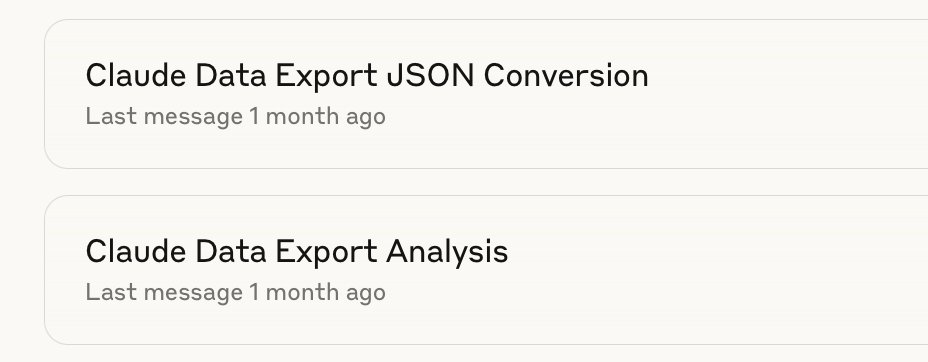
So I downloaded the data, which was all in JSON. I then threw it at Claude to analyze the structure and make a Python script to convert that JSON into individual, human- and MacOS-readable RTF files.***

The script was ridiculously fast, blowing thru the 200 or so convos I had, practically instantaneously, creating, based on my requirements, RTF files with dates in the chat names and messages (yeah, Claude doesn’t show dates in its UI), and human-readable formatting of the RTF to distinguish me and Claude in the text by color.

Good enough for gov’t work
Now I have all my convos up to certain date, searchable in MacOS. Very handy. And all the messages have timestamps, so I know _when_ I wrote something. And I kept the original URL of the convo, so I can go back as needed to the original chat thread to review or continue it or even access any artifacts or documents (tho I see Claude has recently added an artifact section – good move).

There are some tweaks still I’d make to the output (there’s some duplication of messages in each convo), but I’m in no rush. This system works, and searching the repository has been extremely helpful.

Next time I want an updated repository of my convos, I just need to repeat the steps. The JSON file is small – about 11MB for the 200 or so convos I had. And the conversion script is practically instantaneous.

Claude, as always, was a great help in making this happen. While I could have done this all by myself, Claude is definitely a force multiplier for all my programming needs.


*I swear Claude had search in chats at some point. Might it have been the Pro version and not the free version, which I currently have?

**ChatGPT does search in chat messages.

***I admit, I didn’t do any deep research to see if I could have used the Claude API to do this. But I do not think I can. Feel free to correct me.

Another data point on the eternal quest to not use smartphones (BONUS: data points from 2008, 2013, and 2017)

Back in 2008, I was the Editor-in-Chief for Nokia Conversations, the main Nokia blog. Like a good tech blog back then, in addition to industry news, product reviews, event reporting, we also came up with different mobile-related challenges.

Relevant to this post, we were looking at the next year bringing in a billion new mobile users, mostly in emerging markets in Africa, South Asia, and South East Asia. Nokia had released the 1100-series of entry-level text-voice-only phones, such as the Nokia 1209. They were about €50 or less, built robustly, and meant to sell in the 100Ms, as indeed some in the series did.

Dumbphones rule?
I got my first Nokia smartphone at the end of 2001. As I was on the Series 60 (the OS in the smartphones) marketing team, I used a long stream of the latest smartphones, even thru the next two roles I had at Nokia.

But the whole thing with emerging markets always got me excited. We’d speak about SMS services for Kerala fisherman to sell their fish before hitting the short, of Kenyan services to find drug counterfeits, and of emerging mobile payment systems bringing micro-loans and remittances to millions for the first time.

Club 1100, anyone?
Therefore, I wondered what it was to live in that text-voice-only world. After years with a smartphone, I’d forgotten what it was like.

As a sort of challenge to myself, I decided to see if I could go 30 days using one of these entry-level phones. I picked up a 1209, put my smartphone away, hooked into some SMS services, and had an interesting time going smartphoneless.

Same but different?
Unlike in 2008, now that we are in a pervasive smartphone world, the drive to ditch is not driven by nostalgia or empathy, but by a desire to take more control over the lean-forward, two-handed, two-eyes, full-attention devices that smartphones have become.

As I say in a post from 2007:

…there is a distinction between Mobile Computing vs a Mobile Lifestyle.

Mobile Computing is two-hands, two-eyes, lean forward, flat surface, stationary, broad-band, big screen, big keyboard, mouse, multi-window, multi-button.

The Mobile Lifestyle is one-hand, interruptive, back-pocket, walking, in and out of attention, focused (not necessarily simple).

Alison Johnson, from The Verge, is the latest in the spirit of the Club 1100. She tried to use just her Apple Watch.

I ditched my smartphone for a cellular smart watch — here’s how it went | The Verge

As I discovered with the Club 1100 Challenge, even back then there were expectations of fuller connectivity and applications. Fast forward to now, and our world is built even more around the expectation that everyone has a smartphone.

Also, so much of our info is digital – maps, contacts, messages. When I went Club 1100, I printed out maps and contacts (my phone wasn’t connected to migrate contacts). And I had some folks get upset when I wasn’t able to engage, as I used to, with more advanced messaging and such. [Tho I am sure the ‘basic’ phones of today have the key apps needed, such as Google Maps and WhatsApp]

Almost, but no cigar
I realize that Allison was just exploring the idea. She by no means goes cold turkey as I did. She did carry around connected devices and had a smartphone turned off in her bag.

But she was able to learn quite a bit of what being without a smartphone entails. So, kudos there.

Interestingly, mining my old posts, I was reminded that, from using smartwatches also back in the day, I had explored smartwatches as new and potentially innovative surfaces (2013). I was reminded, as well, that I also had posited smartwatches as a way to liberate us from our smartphones (2017), at least once haha.

But as I always say, the current smartwatches are not designed to be independent, but a side-screen, at best. This is partly due to a desire to use the watch as a hook to keep folks on their main device, the smartphone; but I also feel this is partly due to some myopia of smartphone-centric designers not thinking outside the box phone.

How now, you?
Allison only tried 7 days. I can see that being the equivalent of me trying 30 days back in 2008, considering how essential smartphones have become. Like her, I also realized how much planning it takes to go back to a samrphoneless existence. And, like her, I was much more aware of how much, even back then, smartphones have insinuated themselves into our day-to-day (hm, maybe we need to insert ‘smartphones’ into our Maslow hierarchy? where would it fit, tho, haha?).

There are folks making basic phones, locking apps, and the like. But I agree with Allison that we need to make these changes positive, not punishing.

And when I hear of these gimmicks to get folks off smartphones, I ask myself if they are trying to remove something, or seeking to teach folks a positive new (or old) way of navigating the world.

What do you think? Do we need to amputate, or redirect our behavior? Are smartphones the problem or are we?


Image from Allison’s article. Go read it.

Getting into a groove with my Etsy store of marker-inspired t-shirt designs

Back at the start of May, I kicked off the first line of products for my haberdashery. As I mentioned before, this idea was brewing in my head for some time until I honed in on expressive t-shirts for makers and hardware hackers.

I am now 3 months in and have been learning a lot about what it takes to setup and run an Etsy store. But also, I have been in a deep creative drive – every time I think I’ve run out of ideas, many more bubble up.

While for the past many years, I have been accustomed to making tangible electronics, now this has been a consuming project to make wearable art. Haha.

Design decisions
When I started the shirts, I was fixed on twisting famous quotes into a maker version – such as ‘I make, therefore I am – Descartes’ or ‘Ask not what your makerspace can do for you… – Kennedy’. Some were text only, tho, where I could, I added some related graphic.

Then I started making some bigger graphics to use, and in some cases, decided the graphics on their own could be cool. That’s when I started thinking of other things I could do, especially hand-drawn.

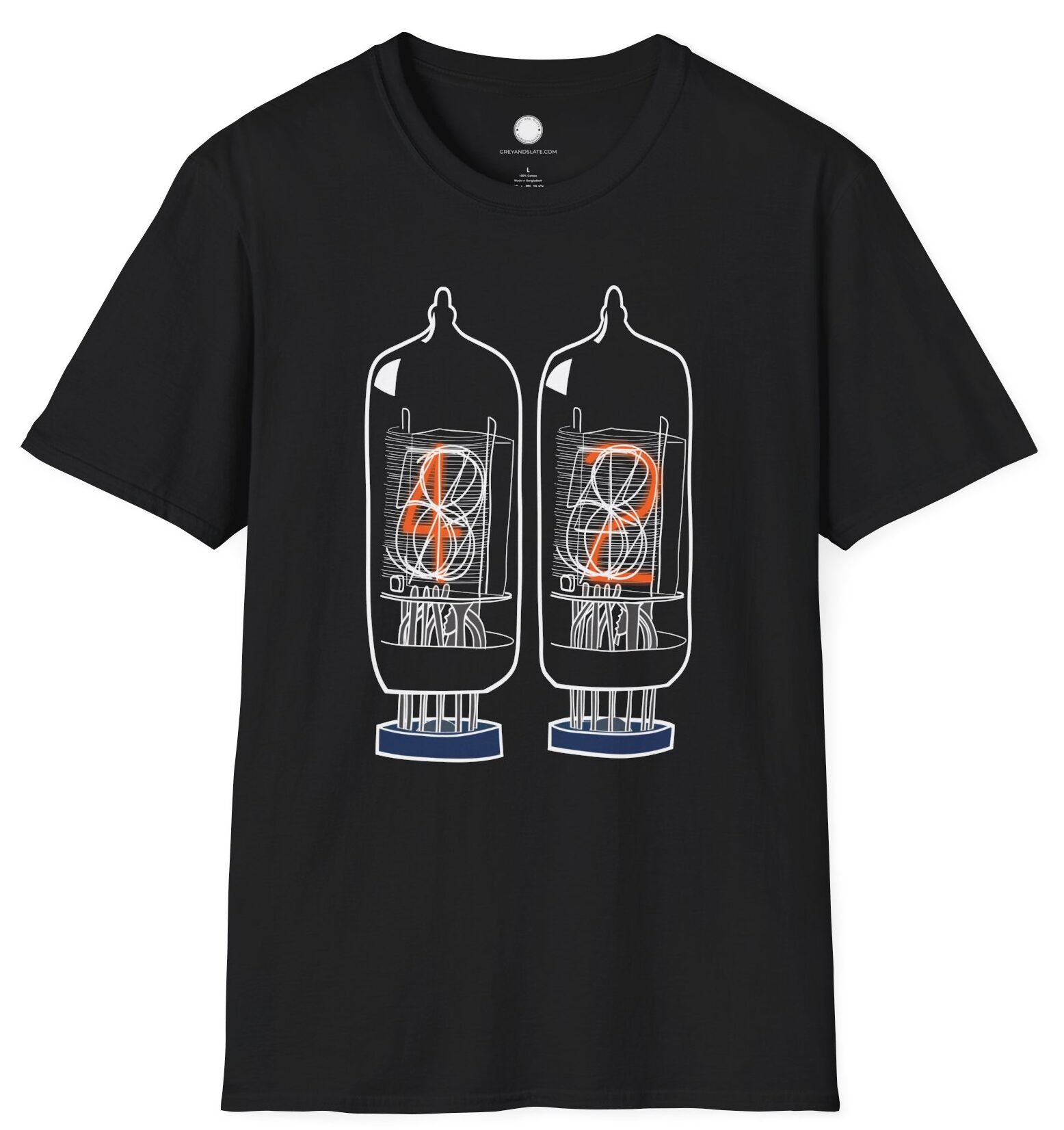
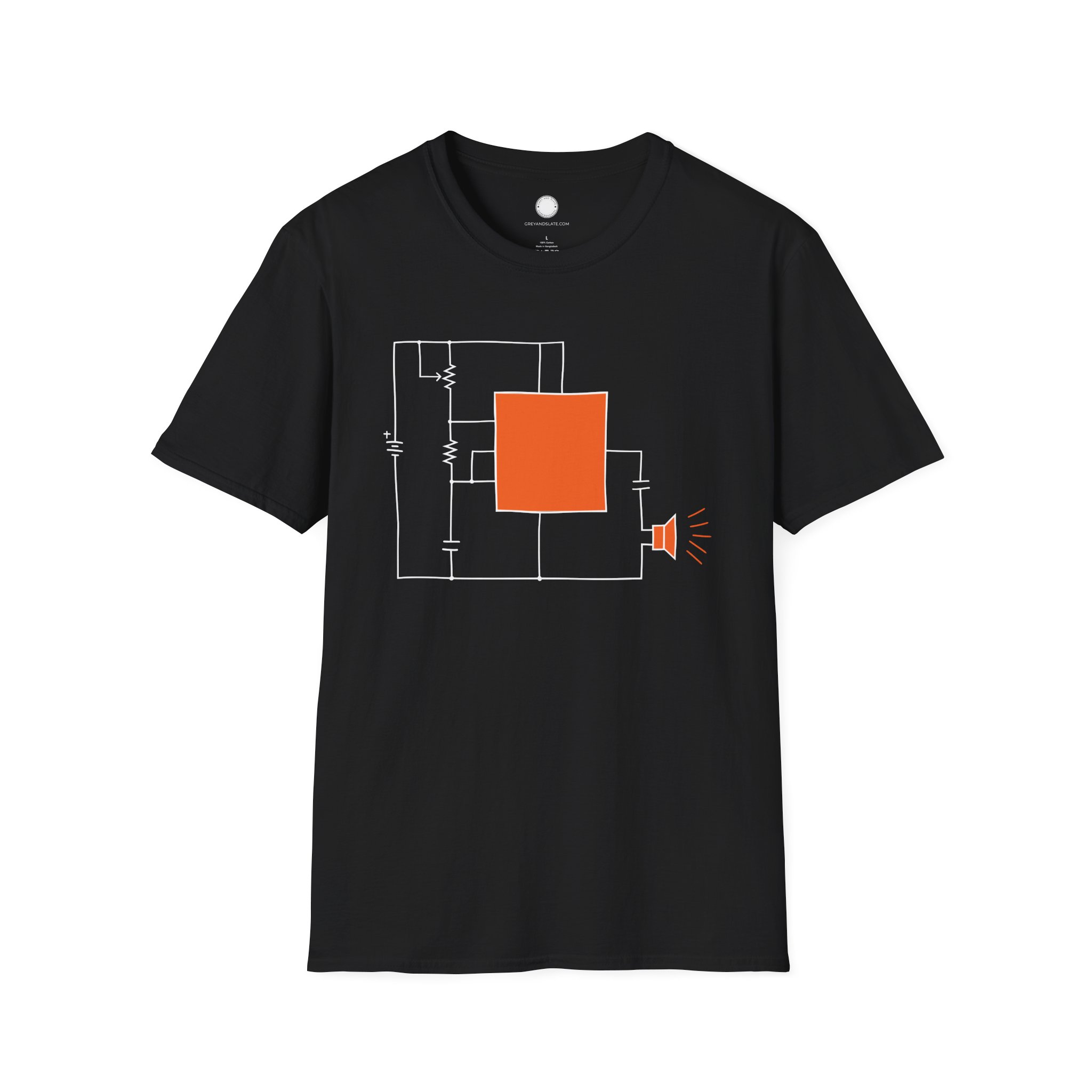
I’ve been having a blast doing hand drawings of famous circuits, chips, components, and dev boards. I think this will keep me busy for some time.

I made a video about this, at the end, below.

The next three months
The strategy for Etsy success is to regularly list (I’ve been listing daily for the past two months) to get to that critical mass when folks start regularly buying. I’m almost at the number of listings folks say is needed to reach that critical mass. Tho if things don’t sell well after the next milestone of listings, then I’ll need to reconsider the value and fit of my designs.

There are positive signals, tho. I am getting regular views and some shirts have been favorited (I just hope it’s not my mother checking in daily, haha). But I can’t say I’m ready to claim any success yet.

My goal for the next month is to get more feedback – is this something folks want, is the style anything folks want to wear, are the designs even good enough for folks? But I gotta get out there: There is a big maker event next month, there’s at least one meet-up next week, and I might visit the local makerspace to do some work. That might give me access to good feedback.

Everything points towards me trusting the process I have: being patient, being consistent with adding listings to the store, and getting to the critical mass point I am soon crossing.

Let’s see.

What about you: What do you think of these designs? Anything you’d wear? Feedback, welcome.


cross-posted on Grey and Slate

Is AI homogenizing our thoughts. Or are we just being idiotically lazy?

I’ve been meaning to post on this since the article came out a month ago (see link below). Back then, this article did trigger a bunch of discussion. But I’m not sure folks really nailed what the studies actually suggest.

Basically, there was a string of studies that observed the effort and output while using a genAI tool. And there were two key findings that were not surprising to me.

Recent studies suggest that tools such as ChatGPT make our brains less active and our writing less original. Source: A.I. Is Homogenizing Our Thoughts

Cognitive offloading
Researchers measured brain activity in those who were using genAI to complete writing task. They found less brain activity relative to those who were not using genAI.

This makes sense, the genAI tool takes over some of the cognitive effort needed to complete a task. This isn’t much different from a car taking away some of the effort to get from one point to another.

Indeed, human progress is chock-full of all the ways we’ve offloaded effort.* And offloading such effort, we’ve been able to do more, be more productive.

Homogenization
One other finding from these studies is that the output of these task ended up being similar, dare I say, bland. Again, not surprising. While we might think different people are driving the tasks, in reality, they are offloading the effort to the same ‘entity.’ If we all use Claude.ai, then the output might be similar because, in reality, the output is coming from the same place: Claude.ai.

Added to that, these big genAI systems, when left their own devices, seem to go towards averages, a consequence of them hovering up as much as possible and making sense of it. That process tends to teach them what’s common rather than what’s special.

Looking in the wrong place
When the article came out, most folks did the aggressive pointing, saying, ‘oh, no, our brains will be mush’ and ‘oh, no, all writing will converge towards a boring average grey goo’ and ‘look at all the pretentiousness of all those em-dashes and lofty, awkward words.’

Yet, these are not the real things these studies reveal.

What these studies reveal is: we cannot surrender all cognitive effort. As I keep saying, you cannot use genAI on autopilot.

My own experience with genAI tools is that the less effort one puts in, the worse the output is. There’s only so far one should be willing to cognitively offload.

Indeed, if you offload it all (go on autopilot), then you do get that boring, homogenous, identi-krap. What do you expect?

Pilot in the cockpit
In summary, I am not surprised that when we use genAI on autopilot, our cognitive functions are quiescent and we spit out bland and similar output.

With genAI, you must be in the pilot seat, you must use your own brain.

As I learned from some smart folks recently: We must still be the ones making the decisions and putting in the effort. That’s how we’ll separate the slop from the good stuff.


*🤔 Geez, in what ways have we offloaded cognitive effort? Ask the Homeric bards in Ancient Greece what they think of books. Socrates, for one, was not too enthused.

Project: Spotify “like” Shortcut

I built a silent, tap-based Apple Shortcut that lets me like the currently playing song on Spotify.

Y’see, often my phone is in my pocket when I listen to music. And when I want to like a song, I don’t want to haul it out, open the song, like it, and then put it all back in the pocket.

Yes, Siri itself can do this. But for some reason, it doesn’t realize a song is playing and so it babbles on to tell me ‘it liked the song on Spotify’, rudely barging in during a song I obviously like.

Danger of over-engineering
Being a maker, I started thinking of using some ESP32 or Wifi dev board to make an IoT type button. I then realized that Bluetooth might be better and that brought up the complication that I’d likely need some app on my phone to connect to the board and relay the info to Spotify.

Then I remembered val.town from a presentation by the wickedly creative Guy Dupont. Val.town allows one to script code that lives on the web and that can run on triggers or cron jobs.

Vibe living
So today I have a brief moment and started posing the question to Geoffrey (what I call ChatGPT), mentioning wanting to use Apple Shortcuts, which can send GET. But Geoffrey rightly pointed out some authentication issues.

I remembered val.town, mentioning it to Geoffrey, and that’s when things started falling into place.

Geoffrey helped me write a simple script for val.town that when triggered by an HTTP GET would ‘like’ the song that was playing.

After a few bumps and stumbles as I learned how to set things up in val.town (I knew what I was looking for, just not where things were) we were able to set up an Apple Shortcut that would send a GET to val.town that would then tell Spotify thru its API to like the playing song.

Geoffrey was helpful in breaking down the steps to set up the endpoint on Spotify, where to find the authentication credentials, and the code for val.town. We also added a few other features on the Apple Shortcuts side to read the result, and, if there was a successful ‘like’, play a tone and vibrate to signal success, but be silent on failure. [I was a bit concerned, but saw a delay between API call and UI update so needed to make sure the API call went thru.]

And Geoffrey kept surprising. After I mentioned Siri was still saying something after the Shortcut executed, because I was activating the Shortcut via Siri, Geoffrey suggested I trigger the Shortcut via Back Tap, an Accessibility feature I had forgotten about.

With a few clicks, I was able to activate Back Tap to activate the Shortcut that then leads down the path to liking the playing song. No Siri! Just Love. [That’s a line from Geoffrey, BTW.]

No autopilot ncessary
I do this ‘vibe coding‘ a lot. And despite what dreamers might say, you still need to know what your’e doing. I knew enough to ask the question, knew how the syntax worked (or at least could grok it), and didn’t have any issue jumping into Hoppscotch (recommended by Geoffrey) to do some REST play.

I don’t think I could have done this on my own. I am not sure there are enough examples for me to learn from, other than the API docs from Spotify. Geoffrey, under my direction, was able to do something that I could envision, see the steps, but not code. Yes, complementary, as I still needed to know what was going on.

Onwards and upwards
I only spent a few hours on this and ended up with something I’ve been ruminating on for a long time. I was able to ask for a simpler way, with well-remembered tips, and together Geoffrey and I built something very useful to me.

The funny thing is that Geoffrey then started wondering what else we could do, or what next. He’s always an eager beaver and trying to suggest the next step. But I told him we are good for now.

And really, Siri needs to be more polite.


Image: Co-created with Geoffrey.

I did a thing: Expressive t-shirts for makers and hackers

I’m the great-grandson of a haberdasher, as I keep telling my wife. And my mother is an obsessive maker – she used to have her own children’s clothing line and has quilted, crocheted, knitted, and sewed her way thru the past many decades (and still at it daily at 91!).

Only in the past few years, tho, have I started paying attention to what folks wear and had a hankering to design some clothing.

Start small
I have a plan, but wanted to start small. So I brainstormed at bit (thank you. Claude) and came up with a focus on famous quotes twisted for makers. And the ability to use Print on Demand (I use Printify) and sell thru Etsy lets me experiment with design, delivery, and various product types.

I’m starting with shirts. While the t-shirt market is saturated to no end, I don’t see many maker-focused t-shirts. I could be wrong, but certainly my niche is special.

Here’s the link to the store on Etsy: https://greyandlslate.com.

Again, starting small, so right now the website goes just to the Etsy store. I already have four designs up, and many more ready designs in line. But I have a huge backlog of quotes, design ideas, and variations, so they’ll keep coming for a long time.

You can follow me @greyandslate on Instagram, were I will be announcing new designs.

Of course, I’ll need to see what works, what resonates, and if there’s any any any interest. Haha. Then I can expand to other products with the same theme.

Build notes
The past few months have been me going thru the design process – from idea to sketches to layouts to listing.

My wife uses an iPad Pro for work, so I borrowed it for some designing. The Apple Pencil on an iPad Pro is lovely. I use Adobe Fresco for the pencil styles and ability to do layers and SVG.

I use InkScape on my ancient MacBook. And have used a bunch of cool fonts from Google Fonts (what a great resource).

Printify makes it easy to layout my design on a shirt. And I am currently using just what they have for mockups.

Interestingly, the whole listing process has so many steps and things to pay attention to. Rather than wait for all my designs to be up to announce this, I figured I’d start already now and, when I can, add the other designs.

GenAI claimer
You might be asking: “Are you using genAI?”.

[added 02jul25] I had a few designs with genAI elements and asked for some feedback from makers I respect. The response was strongly negative (“With love, no”), so I removed all genAI containing graphical elements. I did not feel that my designs were slop, tho just hinting at it made everyone feel uncomfortable. And not even getting into the ethics of it all.

So now ALL my designs are, to riff off of Tank in The Matrix, “one hundred percent pure old fashion homegrown designs, born free right here in the real world.”

So, “No, my designs do not have genAI.”

Next steps
I’m excited to start on this journey. The idea has been burning in my head for a long time and good to see things progressing.

Now to promote the store, keep adding designs, and hopefully make at least one sale. Haha.

I look forward, tho, to the feedback and guidance of customers and enthusiasts as I take this further. So feel free to comment here, below, or on my Etsy store, or hit me up on Instagram.


cross-posted on Grey and Slate

The ineffable Maria Popova: the Universe in verse

I find myself struggling to articulate the essence of Maria Popova’s writing – how it weaves together the delicate and the scientific, the thoughtful and the wondrous, in an intricate tapestry of meaning.

I first encountered her through Brain Pickings (now The Marginalian), subscribing on and off over the years, and through her book discussions with Ira Flatow on Science Friday. But lately, her work has taken on deeper significance. Her ability to bridge poetry and science, to find wonder in both, touches me in a way few writers can, resonating with my interest in finding ways to connect to the sublime through tangible experiences.

From nature, words
Her writing style, dense with scientific insight and literary connections, evokes something almost ineffable* – an emotional response that is hard to articulate. She raises both feelings and thoughts, wielding language with surprising precision (one of my many favorites being her description of the black hole at our galaxy’s center as “the open-mouthed kiss of oblivion”).

As a scientist, I resonate deeply with her scientifically-grounded writing. I recently finished, “The Universe in Verse”, with its 15 stories of scientific history, each paired with carefully chosen poems, such as Plath’s “Mushrooms” (and, oh, the artwork). I read some of the stories and poems aloud to my wife. Though I had to return it to the library, I’m considering getting my own copy for note-taking.

We need science to help us meet reality on its own terms, and we need poetry to help us broaden and deepen the terms on which we meet ourselves and each other. Source: The Universe in Verse Book – The Marginalian

Her writing is consistently immersive. I often find myself branching off to explore her references, diving deeper into the remarkable stories she tells, or delving into the works she’s summarizing or quoting. This happened with “Figuring,” her book exploring interconnected lives of 19th-century women scientists. I kept rereading fascinating passages until I ran out of time and had to return it to the library – another book I’ll need to revisit.

Science and poetry and humanity
All of Popova’s prose is densely layered and interconnected – easy to get lost in, sometimes overwhelming with its nested subclauses, and endlessly quotable. But what permeates every word is her relentless exploration of meaning and wonder. Listening to her in a podcast interview and on Science Friday, she remains pragmatic yet tender, her thoughts and hopes radiating a quiet intensity.

For me, Popova is dangerously good, pulling me into a swirl of thinking and wonder and science – a place I want to be, but must approach mindfully. I was delighted to learn that “Universe in Verse” emerged from regular gatherings of poets celebrating the wonder of the universe through poetry. I look forward to seeing more from this corner of Popova’s remarkable world.

I’ll end with the inevitable: read “The Universe in Verse” and subscribe to The Marginalian for your weekly dose of wonder.


*In “Good Omens” by Pratchett and Gaiman, Aziraphale frequently uses “ineffable” to describe God’s divine plan. It’s his go-to word when things are beyond human comprehension or explanation.

The parallel with Popova is apt – both deal with trying to express the inexpressible, though Popova manages to find words for what often seems beyond words.