Galt’s Gulch? Freeside? The Raft? AKA: Rich people fleeing

Update below (04sep23)

This article got me thinking of Galt’s Gulch in Rand’s Atlas Shrugged, or Freeside in Gibson’s Neuromancer: places the wealthy run off to to escape mainstream society. Indeed, what this article talks about isn’t something that echoes these fictions, this is an actual escapist effort in our own reality.

Reid Hoffman, Marc Andreessen, and Laurene Powell Jobs reportedly all contributed to the venture to build a new city with ‘tens of thousands of new homes’ and ‘orchards with over a million new trees.’

Source: Tech leaders spent $800 million trying to build new city beside San Francisco – The Verge

“Impact of privilege and isolation”
I was trying to remember other similar books that had this or something similar as a plot tool, such as in Sagan’s Contact or Stephenson’s Snow Crash. So I had a conversation with ChatGPT about this and then had it summarize a few for me:

Certainly, the concept of wealthy individuals or groups leaving mainstream society to establish their own secluded enclaves is a recurring theme in literature. Here are a few more examples of such settings from various novels:

“The Diamond Age: Or, A Young Lady’s Illustrated Primer” by Neal Stephenson: In this novel, there are gated communities known as “phyles,” which are separate cultural and societal groups. Each phyle has its own rules, norms, and values. Some of these phyles are quite wealthy and have their own advanced technologies.

“Jennifer Government” by Max Barry: The novel is set in a dystopian future where corporations have replaced governments. There are affluent enclaves where company employees live, separated from the general population. The divide between the wealthy and the rest of society is stark.

“Snow Crash” by Neal Stephenson: While not exactly a refuge for the rich, this novel features the “Raft,” a massive floating city made up of scavenged materials, home to a diverse range of people including refugees and outcasts. It’s an example of an alternate society outside the mainstream.

“The Circle” by Dave Eggers: While not a gated haven, the novel explores a powerful tech company that seeks to create an all-encompassing online community where people live their lives. The company’s influence blurs the lines between private and public spaces.

“Super Sad True Love Story” by Gary Shteyngart: This satirical novel portrays a future where society is deeply divided between the technologically elite and those who are left behind. The wealthy elite live in protected enclaves with advanced technology, further isolating themselves from the rest of the population.

“Parable of the Sower” by Octavia E. Butler: While not centered around wealthy individuals, the novel explores the concept of intentional communities known as “acorn” communities, where people come together to create self-sufficient and sustainable communities in the face of societal collapse.

These novels offer various takes on the idea of exclusive enclaves, intentional communities, or alternative societies created by the wealthy or powerful. While the nature and motivations behind these settings might differ, they all contribute to the exploration of social dynamics and the impact of privilege and isolation.

Truth v fiction
Sometimes you read things in sci-fi and just can’t think it could be real. But then sometimes sci-fi is really just a mirror to help us see what is happening around us in our own reality.


Update 04sep23: And more ‘California Forever’ website touts the city tech billionaires are trying to build
Update 03sep23: Interesting new developments on Boston.com Billionaires’ secretive plan to build a new city is backfiring

Image from Randian OSI

Does the generation of AI have to be so grim?

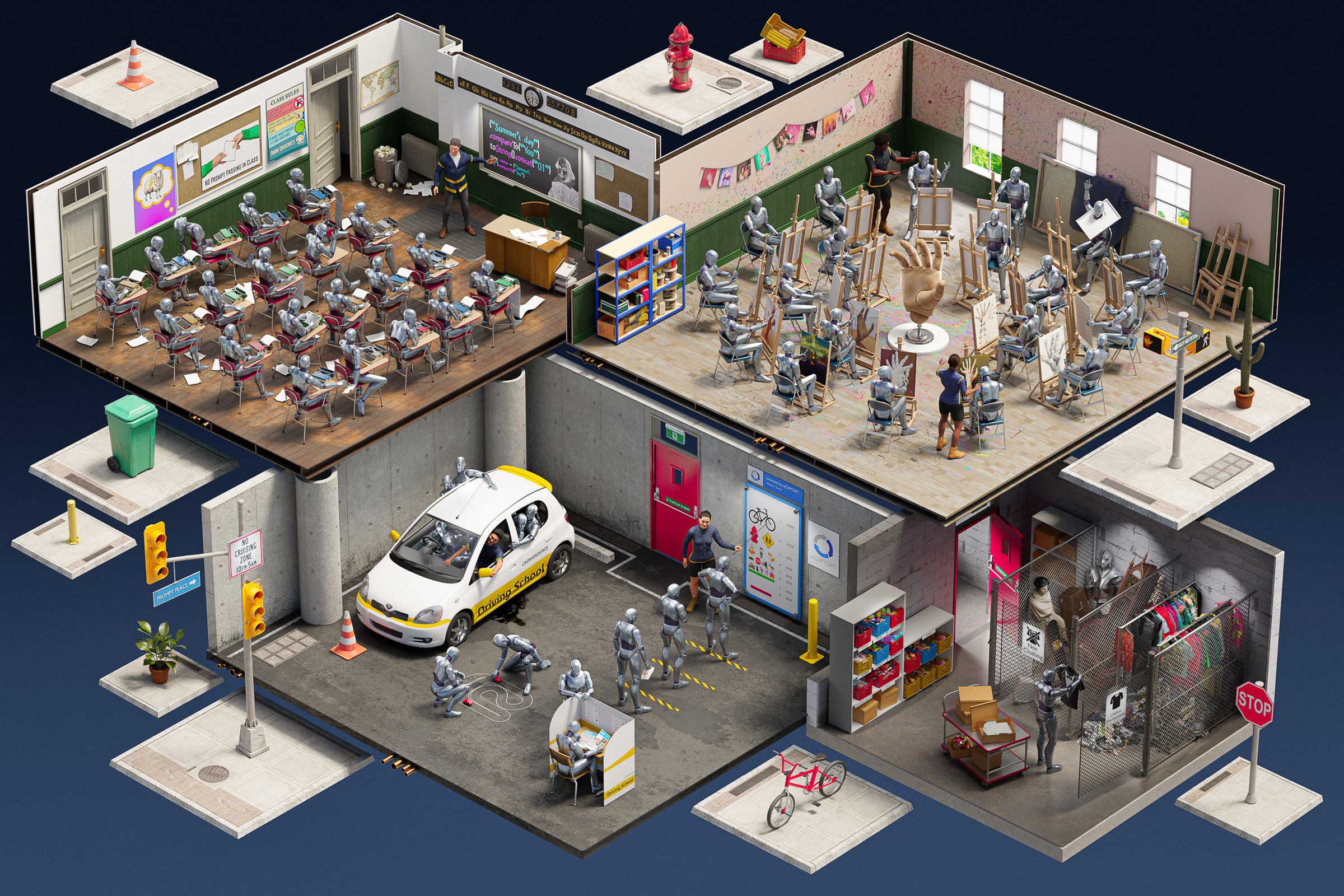
How many humans does it take to make tech seem human? Millions.

Source: Inside the AI Factory: the humans that make tech seem human – The Verge

Back in 2005-2006 I already saw that there was going to be a need for humans to be in the loop, specifically for annotating data to contextualize the quickly growing content and social streams on the web.

I used to say there were three ways to add context to data: just watching what folks do, tagging as you go about your day (Delicious was big back then), and what I called ‘librarian’ duty – actually having folks annotate data to provide context.

Benign benefits?
Fast forward to 2016 and I was working with a company that was using AI to annotate medical notes. I started thinking again about annotation in general and was wondering if there was some way we could employ folks to annotate. What’s more, realizing that, for so much annotation, you really just needed a human, regardless of education level, I had envisioned a benign system where the annotation was educational and beneficial to the annotator.

I kept thinking of places like West Virginia, where there were deep shifts in society as the coal industry fell apart. What if we could not only tap into all these unemployed, who would have more than enough skills to annotate, being human and all, and, through the annotation process, educate them, provide them with skills to help them into their next non-coal job?

Then reality catches up
So it goes without saying that this article in the Verge really struck me hard.

Of course, if the tech-bros could find a way to pay by piece or sweatshop their growth, they would.

And now we have the sad backstory to all our amazing AI of today.

Will the ethics of the generation of the AI contextualizations and annotations become a larger topic for discussion? Will companies use the ethics of their annotation as a marketing differentiator? Will there be a label or rating for ‘ethicallly annotated AI’ (“no humans were harmed in the creation of this AI”)?

All I know is that we’re missing an opportunity to actually make annotation useful to the annotator as well. And I think that’s a fantasy world I’ll never see.

I see so much of my own past in how Google Reader died

Great article looking back at the growth and termination of Google Reader.

Google Reader was supposed to be much more than a tool for nerds. But it never got the chance.

Source: How Google Reader died — and why the web misses it more than ever – The Verge

I was a big Google Reader user and also used it as an example of the morselization of the web, at the time. I also thought there was a need to have some sort of aggregator for all the content and people in our lives.

And, I must say, I also was a victim of being a Cassandra in a large organization that had bigger issues and scale requirements to tackle.

I sometimes forget that even folks who have all the money and all the smarts also fail spectacularly. Good to know I’m not alone.

Social media’s end: a long decline seems so sudden

Maybe we should all embrace the downfall of social networks, and maybe my (and our) need for a global water cooler is just a vestigial feeling we’ll all be rid of in a few years. But even before this era fully ends, before Twitter and Reddit turn into MySpace and Friendfeed and basically disappear from my life, I find myself longing for what they once were. Still are, maybe, just not for long. I miss everybody, and I don’t know if I’ll ever find them again.

from So where are we all supposed to go now? (The Verge)

I was there in the heady days of 2004-2007. We saw that we were all becoming compulsive data capturers (text, video, images), that data was emanating from us like contrails as we went thru life, that the internet was breaking up into morsels, and we’d all want to search for, keep up with, and recombine those streams and morsels.* And we were watching in real time as a billion people took up mobile phones, changing expectations of connection, communication, and access to information.

We talked about social objects, ambient awareness, digital pheromones, the mobile lifestyle (and manifesto, haha), lifestreams, tight-loose-pubilic connections, the mobile aspect of sensors. I even tried to capture all this in one story I wrote called “One Night“.

And the phone, already the best peer to peer social networking tool, would be the doorway to all of that (disclaimer, I was at Nokia at the time).

I even tried to build upon that doorway, reflecting what I thought was the future of connecting people.

Rotten at the foundations
While actively promoting and using social media, as the growing beast was named, I quickly soured on it. Already back in 2008 I had killed my LinkedIn and Facebook for the first time. I became more particular of who and how I used social media. I became more a corporate user than a personal user.

I recall, also, seeing how the promise of the Cloud was actually corporate control in disguise. “Take back the Cloud” was my call to federate social media networks, put it back in the hands of the users. Yes, almost 15 years ago.

Suddenly after a long time
In the past few months, rotten foundations have finally crumbled spectacularly. Now everyone is finally pointing at the emperors for the bare villains they are.

Twitter is the poster child for this implosion. But for years folks have been circling around social media companies – government, commentators, tech publications – realizing that, really, we selected for the wrong things and ended up with the shit we selected for.

There have been some good articles listing out the process of ‘enshittification‘ of social media networks. There’s hope that maybe Mastadon and ActivityPub** – ways to federate social media networks – are the future, the savior. Alas, I think that’s trying to do the same thing a different way – might not be enough to fix what’s broke.

Where from here?
Go read this article, that I’ve quoted above. The article has a good overview of the long overdue collapse of social media and ponders what remains and where things might go.

Echoing a bit the quote I use above, I hope that we don’t try to redo the past 10 years in another form only to fall back into our bad habits (“be careful what you select for”). What I hope is that we understand the situation and potential outcomes and ask ourselves what is it we want (our hopes), what we don’t want (our fears), the tradeoffs we’re willing to make and not make, and what course of action best serves that understanding.

I’m not the one to answer these questions, even tho I do have my own answers.

I just know that we shouldn’t try to rebuild what we had in different clothes, that doing something over and over again and expecting a different result is nuts.

I also know the suddenness of the social media networks collapses were long in the making and the majors were laughing all the way to the bank (just see the date on my links above).

He’s dead, Jim
Technologies never really die, they just end up being de-emphasied. People still use buggies and buggy whips, but not like before. Don’t mention faxes to me. Even Myspace is still around.

And every year we have some darling tech that changes our expectations of what communication, connection, and information should be like.

I look forward to see what comes next, what the complexification of our connections, society, and organizations will look like, and who the next behemoths leading them will be.

What about you?

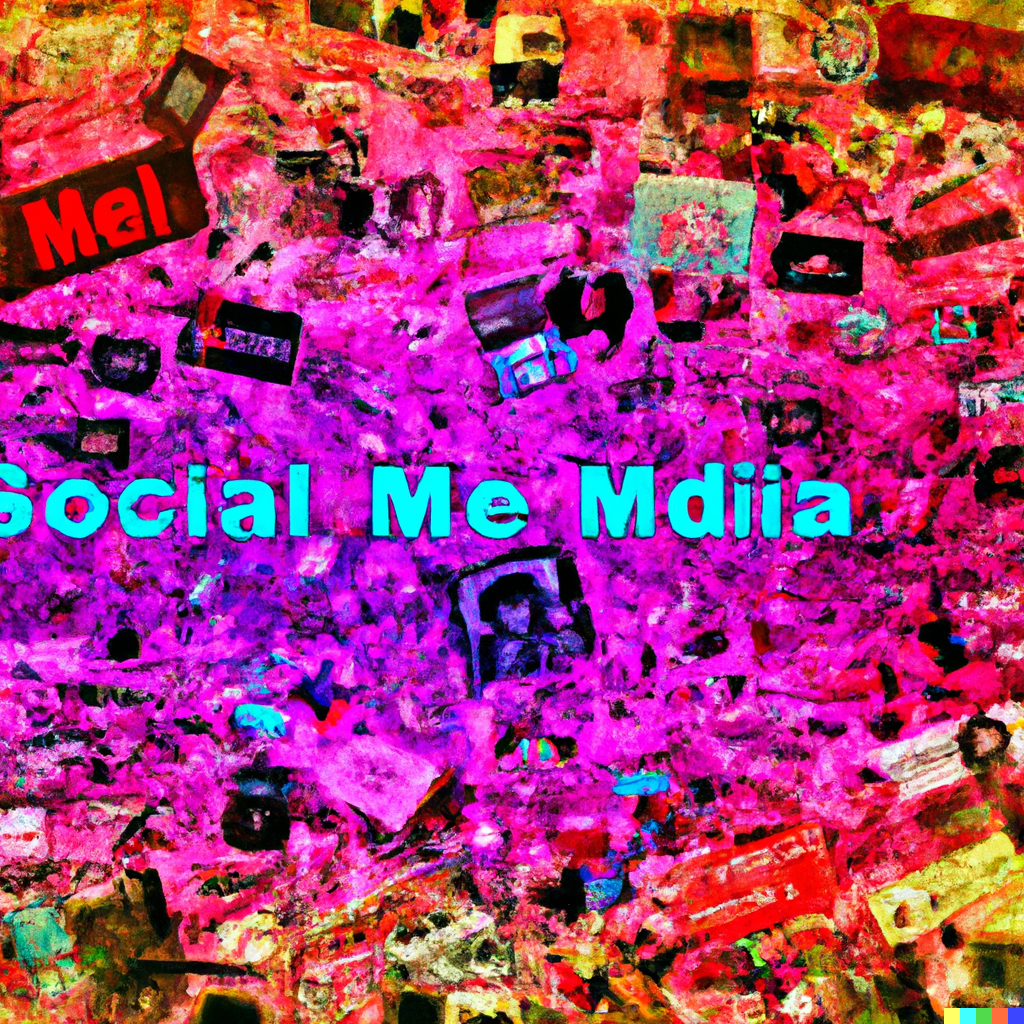
Image courtesy of DALL-E. Prompt “the death of social media as a dense collage”. I chose this one perhaps because I just finished watching Season 4 of Stranger Things and that sure looks like a gate.


*This article on Google Reader also triggered me to make this post.

**This is not the first attempt. As the article rightly points out, folks have been working the last 15 years on distributed social network protocols (heck, just see my comment on lifestream aggregators).

Work in progress: Life from light

I try to only post after I’ve completed a project, but this one has so many pieces (and is not done yet) that I wanted to already post some interesting things that have happened.

Inspiration
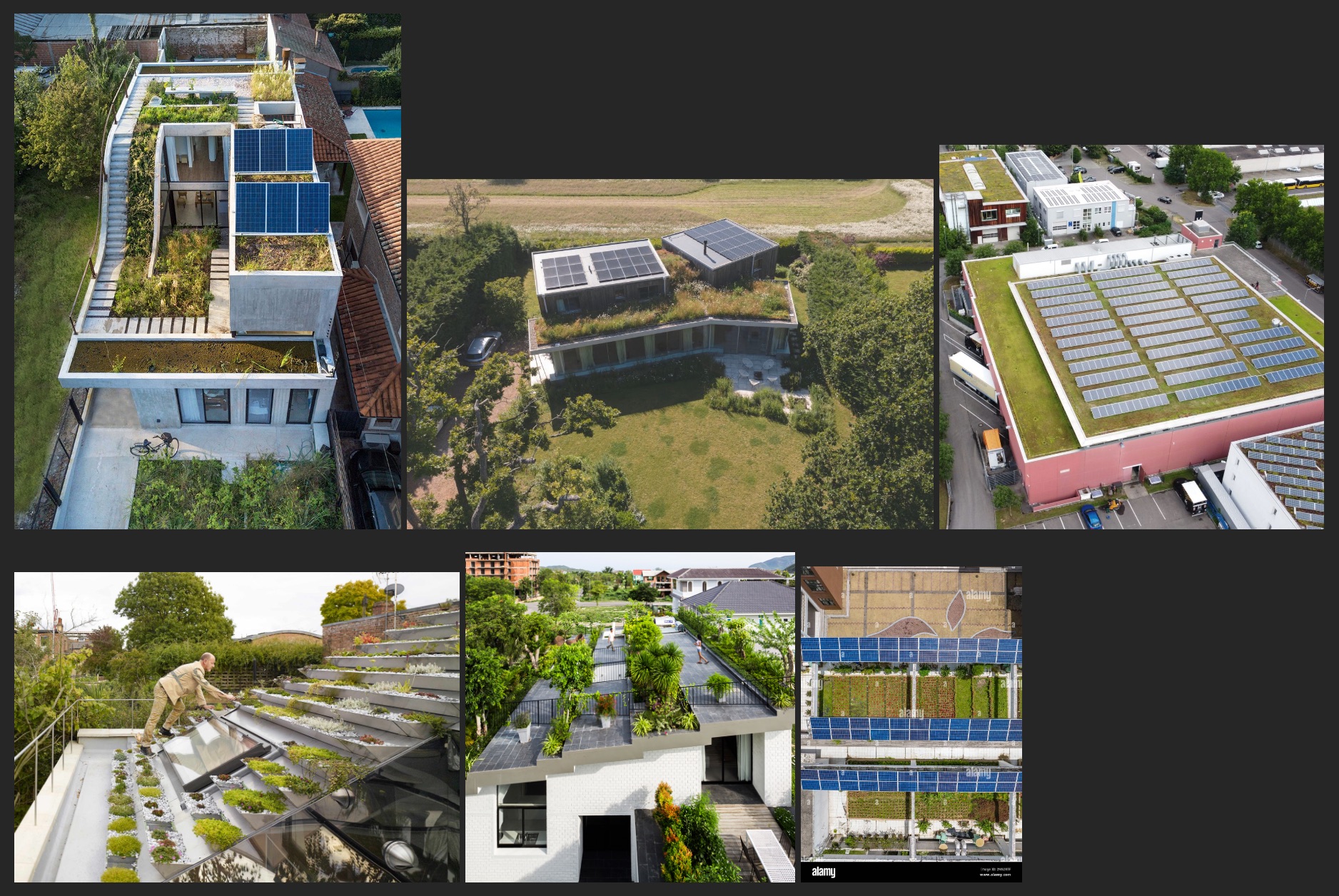
In Becky Chambers’ “A Psalm for the Wild-Built“, the main characters reach a mountain retreat. The imagery of the description of the building’s roof, striped with solar panels and grass, was described as:

glossy blue contrasting with buzzing green, an attractive striped mosaic made of things that drew life from light

Inspired, I set off to make something that mixed solar panels and plants – things that draw life from light.

Grand hack
I started ruminating on mosaics, solar panels, lights. I searched for examples in architecture, arts, flower pots, and even asked DALL-E to help out (see some images, right).

I considered what the project ‘said’. For example, I wanted to do construct it in PLA filament, because PLA filament broke down in the sun. I even dabbled, unsuccessfully, with wood PLA, to make it seem more natural.

Thinking of the hardware, my previous solar panel project had these small panels and supercapacitors to power a power-sipping chip and a single LED. I could use those and wire those up, like before.

I then started to think of larger panels and batteries, to drive more power-hungry NeoPixels, that would be animated with a fully-powered chip. That would require a proper battery, tho not LiPo, as that doesn’t do well in the cold, some charging circuit, maybe a beefier solar panel.

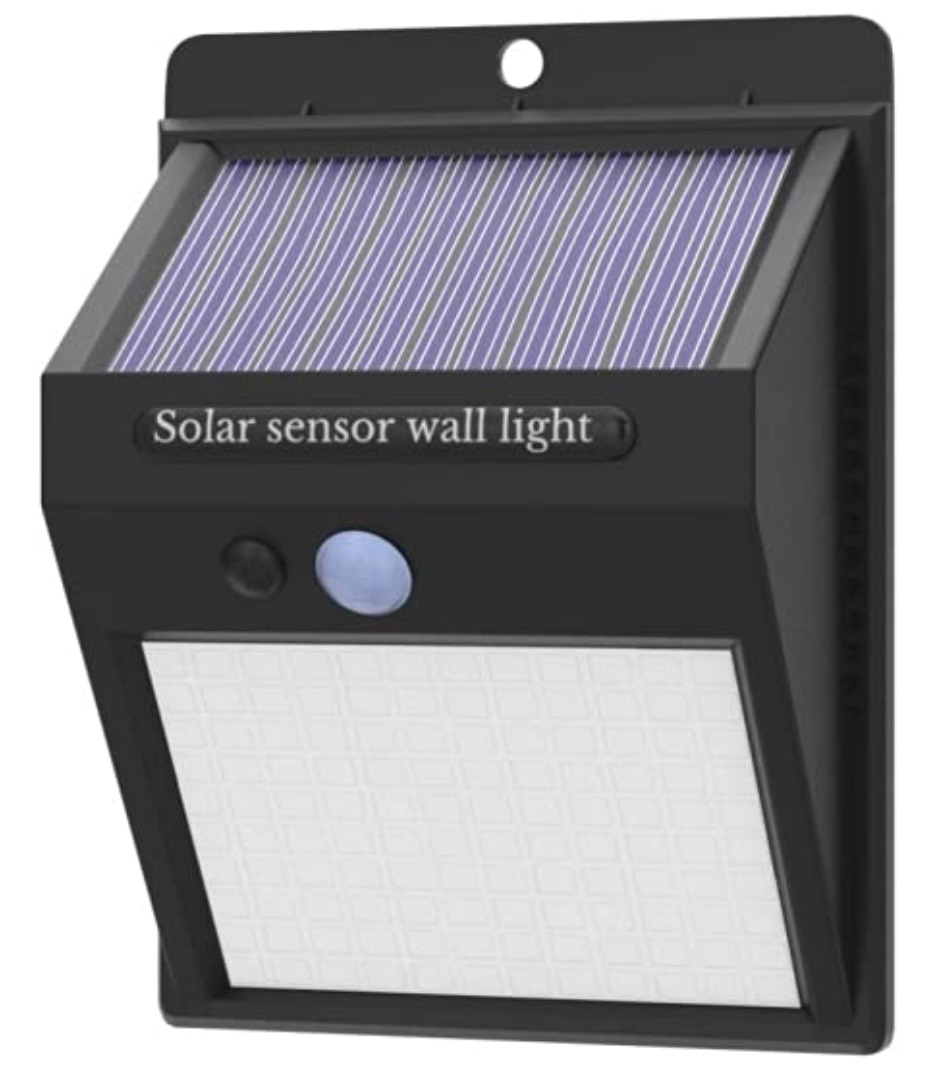
Then I realized I had some solar-powered outdoor lights on my deck and porch. They had come in a pack of six and we had only used five. So, yep, I busted the remaining one open.

Just for parts
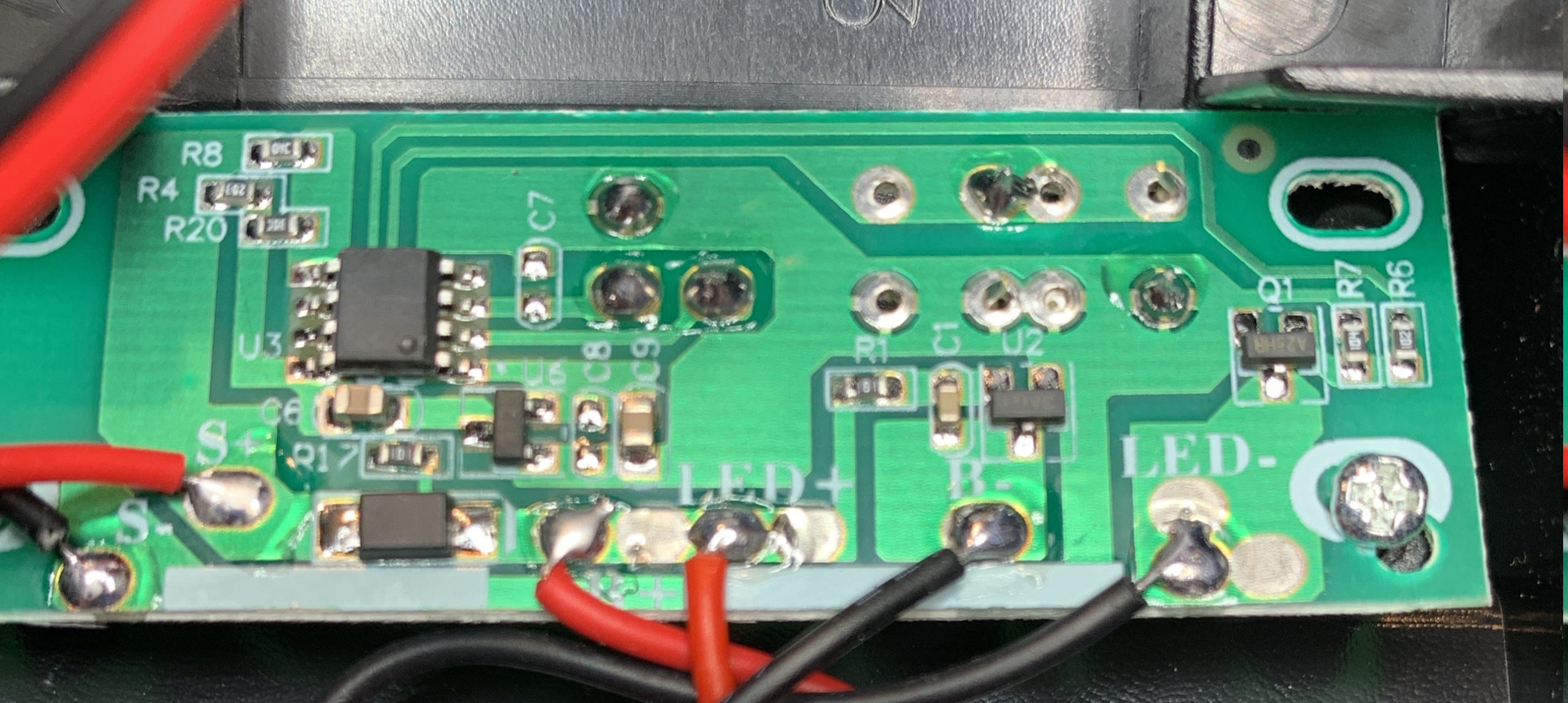
These solar-powered outdoor light have a large solar panel, a panel of LEDs, a motion sensor, a button switch, a large 1800mAh LiIon battery (that I know works thru the winter), and, inside, a board to control, charge, and respond to everything.

All the parts I needed for $5.

I analyzed all the chips and paths on the board, to reverse engineer how it works. The brains of the board is an 8-pin chip. I was able to figure out all the traces, how the chip read the solar panel’s state, turned on LEDs, and responded to the motion sensor and button switch. And I could measure and follow the power paths.

As is usual in this day and age, there was a video that did a tear down of a similar product. That product had more LEDs and a more complicated structure, but the board characteristics and function were very similar to the one I had. And the video was helpful in confirming what I was seeing and understanding the parts.

Layer upon layer of surprises
I was really pleased that I could use the board to power things – all the parts I needed in one place, all ready for me to use.

But the real surprise was when I noticed the VCC and GND pins of the chip (pin 1 and pin 8, respectively) reminded me of one of my favorites: the ATtiny402. Not only were those two principle pins the same, but the footprint was the same. That meant I could remove the existing chip for one my own that I could program and use to take control of the board.

To be fair, the ATtiny402 isn’t a perfect fit for this board. Pin 6 on the board turns on the LED panel. In the ATtiny402, that is the programming pin, best left like that, tho it can be programmed for a signal pin (but not so good). In any case, there might be some bodging needed.

Sidebar surprise
Interestingly, identifying an unknown chip, based on pin mapping, is hard. I just happened to be browsing Hackaday and they were talking about cheap MCUs. One thing led to another and I was checking out the cheap chips on LCSC when I got the idea to 1) filter for SOIC-8 (the chip package on the board); 2) look at the data sheets for the cheapest. Yes, I was looking for a possible chip from the solar light.

Wouldn’t you know, the three four five six cheapest (three different vendors) that came up ALL had VCC on pin 1 and GND on pin 8. And these are ALL 8-pin SOIC150/SOP150 – the same size as on the board..

Cool!

Interestingly, four of the six were OTP – “one-time-programming.” I will guess that the ones used in the solar lights were of the same category of these cheap OTP chips.

Sidebar of the sidebar
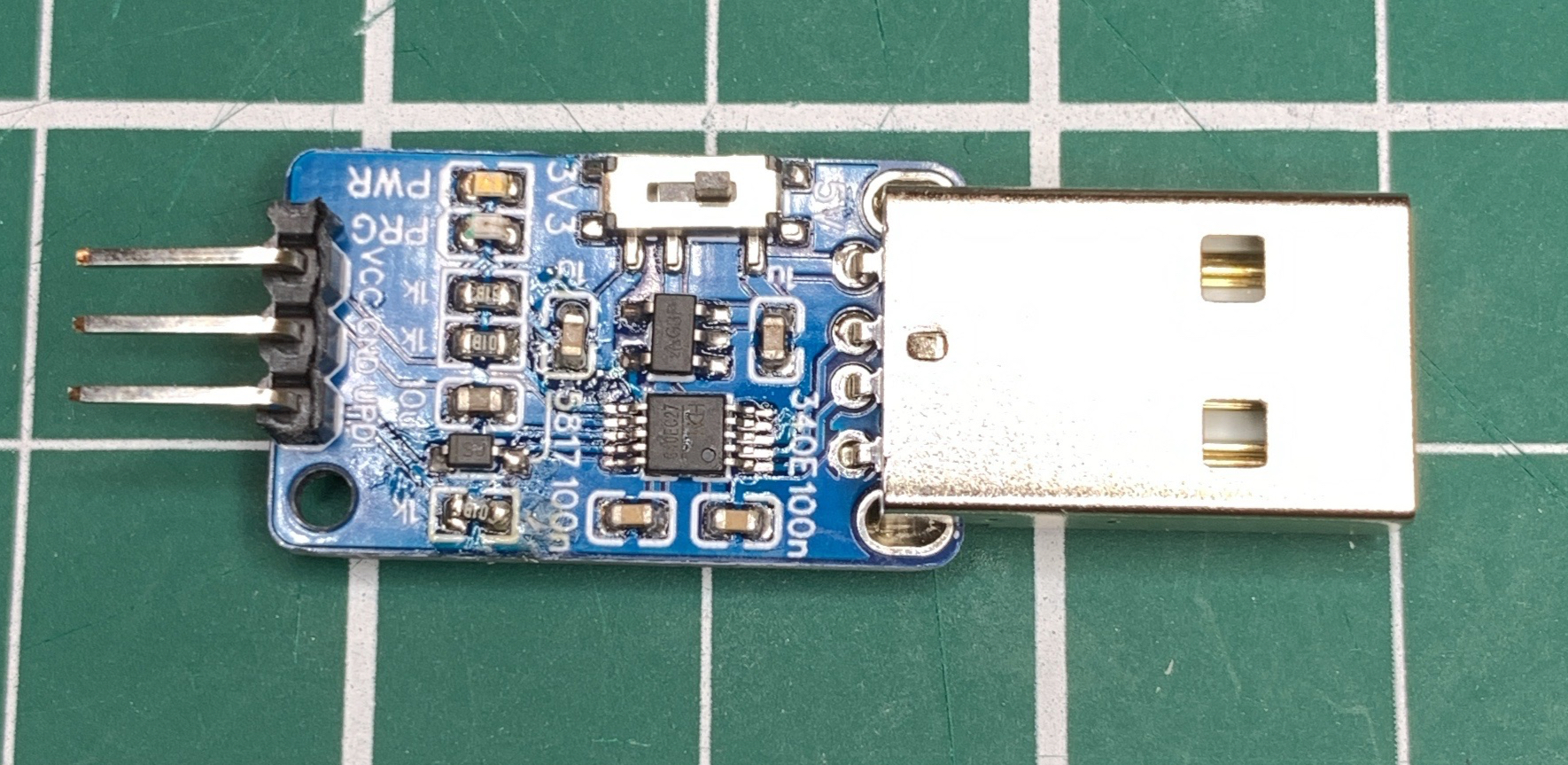
The UPDI programmer I had for the 402 was no longer working, and I had a bunch of bricked 402s I wanted to revive, so I decided to make a HV UPDI programmer. And rather than cobble something together, I thought I’d make a proper programmer board.

I ordered the PCB for this board and got the components, only to find that the components were frakkin’ small and impossible for me to hand-solder with the equipment I had.

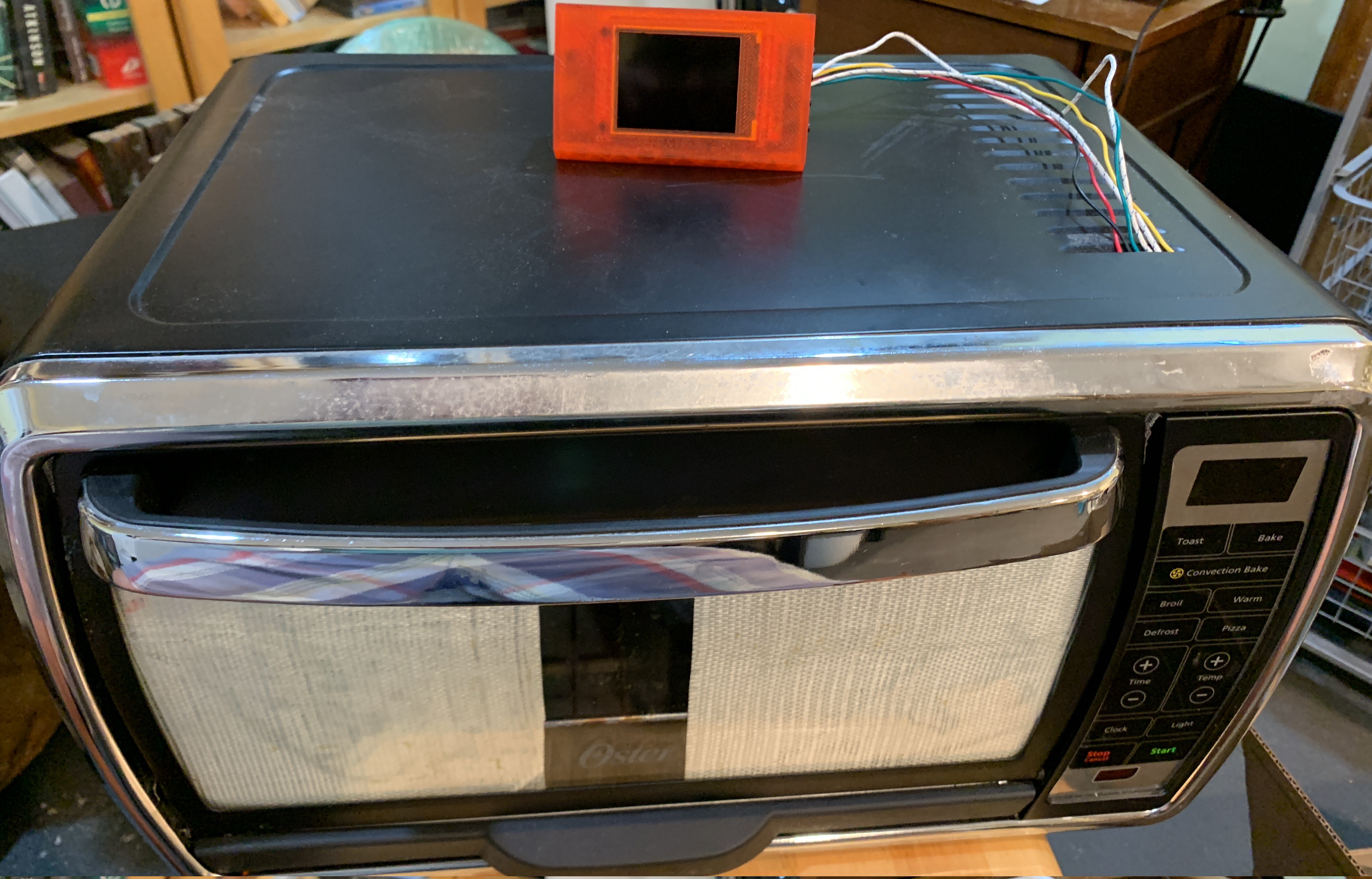
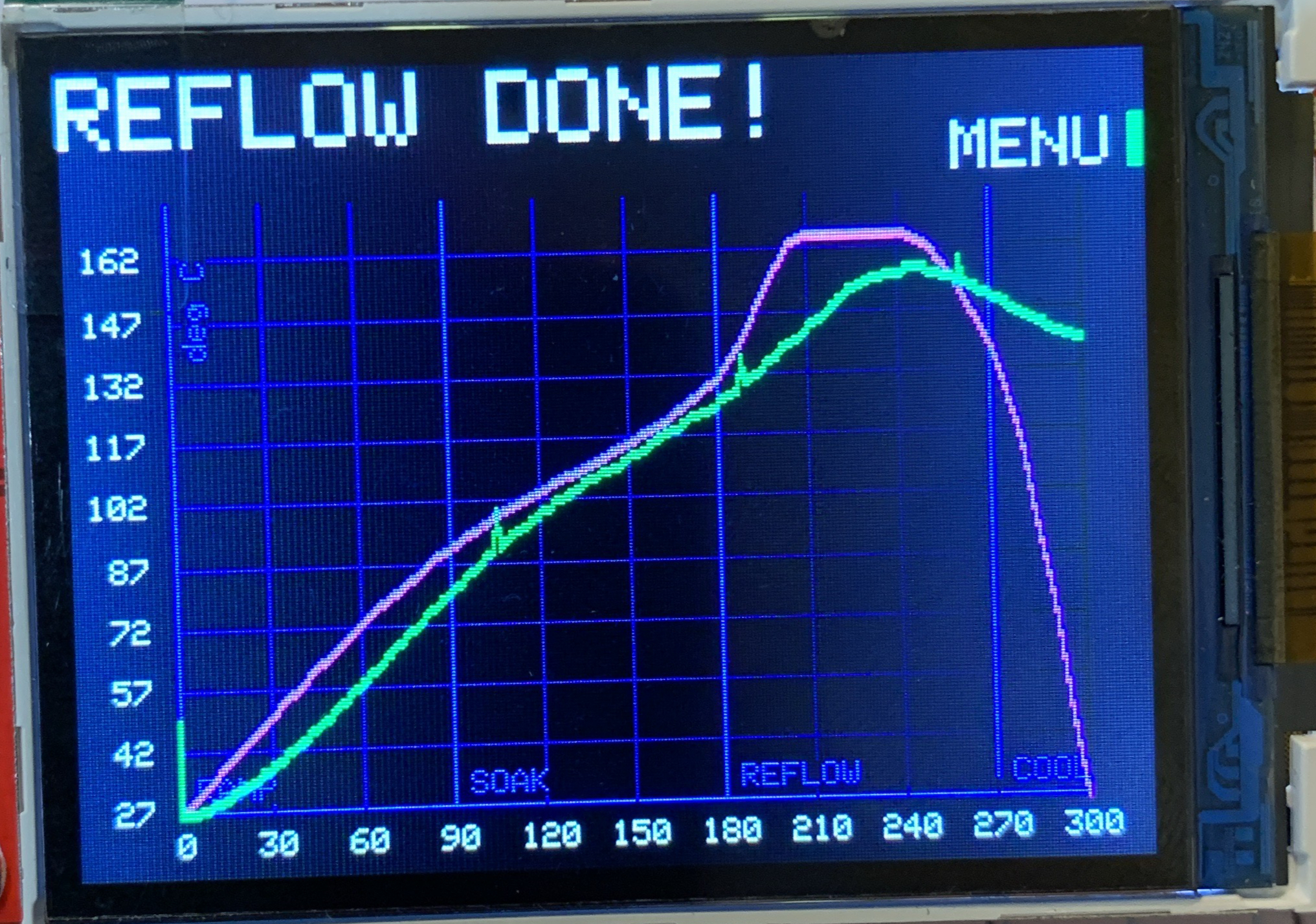
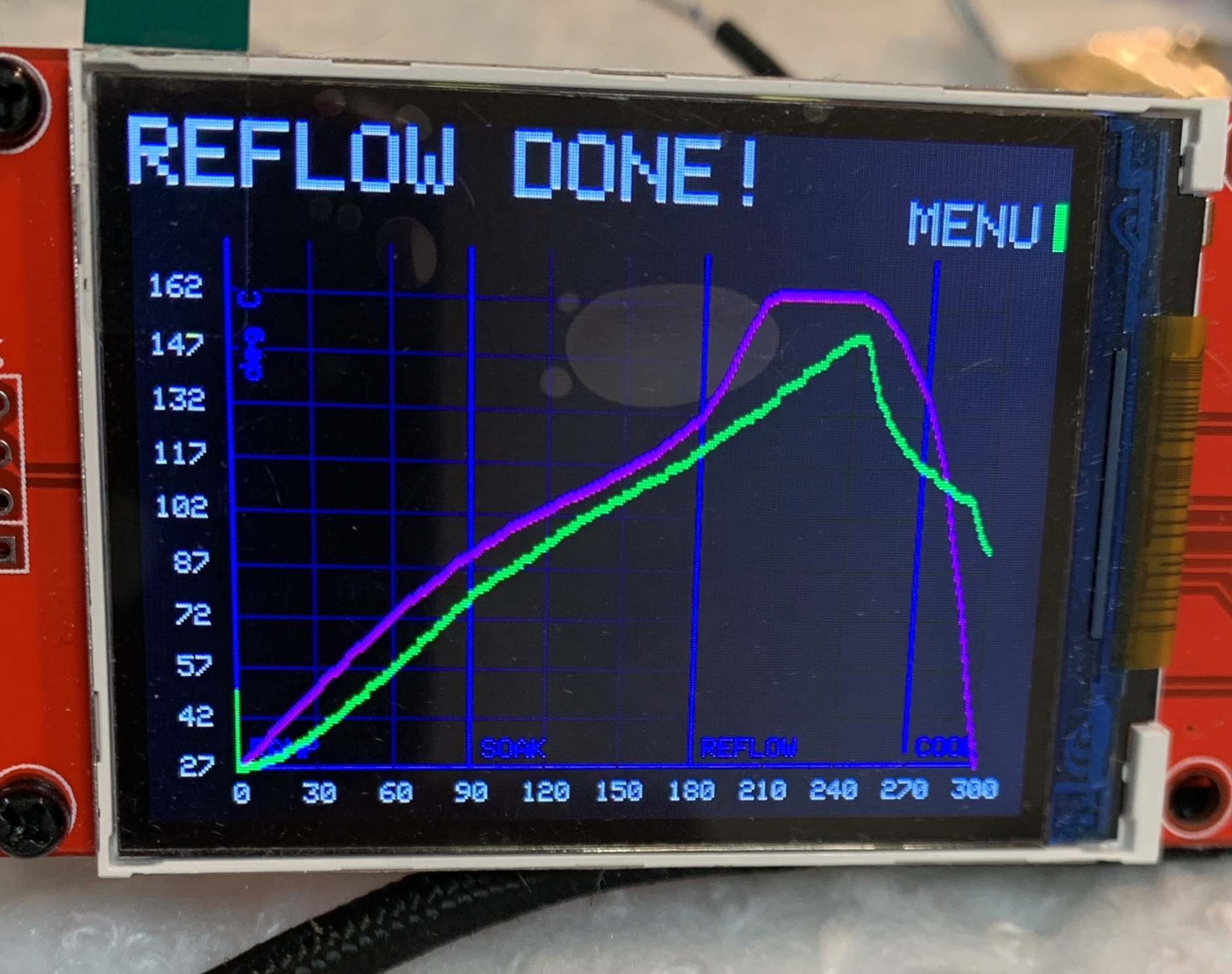
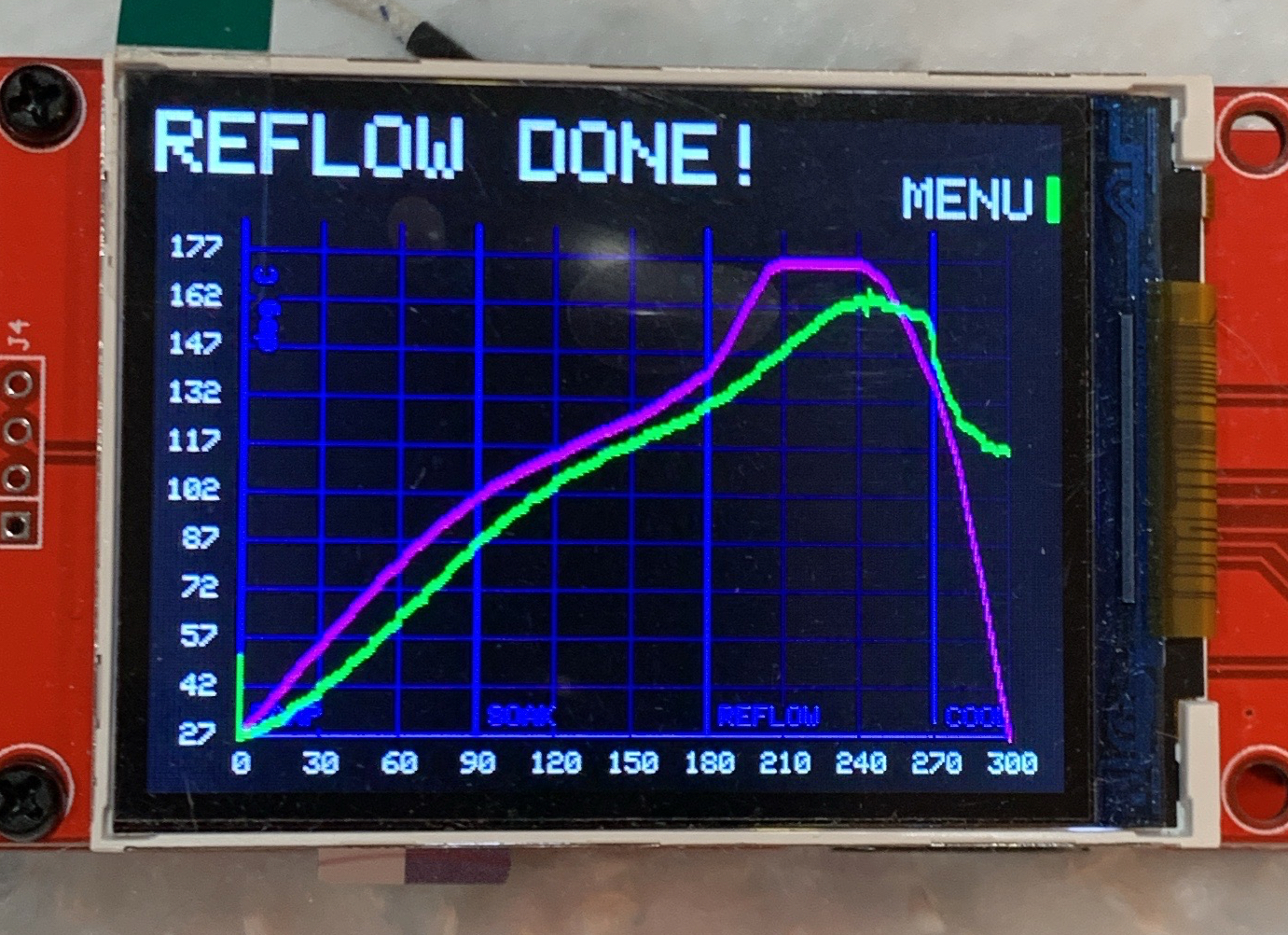
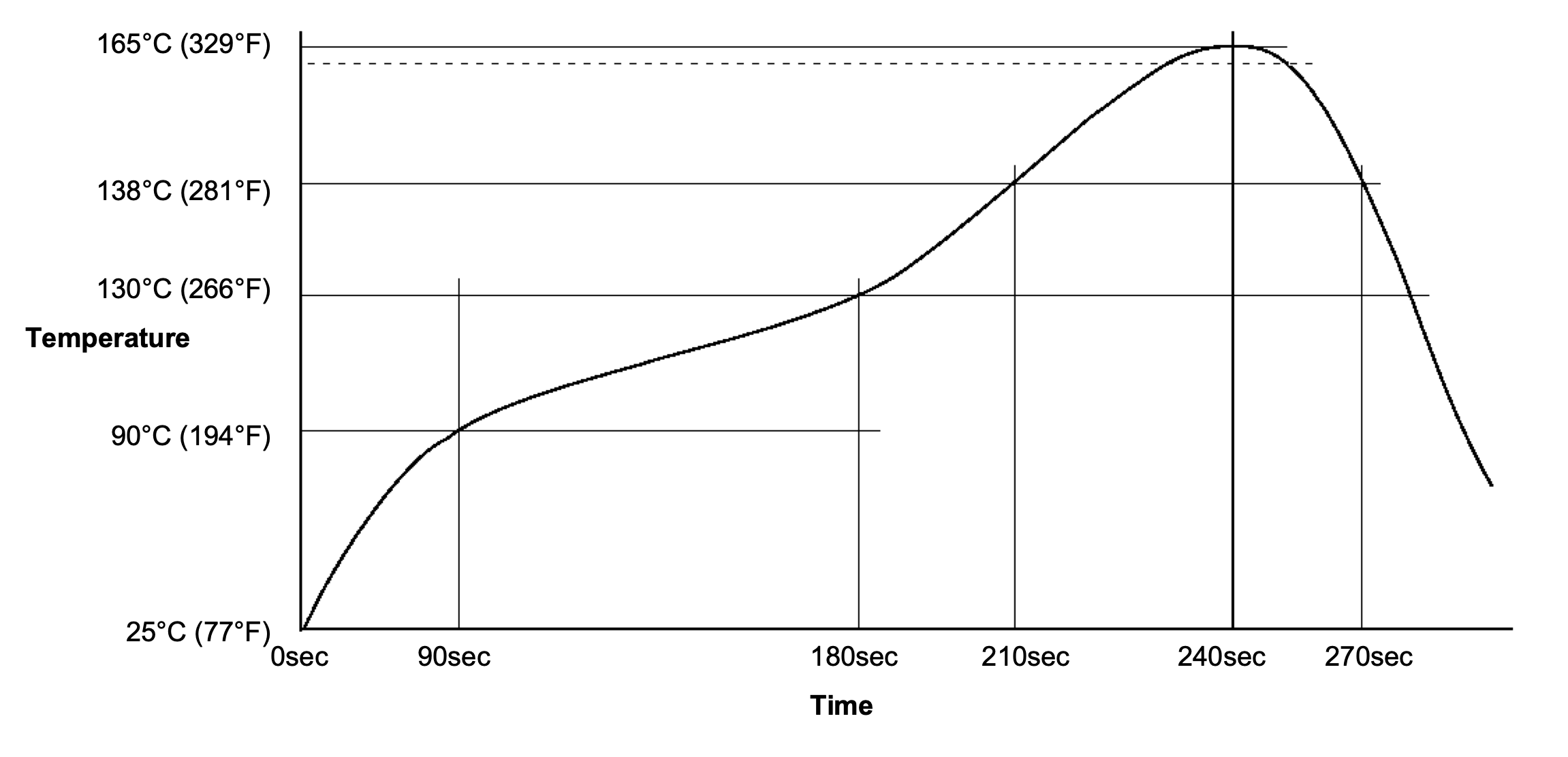
In the spirit of “When you give a mouse a cookie“, I realized I had to finally make use of my toaster-oven reflow oven. Tho, to make a long story short, my first test suggested I had to do some heavy insulation of the oven. I plunked down money to get the materials, insulated the oven, and nothing changed. Then I just tweaked the reflow profile and all was good.

Gah.

Alas, I am about to use the reflow oven – I haven’t had much time to do it properly. But I hope after spending money on a bunch of boards, components, oven insulation, and the reflow controller (which I’ve had for a while), I’ll get one decent (and damn expensive, haha) Serial HV UPDI programmer.

Back to the main story
In any case, not satisfied with my pace of making the oven, I just decided to build something.

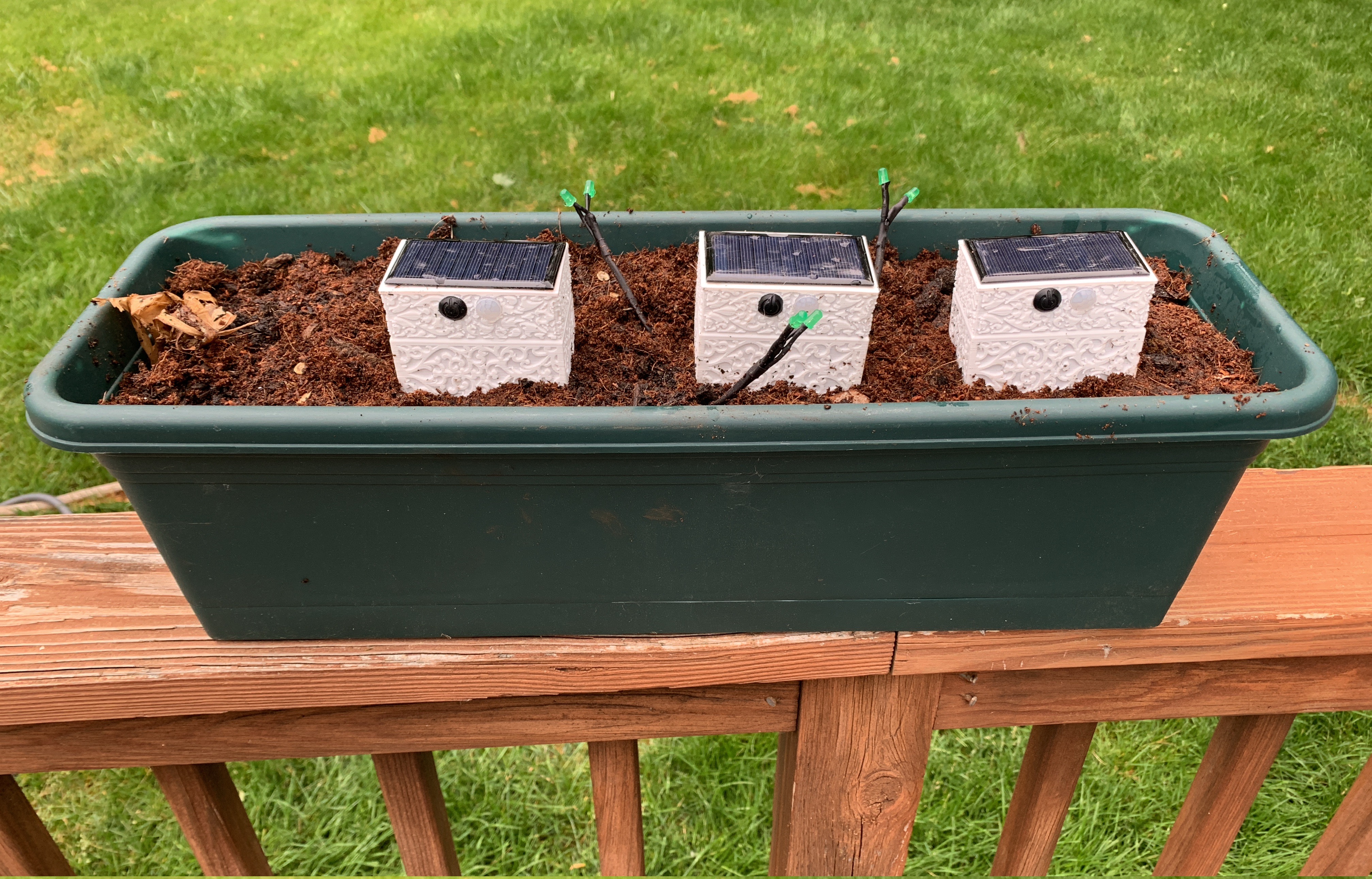
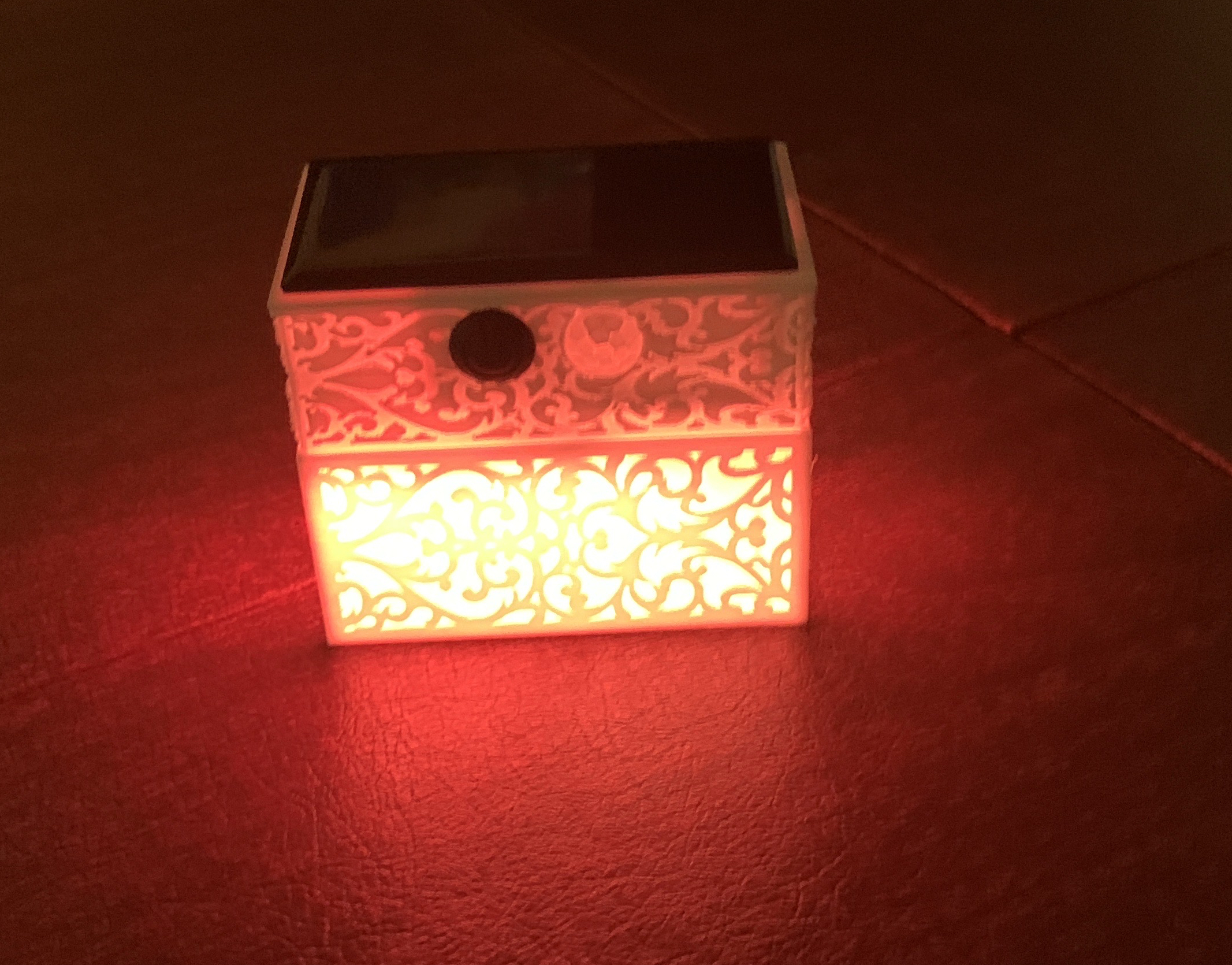
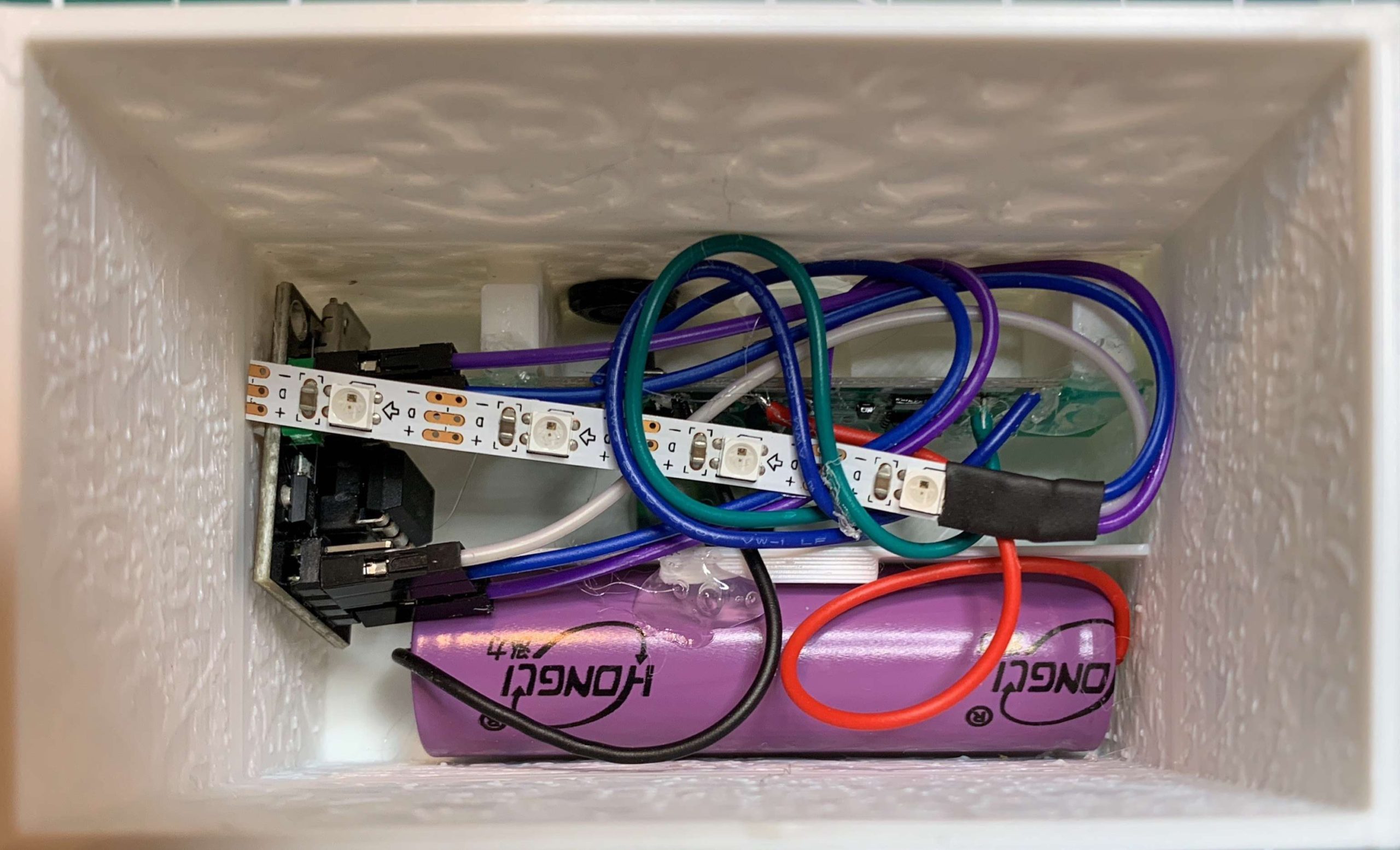
After a few iterations, I came up with a patterned translucent case to hold the switch and motion sensor, the solar panel, battery, and the control board. I then soldered it all back together and used it to power an ATtiny45 animating a fire-like flicker with NeoPixels (everything shoved in the case, image, right).

The battery and solar panel are plugged into the board as usual. And the motion sensor and switch work as usual, telling the board’s chip how to behave, time out the lights, detect the state of the solar panels. The chip thinks it’s turning on the LEDs, but instead it powers the ATtiny45, which then animates the NeoPixels (see image of it lit up at top).

The light was well received. Tho, of course, I am fighting the temptation to keep iterating on it.

In progress
You might be wondering why I called this “in progress” if I built something cool. With the sidebar of the sidebar and mice and cookies, you’d be forgiven for forgetting the impetus of this project.

The inspiration was for a mosaic, and I have only hacked the solar lights so far. I want to make a few more of these lights and integrate them, as originally planned, with some plants or grass.

Not to mention, I hope to get around to assembling that HV UPDI programmer so I can hack the board with my own chip.

So, we’re not done yet.

Project: “My heart beats for you”

I was inspired by this clever little Valentine’s Day card from the delightfully creative Charlyn (left), made with a wee Trinket M0 (a fave of mine), Neopixels (blikenlights!), laser cut parts, a 3D printed case, and rechargeable battery.

Alas, I don’t have a laser cutter, so doing a similar cool design was sorta out of my reach.

But then I took a side step in my head and got a brainwave to do something similar on my 3D printer. And I could mount it all into an Ikea frame I had left over from my lithophane project.

Then I started thinking of my heartbeat, and that I always wanted to do something around it. Y’see, my wife has the same number of letters in her first name to match the PQRST of an EKG trace – hence there’s a connection between my EKG and her – my heart, indeed, beats for her.

What’s more, she actually has a Kardia I’ve used before to capture my own EKG.

The build
I found a design from an amazing illustrator* for a heart that had some anatomic verisimilitude – with a PhD, DVM, and MD in the family, anatomic verisimilitude is how we roll.

Then I captured my EKG and calculated all the timings of the peaks (PQRST, remember?).

I edited the graphics of the heart and the EKG of a single heartbeat thru Inkscape to get them into an SVG I could import into TinkerCAD.

Then I built a simple model with a hole the shape of the heart, the trace, and “My heart beats for you” just 0.5mm up off the bottom of the model. The intention is the first 0.5mm is translucent and the rest of the model is a black mask.

Test models helped me refine the final print, and I ended up using white PLA for the bottom and black PLA for the top.

Prototyping
I like to do tests as I build something. Helps me try parts out without having to do the whole thing. For example, I did a tiny print of the heart to see how it looked with light from behind. To improve the process and see how different colors looked like, I practiced the two-tone filament switch with test prints, even though I’d done them before, such as in my Tree of Life.

With the code, I have a CircuitPlayground Express I normally use to prototype Neopixel code. While things printed, I was experimenting and refactoring the code, such that when I was ready, I was able to just copy and paste it, and then tweak it, for the QtPy I ended up using (actually, a QtPy Haxpress I had made a long time ago).

Let there be light
This is a project meant for lights – Neopixels.

The idea was the PQRST parts of my EKG would light up in sync with the parts in the heart (so P would light the atria, R would light the ventricles) and the words (see, same number of words as PQRST). What’s more, when the ventricles light, the heavy dub of the heart’s lub-dub, “beats” will light too (OK, so didn’t plan that one, was a coincidence).

When I do these pixel constructions, I print a guide image and use double stick tape to help me place and connect the Neopixels. Right, a view of the Neopixel strand, glued to the back of the print, ready to go into the frame.

The iffy GIF at the top of this post shows the final build, with the print and pixels mounted in the frame and going thru a single beat of the heart, MY heart.

My mom of course, showered praise on me – what a great mom. But the really hard one to please was my wife, for whom this was designed, and she was delighted. And I was able to surprise her as she has ZERO interest in my printing and soldering and coding. Haha.

Blemishes
What was really fun with this project wasn’t that it was the first mixed-media microcontroller-based project that I’d made in a while. The real fun was the errors and blemishes that revealed new opportunities to learn.

Stepper motors: For example, I normally am near the printer when the pause for filament swap happens. But one time I noticed the print head sag a bit and I had to try to recover (which didn’t work). But then a subsequent time, it did it again and the print head ground into the print and print bed.

Thinking my printer busted, I did some research and learned that the stepper motors have a time out for how long they hold their position. The two times my print head sagged were times I was NOT near the print when it paused and had tried to do the filament change long after the stepper time out.

Now I know, and have changed the timeout in my pause script in Octoprint, as well.

Filament tangle: I also had the filament get tangled and stuck in the spool. Kinda has been happening on a few of my spools, but I’m usually around to release the tangle. I knew the tangling was related to the winding of the spool. But I didn’t realize that there were ways to avoid the tangling.

Gcode: And challenges in making the filament swap go smoothly had me learning about Octoprint scripts and tweaking gcode. GCODE! That was a rush when I felt like I had leveled up in 3D printing, haha.

Animations: I also wanted to animate the pixels to fade, rather than turn on and off at one brightness. So I spent some time trying to animate the Neopixles to fade. But there was a lot of flickering. I think CircuitPython was too slow for the speed of animation I wanted. But was truly fun figuring it out and trying to do the animation.

In closing
This was a fun project. I applied learnings from previous projects, learned new skills, and got deeper into some domains.

And the process of making, figuring things out, watching something being created, and learning – that’s a rush.


*Hm, I have no problem buying designs, which I do often with 3D models, but didn’t know what to do here. Felt wrong just downloading the image and using it, even with all the ‘fair-use’ thinking. So I bought a sticker to put on my laptop. The first sticker I’ll put on it. Gonna be a good story-starter.

This call to bring back blogging got me reminiscing

Twitter is creaking. Social media seems less fun than ever. Maybe it’s time to get a little more personal.

Source: Bring back personal blogging – The Verge

My first exposure to blogging was during a project I joined (more like, weaseled my way into) that was looking to put wee blogs on phones that folks could search for and engage with (it was an interesting idea and could still be something cool). Around that same time, I was slated to join a team working on a digital multimedia diary at the start of 2004. Turns out, just before I joined the team, at an ex-officio meeting I attended in late 2003, they chose to name the product Lifeblog, forcing all of us to jump into blogging (and retconning blogging features into the product, haha).

From 1.0 to 2.0
I’d already been online for many years. I had used various sorts of bulletin boards and forums to post stuff and engage with folks. I had jointly run a proto-blog for a company (mostly news, analysis, and commentary in reverse chronological order – but no comments or permalink or feeds). And I had a few pages for family updates on Geocities (Athens 1066 was the main one). This was during the roaring 1999-2001.

Yet, blogging was different. Blogging took various nice elements from being online and gave online writing key features to help build engagement and ease of publishing. Not to mention, there were some hosted services, such as TypePad (where this blog got started at cognections.typepad.com) and Blogger (purchased by Google in 2003), hosted service that became THE thing in 2004 (blogging was a regular cover story in 2005).

Back in the day, a Tuesday, to be precise
Because our Lifeblog product was about blogging, we had to dive into the world of bloggers and blogging. As far as I know, our team was the first at Nokia to talk about our products and to engage with bloggers to earn goodwill for a product launch. Over 2004 and 2005 I did a lot of traveling and speaking and posting about blogging and mobiles.

Fast forward to end of 2007, Nokia corporate comms brought me on to build and run the Nokia corporate blog, which we called Nokia Conversations. This was not the first Nokia corporate blog. The first one was the S60 blog, set up by Phil Schwarzmann, who followed me after I had left the S60 team. I was a sorta godparent to the blogs he set up and ran. Of course, I turned to Phil to replace me when I left Nokia and the Nokia Conversations team.

Why didn’t the Nokia Lifeblog team have a blog? Well, individually, some of us did, and we talked about what we did, our products, and such. But blogging was so new. As I recall, someone told my boss ‘We don’t make celebrities at Nokia.’ Really, none of us wanted to be a celebrity blogger riding on the Nokia brand. We just wanted to promote our products. Tho that led to the other rub – the whole blogging about our product seemed so contrary to how Nokia had been marketing all their products.

So in the end, the team that finally brought blogging to Nokia was sorta not allowed to actually have one.

By the time Phil set up the S60 blogs, things were more accepted, and marketing teams were more experimental. By the time I got back into the game, Nokia Conversations was able to go big, be experimental, drive huge changes in Nokia comms, and do it while having fun (thanks to a forgiving and creative leadership).

Still here
This blog started on cognections.typepad.com, by my records, in mid-January 2004 (on a Tuesday, actually). I moved the domain to Molecularist.com, I think around 2008/09, just before my move to the US.

I was a heavy blogger in the day. And I’ve had the good fortune to have various jobs where blogging was part of the role. No more so than Nokia Conversations, of course, but also at Children’s Boston (more videos and Facebook than traditional text blogging), IBM, Owl. Indeed, posting something online is always my go to move at any org I’m at.

But, as I saw way back in 2005, social media morselized the web – fragmenting where people ended up, spreading convos across (off the top of my head) Facebook, YouTube, Instagram, SnapChat, and of course Twitter, not to motion so many other places people post stuff, such as Yelp, Amazon, Wattpad, and all the ones that have died in the past 15 years (looking at you Flickr).

And folks follow the conversations. So, for me, this blog became less of an outlet, especially as feed readers and the like died down, I lost contact with so many I knew back in 2005-2009, and everyone moved to mostly Twitter. I usually end up having spurts here when there are no other places for me to write things down, or when I have a brainwave and just need to write it down.

You know the line ‘dance like no one is watching.’ Blogging to me these days is just like that. The things in 2005-2009 that made blogs hum with activity are no longer around or widely used. So I don’t give a damn and ‘blog like there’s no one watching.’

Social media is dead, long live social media
What struck me from reading the article I link to above, is that these past few weeks I’ve been reviewing my online presence, like I do every end of year. I had soured on Twitter so long ago, but in the past few years, I heavily curated my Twitter feed, focusing on makers and the like. Tho in the past few months, I basically shut off the spigot on all my online and offline feeds, narrowed down to two websites and a print magazine. I occasionally hit Discord for two communities, mostly to troubleshoot electronics things I’m working on. And I use LinkedIn for work.

But, for sure, this blog, the one that predated all of the others, is still limping along.

I know what it takes to grow a blog, and not sure that’s the path I want to take. Growing a blog is hard work, like any channel. I’ll leave that to someone who wants to pay me. Haha.

I’ll be content with posting something once in a while for now, mostly for me, not working hard on changing things up.

And if you happen to be one of the rare person who is actually reading this, let me know. Perhaps that will encourage me to write more.

What do you think of the Verge article? Do you blog? When did you start? Why do you blog?

[BTW, just saw this right after I pushed the publish button. Russ Beattie, a compulsive blogger for many years, also commented on the return of lifelong blogging and his own path from blogging for a living to tweeting and back to blogging. Hm, wishful thinking or a real trend?]


Image by Nile from Pixabay

When the myth of the visionary founder flounders: push back!

Tesla has announced it’s phasing out its cars’ use of ultrasonic sensors (USS) to sense objects in the world around them. It’s part of the company’s shift towards its camera-only Tesla Vision driver-assist tech

Source: Tesla ditches ultrasonic sensors from new cars as it bets on camera-only driver assistance – The Verge

I have a car full of sensors. Indeed, I bought it almost exactly 7 years ago for the very reason it was chock full of sensors – particularly the visual, ultrasound, and radar sensors and how they help with safety features such as lane guidance, parking and backing up, and front braking and adaptive cruise control, respectively.

But some ‘visionary’ EV car company founder thinks he knows better and has effectively mandated his vehicles only be camera-, visual-only.

Not only did this mandate trigger in me, as a biologist, to point out that if you are making a smart vehicle, look to nature for ideas on how to make use of all forms of sensing, rather than just one human-centric one.**

But what this mandate really triggered in me was this rant against the idea that ‘the visionary founder is always right.’.

No surprise, Musk is having a totally f-ed up end of year (really, read this article, if only for the ‘Howard Hughes moment’ comment).

Yes, vision counts for something
I do believe folks like Bezos, Jobs, Musk, Zuck, and others are amazing in their vision and have upended industries with their monomaniacal drive and direction.

But they, especially, recently, Musk, have all had disastrous moments when their vision was just downright wrong, or that they didn’t listen to the chief smarties they hired to run their biz. [Again, don’t listen to me. Just see the mess Musk is in from all his meddling.]

I’ve seen this in many other companies (even too close to me): a strong overreaching visionary or exec or board member who went a bit too far and ended up with some shit outcome. They put down or yell over or just suppress or disrupt any check that normally would have happened had they listened to someone under them who actually knew more (indeed, who was hired because the hired knew more).

Often the visionary blames their underlings for the failure, underlings who ended up with no recourse other than to just follow the idiocy their boss demanded, even if straight over the cliff. What’s more, the visionary will never own up to how their ‘infallible’ vision chewed up and spit up really good people who could have helped the visionary succeed.* [Hm, I’m getting total Nuremberg vibes right now, this is such a negative feeling for me, sorry]

Dignity is as dignity does
I used to think shit products or websites were the outcome of designers, with no dignity, pushing out shit stuff.

But watching the shit-show at Twitter and reflecting back on some personal incidents, I will now think that when I see shit products that they were made by really well-meaning and talented designers who were ground down by some overbearing ‘visionary’ boss who thought they knew better and micromanaged some shit design that got launched.

Fuuuuuck.

I should know
I’ve been pummeled into that passive, what-the-heck, I-can’t-fight-anymore subservience to release something that was shit.

Alas, this disaster has happened more than once to me, so I clearly have an inability to recognize when I’m walking into such a damaging situation. What’s worse, when things did go wrong, I first blamed myself for all of it. Tho, only in retrospect, after I’ve already been destroyed and discarded, did I see where the problem originated.

I think it’s my naïve optimism and enthusiasm that keeps me from realizing I am putting myself in the way of harm, without being prepared to push back. Such is the draw and force of the visionary. Moth to flame and all that.

Fortunately, I have had a few opposite outcomes where I was confident enough to push back with evidence, experience, and confidence, or was blessed with a visionary I was able to work with fruitfullywith much success.

It can and does happen. There’s a role for visionaries. And hope for me, yes?

Beware what you wish for
We all worship the visionary sculpting reality to their bidding. Or better, making a whole new reality. But be careful when you think they are infallible in sculpting a new reality or we end up being accomplices in them fucking it all up.

Yeah, this makes me bitter. And it should make you bitter.

We all need to get better at pushing back, differentiating when the visionary is right and when they are wrong. Shame on us for losing confidence at the wrong time.

Know what I mean?

Let me know what you think.


Image from Adventurelandia

*I know you are all thinking Steve Jobs and of his krazy-ass vision and drive. But I know, I _know_, he had some really strong chief smarties (Ives, Cook, Schiller, for example) who worked for him who knew how to channel that vision and keep it from driving Apple off the rails again. [Yes, Jobs already had driven Apple of the rails once. His humble return found how to temper his vision and drive with actually delivering a good product.]

**[added 08jan23] Ha, this past week Sony and Honda announced Afeela (yeah, I feel ya on how that name feels to ya). The car has 45 sensors (see image below), tho, being Sony, there are a ton of cameras.

It’s time we hack the shit out of this virus

The subvariant, known as XBB, accounted for about 52.6% of all cases in New England during the period of time between Dec. 18 and Dec. 24, according to CDC data. The week before, it accounted for about 34.3% of cases in the region, and just 20% earlier in December.

Source: New coronavirus subvariant, XBB, now widespread in New England

Another season, another CVOID variant.

Viruses do as viruses do: they frantically multiply in their hosts, playing a clever numbers game of poor duplication that inserts mutations, leading to an effective exploration of the possibility space of infection, growth, and transmission optimization. And, like any optimization, there are diverse drivers that push the result one way or another: the optimization effectively responds to whatever constraints that are put to it.

I am a visual person when it comes to optimization and the best way for me to visualize it is as a walk across the ‘possibility surface’ to find a minima where the optimization can ‘settle’ (see graphic, right).

I could digress about local and global minima, and add to the visualizations a ball bearing wandering the surface, or ‘adding energy’ to help the ball find a new minima (like those shaky ball-bearing-in-holes-games). I could also comment that the walk is from adjacency to adjacency, so the virus can’t necessarily do a wholesale change: changes in organisms are usually sequential, and if you’ve been following your CVOD mutations, they have been mostly sequential (tho watch out when two separate sequential branches infect the same host and mix and match whole stretches).

But I digress.

What I really want to talk about is a krazy notion as to how we could hack this virus.

How, the f-, Charlie, do you think this can happen?
OK, I’m am NOT suggesting we go for ‘herd immunity’.

If letting a virus run rampant to get herd immunity was a thing, then we would never had needed all the vaccines we actually use – mumps, rubella, measles, polio, smallpox, chickenpox, shingles, flu, plague (oh my gosh, plague*), and so many others. Science works. Letting viruses run rampant in the mistaken desire for herd immunity, as the millions who have died until the invention of those vaccines can attest, is not a useful strategy.

But, what we are seeing in a fascinating, in front of our very eyes, accelerated fashion with COVID is that when confronted by our isolation methods, sterile technique, masks, vaccines, and the like, the damned virus says ‘no worries, I’ll just hop over to where I am not constrained and carry on as usual.’

Indeed, that’s ALL we allow the virus to do: we have a set of things that constrain the virus, and it is very capable of finding where we are NOT constraining it.

As we gain immunity it evades it. As we try to contain the spread, it tweaks its virulence. As we make vaccines, it modifies itself.

But what if we engineered our response to fuck up that walk?

A wee story from an earlier pandemic
Despite the gripes from a certain set of gripers during this pandemic, we have so many changes to our behaviors from so many previous pandemics, such as SARS (masks), H1N1 Flu (Purel EVERYWHERE, cough-in-inner-elbow), and HIV (gloves EVERYWHERE, masks, changes in blood-handling).

For those who don’t remember, HIV used to be a death sentence (and it sorta still is). And at one point we had three really promising drugs in the pipeline to keep it at bay. But they all failed. Individually. At the same time.

But TOGETHER, they were THE shit – they each f-ed up the virus replication in different ways, three different ways that the virus could not mutate to respond to at one go, three different non-adjacent ways that the virus could not reach by walking from adjacency to adjacency, so it was not able to explore a way out in one go.

We hacked three simultaneous constraints that the virus just could not overcome through the means of the usual random walk thru possibility adjacencies.

So could we hack constraints on this virus?
I don’t know if we could do some triumvirate set of drugs that could stop this pandemic. Keep in mind HIV is still endemic in lots of places. It’s not necessarily a death sentence, but only now do we have vaccines and drugs to keep it from spreading (40 f-in years later).

Tho might we be able to engineer the virus to behave in a way we want it to behave, let the virus prosper, but with characteristics WE want it to have, say, no deaths or hospitalizations, mild to no symptoms, no negative outcomes?

Haha, that’s absolutely bonkers, of course. But this damn virus is really clever. How do we use its cleverness turn it into a ‘common’ cold that only gives you the sniffles and then skedaddles off?

What I am suggesting is a selective evolution of the virus at a population scale. Could we do a coordinated effort to nudge the virus in the direction WE want it to go rather that freaking out at each new variant the virus invents on its own in response to our CURRENT attempts to keep it at bay (which might never work**)?

Haha, leave that for some zany fiction story. The ethics alone have this as a an idea dead on arrival. And if just getting folks to get vaccinated and do simple safe behavior has been such a challenge, how would we ever be able to explain the science and goals of such a kracked science experiment?

Tho, I suppose, ahem, there might be some nation that has a ludicrously high level of control over it’s huge population and has a history of incubating respiratory viruses and releasing them upon the world. 🤔

Pft.

In any case, while perhaps bonkers ideas are unimplementable, might they inform something less bonkers?

Dunno. What do you think?


Images from Masina and Globe

*Plague, plague, PLAGUE! Yersinia pestis! How many millions died over how many centuries? Herd immunity, my ass.

*Way to go China for f-ing top your response and being an amazing viral repository these past two years, as the rest of us try to move on, now re-releasing it on the world once again. What kinds of nasty new variants have you been incubating. What next in this pandemic will emerge from you?

Pause for station identification

Yes, another station ID post. And, not that you’re keeping score, normally I have large gaps between them. Alas, we live in Strange Times and strange things happen. So, here we are again, providing an update as I enter a new and interesting role.

Me
Who am I? I’m Charlie Schick. I’m passionate about exploring how the intersection of bits and atoms help us tell stories of our physical-digital-sublime world. I also advise companies on product design, business strategy, and new market opportunities. I’m a recovering PhD, too, and proudly ex-IBM, -Boston Children’s, -Nokia.

By day
I just started (August 2022) a new role as Senior Advisor, Invest in Finland, connecting US organizations with business and investment opportunities in Finland. I will be focused, as has been my long-time interest, on opportunities in digital health and life sciences. I look forward to sharing with all of you my stories and successes in this new adventure.

By night
A most amazing development in the past few years is my journey into embedded electronics, 3D printing, and making in general. I post most of my projects to this blog, so do keep coming back to see what I’m up to. Oh, the places we’ll go.

Because I can’t stop
For a very long time, I’ve been sharing my experience, insights, and exploits, especially through writing for and speaking to large audiences and engaging with others in stimulating conversations, including the office of CxOs. With my new role, I expect things kick up again in this space. Let me know how I can help in this capacity (tho most likely through LinkedIn).

And of course, my standard disclaimer
(my usual riff off of an ancient Cringely disclaimer)
Everything I write here on this site is an expression of my own opinions, NOT of any of my customers or anyone I work for, especially the Finnish government. If these were the opinions of my customers or the Finnish government, the site would be under their name and, for sure, the writing and design would be much more professional. Likewise, I am an intensely trained professional writer 😛, so don’t expect to find any confidential secret corporate mumbo-jumbo being revealed here.

If you have ideas or projects that you think I might be interested in, please contact me, Charlie Schick, at firstname.lastname@molecularist.com or via my profile on LinkedIn.

Yes, you can find me on Twitter. I use it more to follow an amazing community of makers, to be marveled by their creativity, commentary, and caring; though, do say ‘hi’ if you swing by. Left Twitter for good 15feb2023, after 16 years.

Image from a project of mine exploring life, longevity, and dementia